
Inokashira Park (井の頭恩賜公園)
A Kichijoji park around a spring-fed pond that supplied Edo
Quick facts
| Hours | The park is open at all times. Inokashira Park Zoo (zoo and aquatic life section): 9:30–17:00 |
|---|---|
| Last entry | None for the park. Inokashira Park Zoo: 16:00 (tickets sold until 16:00; after 16:00 you cannot move between the main zoo and the aquatic life section) |
| Fees | The park is free. Inokashira Park Zoo: General 400 yen / junior high school students 150 yen / 65 and over 200 yen / elementary school age and under free (one ticket covers both the main zoo and the aquatic life section). Rental boats are charged |
| Closed | The park never closes. Inokashira Park Zoo is closed on Mondays (the next day if Monday is a public or substitute holiday) and December 29 to January 1; it opens on some Mondays |
| Reservations | Not needed (the Ghibli Museum, Mitaka, inside the park, requires a timed-entry ticket) |
| Best time to visit | Weekday mornings. Weekends in cherry blossom season are crowded |
| Time needed (approx.) | 30 min to 1 hour around the pond; half a day if you add Inokashira Park Zoo |
| Access notes | 1 min on foot from Inokashira-koen Station (Keio Inokashira Line); 5 min from the South (Park) Exit of Kichijoji Station (JR Chuo Line, Keio Inokashira Line). About 20 min from Shinjuku Station, about 35 min from Tokyo Station |
| Checked / official info | Checked on Nov 21, 2026 Official website |
What Is Inokashira Park (井の頭恩賜公園)? | History and Origins
Inokashira Park (井の頭恩賜公園) is a Tokyo metropolitan park just south of Kichijoji Station (吉祥寺駅), spreading across Musashino City and Mitaka City. At its center is Inokashira Pond (井の頭池), formed by spring water. In the Edo period (17th to mid-19th century), when the Tokugawa shoguns ruled from Edo, present-day Tokyo, the pond was the source of the Kanda Josui (神田上水), a water supply that carried drinking water to the city, and the Kanda River still begins inside the park. The land was given to the City of Tokyo by the imperial family, and in 1917 it opened as Japan’s first suburban park. The park has four zones: the pond area, the wooded hill of Gotenyama (御殿山), the West Park with sports grounds and the Ghibli Museum, Mitaka (三鷹の森ジブリ美術館), and the Second Park.
In the Edo period the shoguns, the military rulers of Japan, used the area for falconry. Tradition says the third shogun, Tokugawa Iemitsu (徳川家光), named the pond “Inokashira,” meaning “the head of the well,” and a small stone marks the spot where he is said to have carved the name into a tree with a knife. The pond was also called “the pond of seven wells,” because spring water once rose from seven places. At its western end, a spring called Ochanomizu (お茶の水) is said to take its name from Tokugawa Ieyasu (徳川家康), the founder of the Tokugawa shogunate, making tea with its water.
The spring also drew worship of water deities. Inokashira Benzaiten (井の頭弁財天), a hall on the pond’s edge dedicated to Benzaiten, a Buddhist goddess of water, music and the arts, was revered by the people of Edo as the guardian of the city’s water source and as a goddess of performing arts. Stories of samurai are told here too. In the late 12th century, Minamoto no Yoritomo (源頼朝), who set up the first warrior government in Kamakura (鎌倉), is said to have built a shrine hall here to pray for peace in eastern Japan, and in the early 14th century Nitta Yoshisada (新田義貞), the warrior who brought down that government, is said to have prayed here for victory before his attack. These are local traditions, not recorded history. The present hall is said to have been rebuilt in 1927.
Highlights
Inokashira Pond, Seven Wells Bridge and the Boats
Seven Wells Bridge (七井橋) crosses the middle of the pond and gives a wide view of the water: in spring, cherry blossoms hang out over the surface, and in autumn the colored trees are reflected in it. You can rent rowboats, pedal boats and swan-shaped pedal boats and see the shore from the water. A local saying claims that couples who ride a boat here will break up, and some say it is because the goddess Benzaiten gets jealous. In the 2010s the pond was drained to remove non-native fish in a process called kaibori. The water became clearer, and a water plant thought to be extinct, Inokashira-furasukomo (イノカシラフラスコモ), was found again for the first time in 59 years.
Inokashira Benzaiten
Behind the main hall of Inokashira Benzaiten is a “Zeniarai Benten” (銭洗い弁天) spot, where visitors wash coins in spring water to purify them, and you can stop to pray as you walk around the pond. Utagawa Hiroshige (歌川広重), a woodblock print artist of the Edo period, included this shrine in his famous print series One Hundred Famous Views of Edo (名所江戸百景).
Gotenyama Woods and Inokashira Park Zoo
Mixed woods of oak trees such as konara and kunugi still cover the hill of Gotenyama, whose name (“palace hill”) is said to come from a rest house that Iemitsu built there for falconry. On Gotenyama is Inokashira Park Zoo (井の頭自然文化園), a paid facility in two parts: the main zoo and an aquatic life section beside the pond. To go between them you leave the grounds and walk outside. The main zoo’s sculpture garden shows works by Kitamura Seibo (北村西望), the sculptor of the Peace Statue in Nagasaki.
Access and Opening Hours
The nearest station is Inokashira-koen Station (井の頭公園駅) on the Keio Inokashira Line, about 1 minute on foot from the pond. From Kichijoji Station on the JR Chuo Line and the Keio Inokashira Line, take the South (Park) Exit and walk about 5 minutes to the pond. From Shinjuku Station, the JR Chuo Line Rapid runs straight to Kichijoji; with the walk it takes about 20 minutes. From Tokyo Station, the same Chuo Line Rapid takes about 35 minutes including the walk. Parking is limited, and cars on Kichijoji-dori Avenue cannot turn right into or out of the lots, so the train is the easier choice.
The park itself is open at all times, but Inokashira Park Zoo closes in the late afternoon, and the boat rental and Inokashira Benzaiten have their own separate hours. The zoo is closed on Mondays and over the New Year. The path around the pond is about 1.5 km, roughly a 30-minute walk.
Best Time to Visit
The cherry trees around the pond are listed among Japan’s Top 100 Cherry Blossom Spots. In early April in most years, crowds gather on the bridge and in boats to see the blossoms hanging over the water. On weekends in this season even the streets from the station are packed and picnic parties are noisy, so weekday mornings are better for a quiet walk. The trees around the pond turn color around November, and in winter ducks and other migrating water birds come to the pond.
Nearby Spots
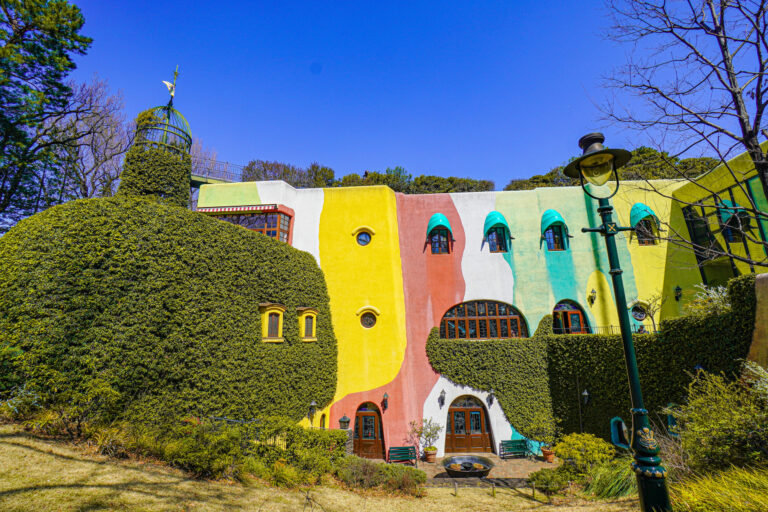
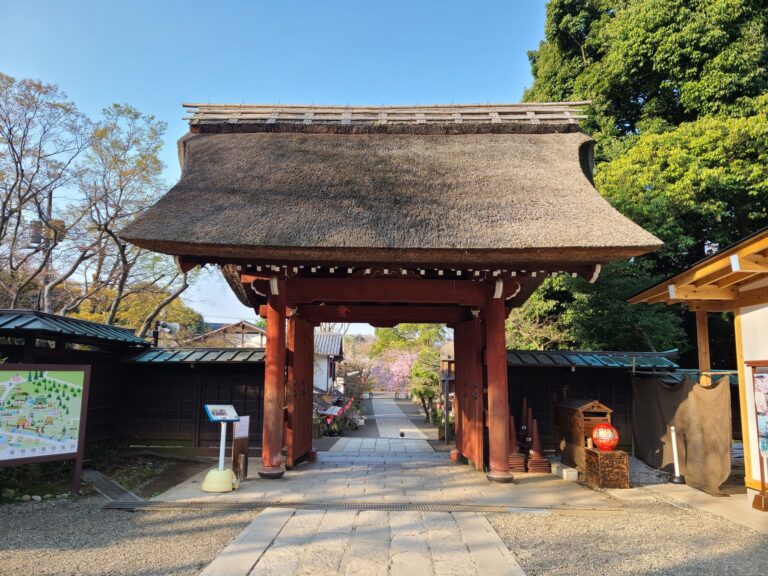
The Ghibli Museum, Mitaka, the museum of the animation studio Studio Ghibli, stands in the West Park, about a 15-minute walk through the park from Inokashira-koen Station. Entry is by timed ticket only, so book ahead if you want to combine it with the pond. Jindaiji Temple (深大寺) is about 30 minutes by Odakyu Bus from the South Exit of Kichijoji Station, so you can pair a pond walk with an old temple visit in half a day.
Summary
Inokashira Park is a Kichijoji park built around a spring-fed pond that once supplied Edo, with a Benzaiten hall, old woods and a zoo all within walking distance. The park is always open, but the zoo and the boats keep set hours, so plan around the places you want to see.
Basic Information
| Item | Details |
|---|---|
| Name | Inokashira Park (井の頭恩賜公園) |
| Address | 1-18-31 Gotenyama, Musashino City, Tokyo (park information center). The park spans Musashino City and Mitaka City |
| Highlights | Inokashira Pond, Seven Wells Bridge, Ochanomizu spring, source of the Kanda River, Inokashira Benzaiten, Gotenyama woods, cherry trees around the pond (Japan’s Top 100 Cherry Blossom Spots) |
| Things to do | Walking around the pond, rental boats (rowboat, pedal boat, swan boat), visiting Inokashira Benzaiten, Inokashira Park Zoo (paid), cherry blossoms, autumn leaves, bird watching |
| Hours | Open at all times (Inokashira Park Zoo 9:30–17:00, last entry 16:00) |
| Closed | None (Inokashira Park Zoo: Mondays, or the next day if Monday is a public or substitute holiday; December 29 to January 1; opens on some Mondays) |
| Admission | Free (Inokashira Park Zoo: General 400 yen / junior high school students 150 yen / 65 and over 200 yen / elementary school age and under free; rental boats are charged) |
| Reservations | Not needed |
| Access | Keio Inokashira Line Inokashira-koen Sta., 1 min on foot / JR Chuo Line & Keio Inokashira Line Kichijoji Sta. South (Park) Exit, 5 min on foot |
| Parking | Paid lots No. 1 and No. 2 (no right turns in from Kichijoji-dori Avenue) |
| Official website | https://www.kensetsu.metro.tokyo.lg.jp/jimusho/seibuk/inokashira (Japanese) |
Information checked on November 26, 2026 (Inokashira Park Zoo: opening hours, closing days and admission fees) / Official source checked: Inokashira Park Zoo (Tokyo Zoological Park Society) official website
Google Map
Nearby sights

About 15 min on foot

About 30 min by Odakyu Bus (Kichijoji Sta. to Jindaiji)

Head on from Tokyo to Kamakura
From Kichijoji, the Keio Inokashira Line and the JR Shonan-Shinjuku Line reach Kamakura in about 1 hour 20 minutes. Change to the Shonan-Shinjuku Line at Shibuya. Trains bound for Zushi or Yokosuka run straight through; on trains bound for Odawara, change to the Yokosuka Line at Ofuna. Temples, shrines and the sea: discover the old capital in our Kamakura Travel Guide.