
Shibuya Scramble Crossing (渋谷スクランブル交差点)
The crossing where crowds surge at every green light
Quick facts
| Hours | None (a public road you can cross at any time) |
|---|---|
| Fees | Free |
| Closed | Never |
| Reservations | Not needed |
| Best time to visit | Mornings are easier to walk. At night the lights of the big screens reflect on the road |
| Time needed (approx.) | A few minutes to cross; 30 min–1 hour if you also visit a viewpoint above it |
| Access notes | About 1–2 min on foot from the Hachiko Gate of JR Shibuya Station (on the Miyamasuzaka side). Other exits can mean a detour |
| Checked / official info | Checked on November 17, 2026 No official website (public road). Tokyo’s official travel guide |
What Is Shibuya Scramble Crossing (渋谷スクランブル交差点)? | History and Origins
Shibuya Scramble Crossing (渋谷スクランブル交差点) is the intersection in front of Hachiko Square (ハチ公広場) at JR Shibuya Station, at the foot of the Dogenzaka (道玄坂) slope. Its official name is said to be the Shibuya Ekimae (渋谷駅前) intersection. It became a “scramble” crossing in 1973: five crosswalks meet here, and each time the pedestrian light turns green, traffic stops in every direction and people cross all at once. There is only one diagonal crosswalk, running from Hachiko Square, a layout chosen to suit the five roads that meet here and the way people move.
There are several theories about the name of Dogenzaka, the slope that rises to the west of the crossing. One of them takes you back to Kamakura, where a samurai government was based from the late 12th to the early 14th century. According to this story, Owada Dogen (大和田道玄) was a member of the family of Wada Yoshimori (和田義盛), a warrior who served Minamoto no Yoritomo (源頼朝), the first shogun who founded the government in Kamakura. When the Wada family was destroyed in the early 13th century after a struggle with the Hojo clan (北条氏), who held real power in the government, Dogen is said to have fled Kamakura and hidden on this slope, becoming known as a bandit. The tale appears in Edo Meisho Zue (江戸名所図会), a 19th-century illustrated guide to Edo (old Tokyo); another theory traces the name to a hermitage Dogen built, and neither is certain. A stone marker partway up the slope explains the origins.
Highlights
The Wave of People Crossing
When the light turns green, people start crossing all five crosswalks at once. More than 1,000 people cross at a time, and at busy moments the number is said to reach about 3,000. Crossing from Hachiko Square brings you to Shibuya Center Gai (渋谷センター街), and the buildings around the crossing are covered with giant screens. On rainy days, colorful umbrellas weave across the crossing when you look down from above, and at night the light of the screens and signs reflects on the road. Inside the crossing, walk with the flow; stopping in the middle to take photos blocks people and leads to collisions, so keep an eye on those around you and on the signal.
Hachiko Statue
The Hachiko statue (忠犬ハチ公像) in Hachiko Square honors Hachi, an Akita dog owned by Hidesaburo Ueno (上野英三郎), a professor of agriculture at Tokyo Imperial University. After his owner died suddenly in 1925, Hachi kept waiting for him in front of Shibuya Station for years. The first statue was put up in 1934 while Hachi was still alive; the current one is a second version rebuilt in 1948, and it serves as a landmark for meeting up.
Watching from Above
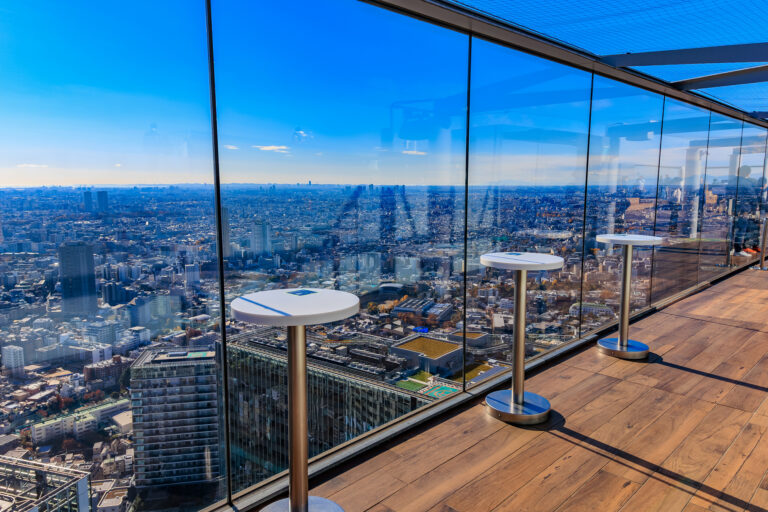
The passage from JR Shibuya Station to Shibuya Mark City (渋谷マークシティ) gives a free view of the crossing from an angle above. The same passage holds “Myth of Tomorrow (明日の神話),” a huge mural by Taro Okamoto (岡本太郎), one of Japan’s best-known 20th-century artists. Shibuya Hikarie (渋谷ヒカリエ) has a free viewing space on its 11th floor. You can also watch from the Starbucks on the 2nd floor of SHIBUYA TSUTAYA, from MAG8 on the roof of MAGNET by SHIBUYA109, or from the open-air rooftop of SHIBUYA SKY, which looks straight down on it.
Access and Opening Hours
The crossing is about 1–2 minutes on foot from the Hachiko Gate (ハチ公改札) of JR Shibuya Station (渋谷駅). The gate is on the Miyamasuzaka (宮益坂) side, and leaving by another exit can mean a detour. As a public road, it has no hours or fees, and you can cross at any time.
Shibuya City bans drinking on the street from evening to early morning all year in designated areas around the station, including the crossing, and littering anywhere in the city can bring a fine. See the Basic Information table for the hours and the amount. Around Halloween and New Year’s Eve, crowds gather, the police restrict traffic, and the city limits street drinking and takes other measures.
Best Time to Visit
The crossing is always busy, and the crowds grow from the evening. Mornings are easier for walking across. Come when it is busy if you want to see the human wave, or in the morning if you want to cross at your own pace. Crossing takes a few minutes; with a viewpoint, allow about 30 minutes to an hour.
Nearby Spots
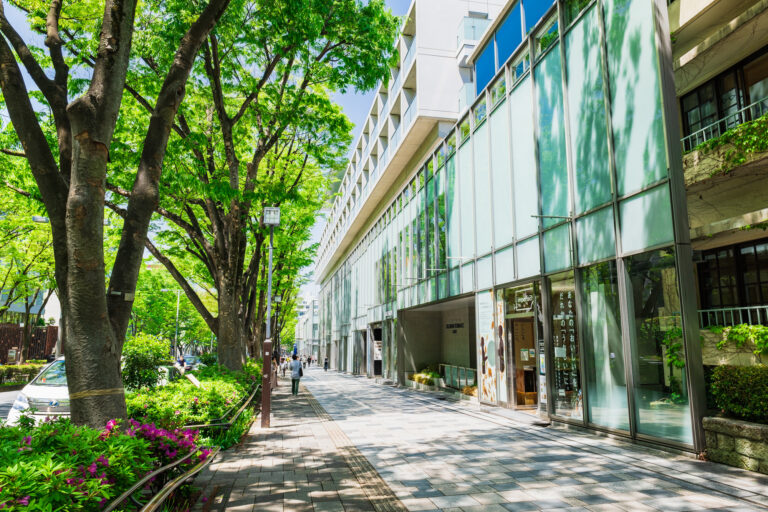
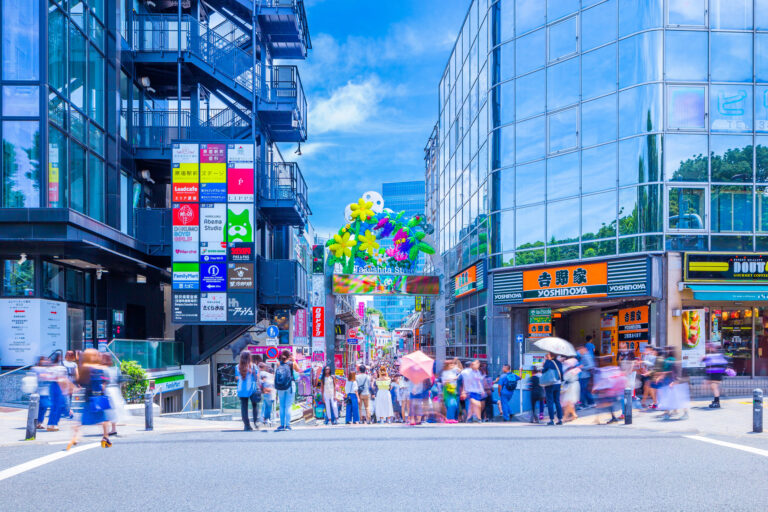
SHIBUYA SKY, right above the crossing, is about 3 minutes on foot, and from its rooftop you can look down on the crossing you just walked. For Harajuku and Omotesando, Omotesando Hills (表参道ヒルズ) is one stop away at Omotesando Station (表参道駅) on the Tokyo Metro Ginza or Hanzomon Line, and Takeshita Street (竹下通り) is one stop away at Harajuku Station (原宿駅) on the JR Yamanote Line.
Summary
Shibuya Scramble Crossing has worked as an all-direction crossing since 1973, with crowds crossing five crosswalks at every green light. Walk across it first, then look down from a nearby building to see the same scene from a different angle.
Basic Information
| Item | Details |
|---|---|
| Name | Shibuya Scramble Crossing (渋谷スクランブル交差点 / 渋谷駅前交差点) |
| Address | Dogenzaka 2-chome, Shibuya City, Tokyo (in front of Hachiko Square, Shibuya Station) |
| Highlights | Crowds crossing five crosswalks at once, the single diagonal crosswalk from Hachiko Square, Hachiko statue, giant screens, views from above |
| Things to do | Walk across; watch from the Shibuya Mark City passage, Shibuya Hikarie 11F, SHIBUYA SKY and other buildings |
| Hours | Open at all times (public road) |
| Admission | Free |
| Access | JR Shibuya Station, Hachiko Gate, about 1–2 min |
| Notes | Do not stop in the crossing to take photos. No street drinking 18:00–5:00 all year in designated areas around the station. Littering fine of 2,000 yen anywhere in Shibuya City |
| Official website | None (public road). GO TOKYO |
Information checked on November 26, 2026 (fees) / Official source checked: GO TOKYO, Tokyo's official tourism website
Google Map
Nearby sights

about 3 min walk
1 stop on the Tokyo Metro Ginza or Hanzomon Line (Shibuya to Omotesando)
1 stop on the JR Yamanote Line (Shibuya to Harajuku)

Head on from Tokyo to Kamakura
From Shibuya, the JR Shonan-Shinjuku Line reaches Kamakura in about 1 hour. Trains bound for Zushi or Yokosuka run straight through; on trains bound for Odawara, change to the Yokosuka Line at Ofuna. Temples, shrines and the sea: discover the old capital in our Kamakura Travel Guide.