
Omotesando Hills (表参道ヒルズ)
Tadao Ando’s mall, its inner ramp sloping like Omotesando
Quick facts
| Hours | Shops and cafes 11:00–20:00; restaurants 11:00–22:30 (until 23:00 on Fridays, Saturdays and Sundays before a Monday holiday). Some shops differ |
|---|---|
| Fees | Free to enter |
| Closed | Irregular closing days |
| Reservations | Not needed |
| Best time to visit | After 11:00, when shops open. In December the zelkova trees are usually illuminated after dark |
| Time needed (approx.) | 30 min to 1 hour for a loop of the building |
| Access notes | 2 min on foot from Exit A2 of Omotesando Station (Tokyo Metro), 3 min from Exit 5 of Meiji-jingumae (Harajuku) Station, 7 min from JR Harajuku Station |
| Checked / official info | Checked on November 17, 2026 Official website |
What Is Omotesando Hills (表参道ヒルズ)? | History and Origins
Omotesando Hills (表参道ヒルズ) is a shopping complex on Omotesando (表参道), with about 100 shops spread over three buildings (the Main Building, the West Wing and the Dojunkan) plus apartments. It opened in 2006 on the site of the Dojunkai Aoyama Apartments (同潤会青山アパート), and was designed by Tadao Ando (安藤忠雄), the architect known for his bare concrete buildings. Entry is free.
The Dojunkai Aoyama Apartments were reinforced-concrete housing built in the late 1920s as part of the rebuilding after the Great Kanto Earthquake (関東大震災), which struck Tokyo in 1923. Over time, boutiques and galleries moved into the flats, and the building is said to have become a familiar face of the avenue. For the new complex, Ando kept the height to roughly that of the zelkova trees outside and dug six floors underground instead, placing much of the shopping space below street level. Omotesando itself is one of the approach avenues radiating from Meiji Jingu (明治神宮), the shrine dedicated to Emperor Meiji, who reigned from the late 19th to the early 20th century as Japan modernized, and its zelkova trees line the way to Aoyama-dori Avenue (青山通り).
Highlights
The Spiral Slope Around the Atrium
The heart of the Main Building is a six-level atrium running from the third basement floor to the third floor. Wrapped around it is the “Spiral Slope,” a ramp that climbs at almost the same gradient as Omotesando outside. It is about 700 m long, and shops open onto it like storefronts on a street, so you browse as if strolling uphill. A grand staircase descends to the bottom of the atrium, where an event space hosts exhibitions and pop-ups. Daylight from above reaches down into the basement, and critics have compared the ramp-around-a-void layout to the Guggenheim Museum in New York. Most shops are luxury and designer brands with prices to match, but walking the slope and looking around costs nothing.
The Long Facade and the Dojunkan
The facade along Omotesando is built so that it does not loom over people on the sidewalk: its height steps with the slope of the street and parts of it are set back along its length of about 250 m. At the southeast end, the Dojunkan (同潤館) partly recreates the look of the old apartments and reuses some original materials, such as handrails and the stone of the outdoor stairs. The roof is planted with greenery.
The Zelkova Avenue
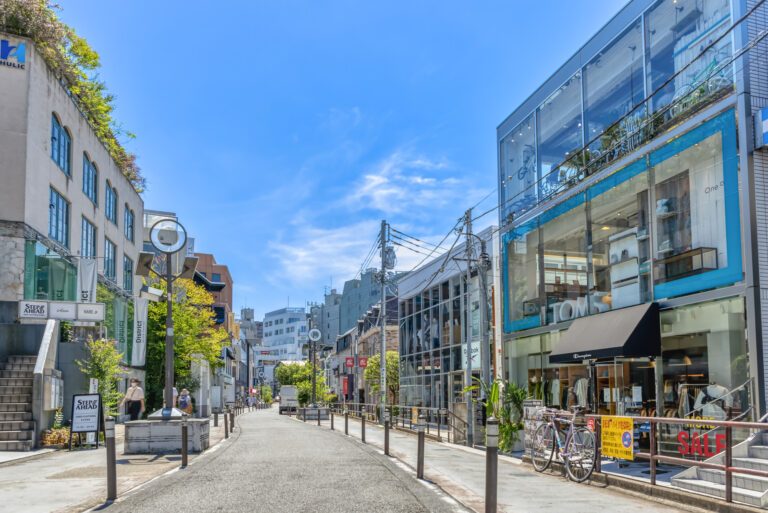
Flagship stores of luxury brands line the zelkova trees of Omotesando. Every December the trees are usually strung with lights, and Christmas decorations go up inside Omotesando Hills too.
Access and Opening Hours
It is 2 minutes on foot from Exit A2 of Omotesando Station (表参道駅) on the Tokyo Metro Ginza, Chiyoda and Hanzomon lines, 3 minutes from Exit 5 of Meiji-jingumae (Harajuku) Station (明治神宮前〈原宿〉駅) on the Chiyoda and Fukutoshin lines, and 7 minutes from JR Harajuku Station (原宿駅).
Shops and cafes close earlier than restaurants, which stay open later on Fridays, Saturdays and Sundays followed by a Monday holiday. Hours vary by shop and may change with the season or events, so check the table below. Closing days are irregular. Inside there are wheelchair-accessible elevators, accessible toilets, a nursing room and diaper-changing tables, and wheelchairs and strollers can be borrowed. Allow about 30 minutes to 1 hour for a loop of the building.
Best Time to Visit
Shops open in the late morning, so if you arrive early the shops inside will still be closed. The atrium and grand staircase often host limited-time exhibitions, events and seasonal decorations. During the December illuminations, the area around Omotesando gets crowded.
Nearby Spots
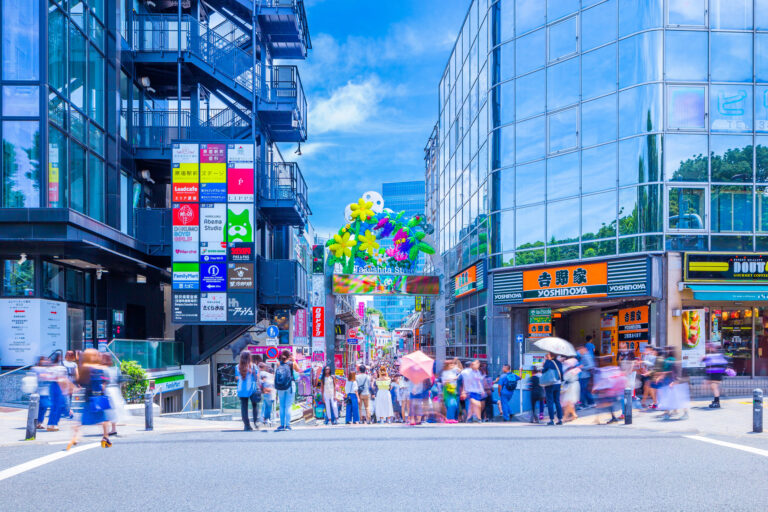
Across Omotesando is the entrance to Cat Street (キャットストリート), which you can follow downhill to Shibuya. Walk north for Takeshita Street (竹下通り), or head up Omotesando to its end at Meiji Jingu to round out a walk through Harajuku.
Summary
Omotesando Hills is Tadao Ando’s shopping complex on the site of the old Dojunkai apartments, where a spiral slope at almost the same gradient as Omotesando lets you browse as you walk. Entry is free, and it pairs naturally with a stroll under the avenue’s zelkova trees.
Basic Information
| Item | Details |
|---|---|
| Name | Omotesando Hills (表参道ヒルズ) |
| Address | 4-12-10 Jingumae, Shibuya-ku, Tokyo (東京都渋谷区神宮前4-12-10) |
| Highlights | Spiral Slope around the six-level atrium (almost the same gradient as Omotesando, about 700 m long), 250 m facade along the avenue, the Dojunkan recalling the old Dojunkai Aoyama Apartments, the zelkova avenue |
| Things to do | Browse shops along the slope, see limited-time exhibitions and events, stroll the tree-lined avenue |
| Hours | Shops and cafes 11:00–20:00; restaurants 11:00–22:30 (until 23:00 on Fri, Sat and Sundays before a Monday holiday). Some shops differ |
| Closed | Irregular |
| Admission | Free |
| Access | 2 min from Exit A2, Omotesando Station (Tokyo Metro) / 3 min from Exit 5, Meiji-jingumae (Harajuku) Station / 7 min from JR Harajuku Station |
| Facilities | Accessible toilets, wheelchair-accessible elevators, nursing room, diaper-changing tables, wheelchair and stroller loans |
| Phone | +81-3-3497-0310 (information desk) |
| Official website | https://www.omotesandohills.com/ |
Information checked on November 26, 2026 (business hours and closures) / Official source checked: Omotesando Hills official website
Google Map
Nearby sights

about 5 min walk

about 10 min walk
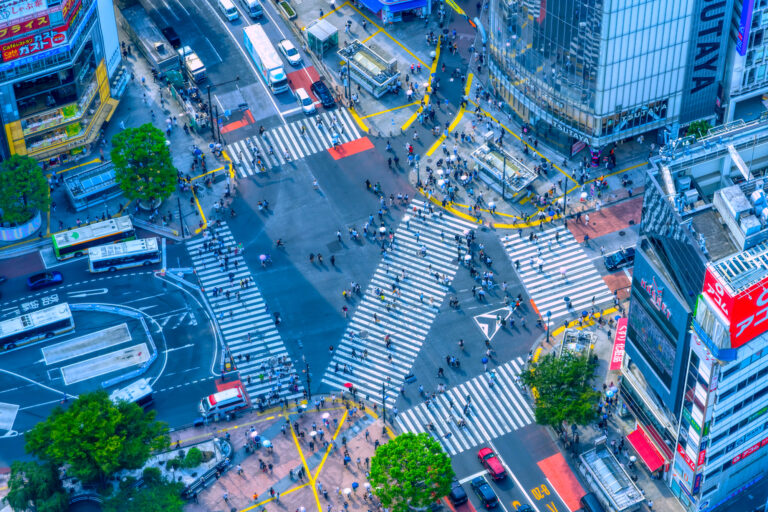
Tokyo Metro Ginza Line, Omotesando → Shibuya, 1 stop

Head on from Tokyo to Kamakura
From Omotesando Station, ride the Tokyo Metro one stop to Shibuya and change to the JR Shonan-Shinjuku Line: about 1 hour 15 minutes to Kamakura. Trains bound for Zushi or Yokosuka run straight through; on trains bound for Odawara, change to the Yokosuka Line at Ofuna. Temples, shrines and the sea: discover the old capital in our Kamakura Travel Guide.