
East Gardens of the Imperial Palace (皇居東御苑)
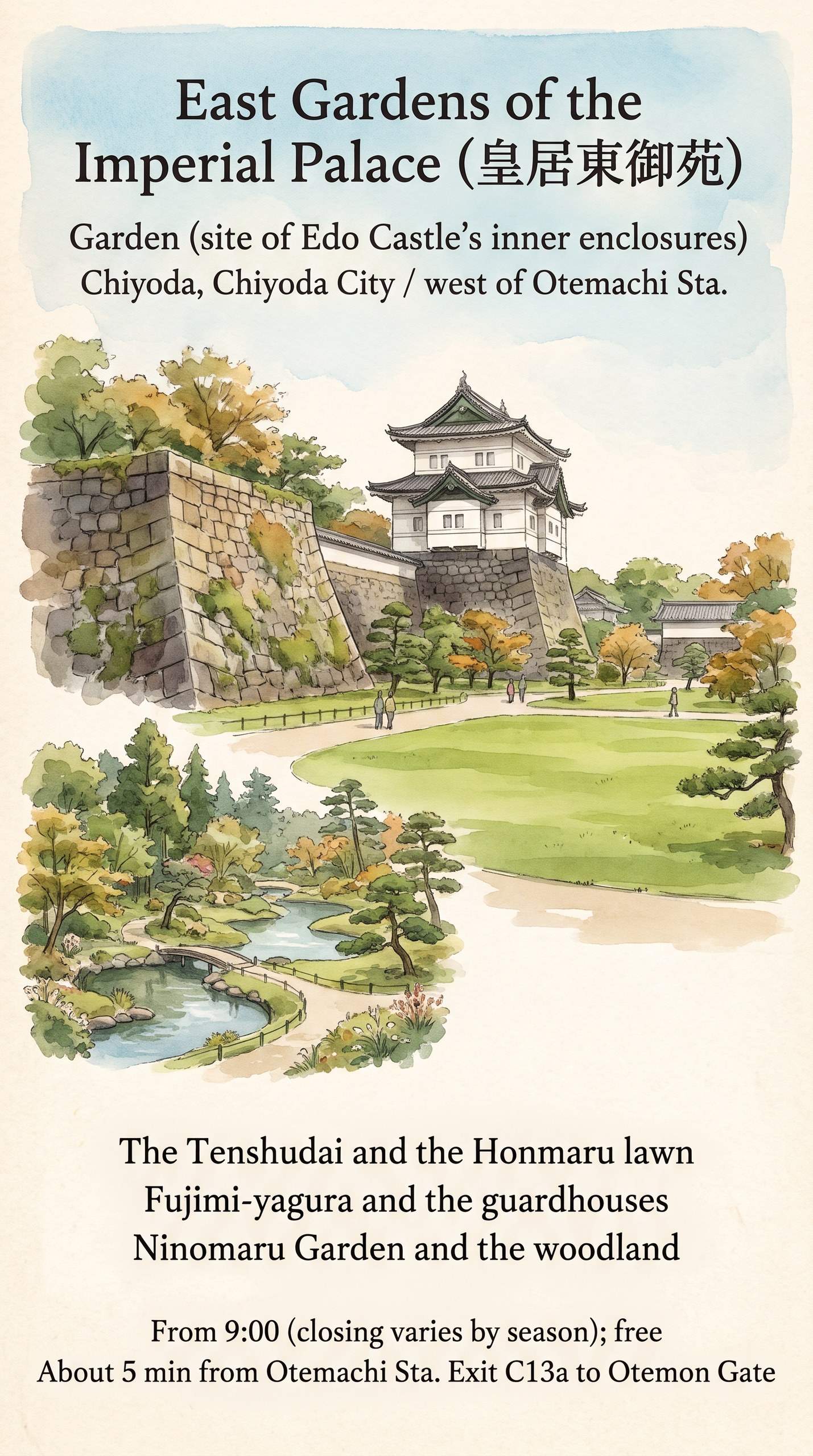
Stone walls and seasonal flowers on Edo Castle’s inner grounds
Quick facts
| Hours | Varies by season. Nov–Feb 9:00–16:00; Mar 1–Apr 14 and Sep 9:00–17:00; Apr 15–Aug 31 9:00–18:00; Oct 9:00–16:30 |
|---|---|
| Last entry | 30 min before closing |
| Fees | Free (separate charge for the Museum of the Imperial Collections, Sannomaru Shozokan) |
| Closed | Mondays and Fridays (open on public holidays except the Emperor’s Birthday; if open on a Monday holiday, closed the following Tuesday), Dec 28–Jan 3, and days with official events. In 2026 the garden also opens on Mon, Nov 30 and Fri, Dec 4 for the Inui-dori public opening (Nov 28–Dec 6); Otemon Gate is exit-only during that period (enter via Hirakawamon or Kitahanebashimon) |
| Reservations | Not needed. The Sannomaru Shozokan museum requires advance timed-entry booking (no same-day tickets at the venue; on Fridays and after the gardens close, enter via Otemon Gate only) |
| Best time to visit | Mornings (fewer people) |
| Time needed (approx.) | 1–2 hours |
| Access notes | Otemon Gate: Otemachi Sta. Exit C13a, about 5 min / Nijubashimae Sta. Exit 6, about 10 min / Tokyo Sta. Marunouchi North Exit, about 15 min. Hirakawamon and Kitahanebashimon gates: Takebashi Sta. Exit 1a, about 5 min. Bag check at the entrances |
| Checked / official info | Checked on Nov 19, 2026 Official website (Imperial Household Agency, East Gardens) |
What Are the East Gardens of the Imperial Palace (皇居東御苑)? | History and Origins
The East Gardens of the Imperial Palace (皇居東御苑) occupy the Honmaru (本丸), Ninomaru (二の丸) and part of the Sannomaru (三の丸), the inner enclosures of Edo Castle (江戸城), the castle where the shoguns, Japan’s military rulers, lived during the Edo period (17th to mid-19th century). Laid out as gardens attached to the Imperial Palace (皇居), the home of Japan’s emperor, they are managed by the Imperial Household Agency (宮内庁), the government agency in charge of Imperial Family affairs. They were landscaped alongside the construction of the current palace and have been open to the public since 1968. Entry is free and needs no reservation. You can walk among castle remains such as stone walls, watchtowers and guardhouses, together with gardens of seasonal flowers.
The Edo Castle keep, the tall central tower of a Japanese castle, burned in the Great Fire of Meireki (明暦の大火), which destroyed most of Edo, as Tokyo was then called, in the mid-17th century. It was never rebuilt, and only its stone base, the Tenshudai (天守台), remains at the back of the Honmaru.
Highlights
The Tenshudai and the Honmaru Lawn
A wide lawn fills the center of the Honmaru, surrounded by a rose garden, a bamboo grove, an orchard of old fruit varieties and more. You can climb the Tenshudai and rest on its benches while looking out over the lawn and trees of the Honmaru. The Honmaru Rest House (本丸休憩所) displays a reconstructed model of the Edo Castle keep. Another viewpoint near the former Daidokoro-mae Sanju-yagura (旧台所前三重櫓), a three-story watchtower site by the old kitchens, looks over the Ninomaru and the office towers of Otemachi. You cannot go inside the stone storehouse.
Fujimi-yagura, the Guardhouses and Two Slopes
Castle buildings still standing include the Fujimi-yagura (富士見櫓), a watchtower used for lookout and defense, and guardhouses where samurai guarding the gates were stationed, such as the Hyakunin-bansho (百人番所), Doshin-bansho (同心番所) and O-bansho (大番所). The inside of the Fujimi-tamon (富士見多聞), a long defensive storehouse on the walls, is open to visitors, though its viewing hours differ from those of the gardens. The Shiomizaka (汐見坂) and Bairinzaka (梅林坂) slopes linking the Honmaru and Ninomaru are steep, and Bairinzaka is planted with red and white plum trees.
Ninomaru Garden and the Woodland
Ninomaru Garden (二の丸庭園) is a stroll garden, designed to be enjoyed while walking around its pond, and was made with reference to a garden plan from the mid-18th century. Its iris garden holds 84 varieties of Japanese irises divided from plants at Meiji Jingu Shrine (明治神宮), the Tokyo shrine dedicated to Emperor Meiji, who reigned as Japan modernized. The Ninomaru woodland was created at the suggestion of Emperor Showa (昭和天皇), who reigned from 1926 to 1989, and in autumn its konara oaks, sawtooth oaks and maples turn color. Paths through the woodland are unpaved and uneven.
Sannomaru Shozokan and Ote Rest House
Near Otemon Gate (大手門) stands the Museum of the Imperial Collections, Sannomaru Shozokan (皇居三の丸尚蔵館), which displays art handed down in the Imperial Family; it fully opened in 2026. Viewing is by timed-entry reservation: buy tickets online in advance, as no same-day tickets are sold at the venue. Visitors eligible for free entry also need to book in principle. Opening hours and closed days are on the official website. The museum charges admission, and some exhibitions open into the evening. On Fridays, when the gardens are closed, and after the gardens close, you can reach the museum only through Otemon Gate.
Ote Rest House (大手休憩所), also near Otemon Gate, has a Sarutahiko Coffee (猿田彦珈琲) cafe. Take the stairs or elevator up to its second-floor-level terrace for a view of the stone walls and a watchtower. The shop sells souvenirs of a visit to the Imperial Palace.
Access and Opening Hours
Otemon Gate is about a 5-minute walk from Exit C13a of Otemachi Station (Tokyo Metro and Toei Subway), about 10 minutes from Exit 6 of Nijubashimae Station on the Tokyo Metro Chiyoda Line, and about 15 minutes from the Marunouchi North Exit of JR Tokyo Station. Hirakawamon Gate (平川門) and Kitahanebashimon Gate (北桔橋門) are about 5 minutes from Exit 1a of Takebashi Station on the Tokyo Metro Tozai Line. Every gate has a bag check, and alcohol cannot be brought in. On busy days a line forms in front of the gate, but people spread out once inside. Travel light. There is no parking for cars or bicycles.
Opening hours change with the season and the gardens have regular closed days, so check the table above before you go. Allow 1 to 1.5 hours to see the main sights, or about 2 hours for an unhurried walk.
Wheelchairs cannot use the Shiomizaka slope; for the Honmaru, entering through Kitahanebashimon Gate is said to avoid the slopes more easily. Climbing the slopes is tiring with heavy luggage. The Kikuyo Cultural Association (菊葉文化協会) runs free guided tours, in principle on Wednesday and Saturday mornings and afternoons. Running, sports and drinking alcohol are not allowed in the gardens.
Best Time to Visit
Mornings, when there are fewer people, are the easiest time to walk around. Red and white plum trees bloom on the Bairinzaka slope, and the Japanese irises in Ninomaru Garden usually flower from late May to mid-June. Autumn colors in the Ninomaru woodland usually peak from mid-November to mid-December. There is little shade, so prepare for the heat in summer. Benches and rest houses are dotted around the gardens.
Nearby Spots
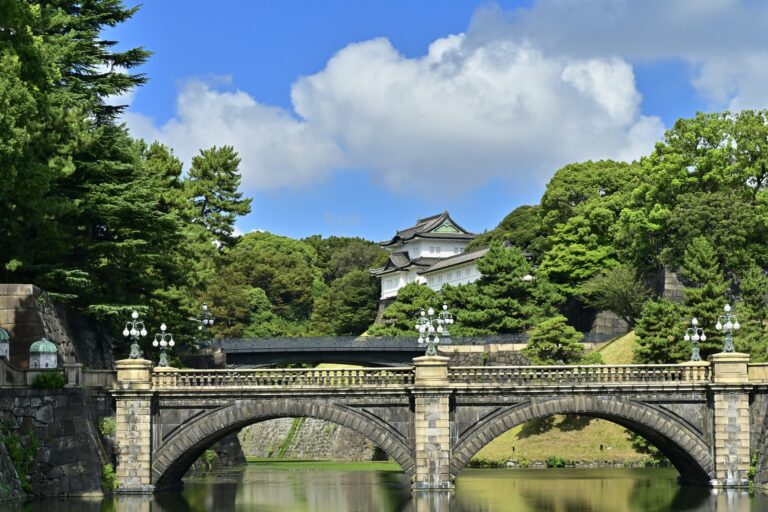
Nijubashi Bridge (二重橋), the bridge over the moat in front of the palace’s main gate, and the Imperial Palace Plaza (皇居前広場) in Kokyo Gaien National Garden (皇居外苑) are also part of the Edo Castle site, and you can walk on to them from Otemon Gate.
Summary
The East Gardens of the Imperial Palace are free gardens where you can walk among Edo Castle remains such as the Tenshudai, watchtowers and guardhouses, along with the flowers of Ninomaru Garden and the woodland. Check the Monday and Friday closures and the seasonal opening hours before you go.
Basic Information
| Item | Details |
|---|---|
| Name | East Gardens of the Imperial Palace (皇居東御苑) |
| Address | 1 Chiyoda, Chiyoda City, Tokyo |
| Highlights | Tenshudai (open to climb), Honmaru lawn, castle buildings such as Fujimi-yagura and Hyakunin-bansho, Ninomaru Garden and iris garden, autumn colors of the Ninomaru woodland, plum trees on Bairinzaka, Museum of the Imperial Collections, Sannomaru Shozokan |
| Things to do | Climb the Tenshudai to look over the Honmaru, see the Edo Castle keep model at the Honmaru Rest House, walk around the pond in Ninomaru Garden, seasonal flowers (plum, iris, autumn leaves), view the stone walls and watchtower from the Ote Rest House terrace, free guided tours |
| Hours | Mar 1–Apr 14 9:00–17:00, Apr 15–Aug 31 9:00–18:00, Sep 9:00–17:00, Oct 9:00–16:30, Nov 1–end of Feb 9:00–16:00 (last entry 30 min before closing) |
| Closed | Mondays and Fridays (open on national holidays except the Emperor’s Birthday; if open on a Monday holiday, closed Tuesday), Dec 28–Jan 3, days with unavoidable official events |
| Admission | Free (Sannomaru Shozokan charged separately; varies by exhibition) |
| Access | Otemon Gate: Otemachi Sta. Exit C13a, about 5 min walk / Nijubashimae Sta. Exit 6, about 10 min / JR Tokyo Sta. Marunouchi North Exit, about 15 min. Hirakawamon and Kitahanebashimon gates: Takebashi Sta. Exit 1a, about 5 min |
| Notes | Bag check at the entrances (Otemon, Hirakawamon and Kitahanebashimon gates). Shiomizaka and Bairinzaka are steep; no wheelchairs on Shiomizaka. Little shade in summer. No running, sports or drinking; no alcohol, drones or bladed items. Sannomaru Shozokan requires advance timed-entry booking |
| Parking | None (no bicycle parking either) |
| Restrooms | Yes, in the gardens (facilities vary by location) |
| Official website | https://www.kunaicho.go.jp/en/visit/event/higashigyoen/index.html |
Information checked on November 26, 2026 (opening hours and closing days) / Official source checked: Imperial Household Agency, Kokyo Higashi Gyoen (East Gardens of the Imperial Palace)
Google Map
Nearby sights

1 stop on the Tokyo Metro Chiyoda Line (Otemachi to Nijubashimae)

about 15 min walk
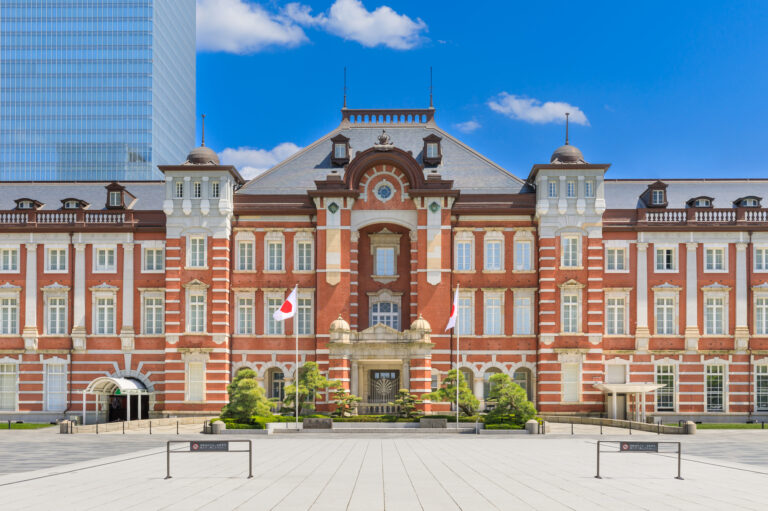

Head on from Tokyo to Kamakura
From Tokyo Station, near Otemon Gate, the JR Yokosuka Line reaches Kamakura in about 1 hour. No change of trains is needed. Temples, shrines and the sea: discover the old capital in our Kamakura Travel Guide.