
National Museum of Western Art (国立西洋美術館)
Western art inside Le Corbusier’s World Heritage building
Check first
| Opening hours | 9:30–17:30 (until 20:00 on Fridays and Saturdays) |
|---|---|
| Last admission | 30 minutes before closing |
| Admission | Permanent collection: adults 500 yen, university students 250 yen. Free for high school students and under, under-18s and those aged 65 and over. Special exhibitions are charged separately. Permanent collection free on the second Sunday of most months (Kawasaki Free Sunday), 18 May and 3 November |
| Closed | Mondays (open on public holidays and substitute holidays, closed the next weekday), 28 December–1 January. Occasional extra closures |
| Booking | Not needed for the permanent collection. Check each special exhibition’s page |
| Best time to visit | Right after opening, or after 18:00 on Fridays and Saturdays (popular special exhibitions can be busy in the evening too) |
| Time needed (approx.) | 1–1.5 hours for the permanent collection |
| Access notes | About 1 min on foot from the Park Exit of JR Ueno Station (上野駅); about 7 min from Keisei Ueno Station |
| Checked / official site | Checked on 16 November 2026 Official website |
What is the National Museum of Western Art (国立西洋美術館)? | History
The National Museum of Western Art (国立西洋美術館) is Japan’s national museum dedicated to Western art, in Ueno Park (上野恩賜公園). It opened in 1959 to conserve and display the Matsukata Collection (松方コレクション), gathered by the businessman Matsukata Kojiro (松方幸次郎), a shipbuilding company president who bought art in Europe in the early 20th century, and donated and returned to Japan by France, whose government had held it after the Second World War.
The main building was designed by Le Corbusier, one of the leading architects of the 20th century, with the help of his Japanese pupils Maekawa Kunio (前川國男), Sakakura Junzo (坂倉準三) and Yoshizaka Takamasa (吉阪隆正). Sakakura also designed the former Museum of Modern Art, Kamakura (神奈川県立近代美術館 鎌倉館), Japan’s first public museum of modern art, now the Tsurugaoka Museum of Kamakura (鎌倉文華館 鶴岡ミュージアム). It stands in the grounds of Tsurugaoka Hachimangu Shrine (鶴岡八幡宮), enshrined on its present site in the 12th century as the guardian of the samurai government, in Kamakura, the seat of that government from the late 12th to the early 14th century. In 2016 the main building was inscribed as a World Heritage Site as part of “The Architectural Work of Le Corbusier”.
Highlights
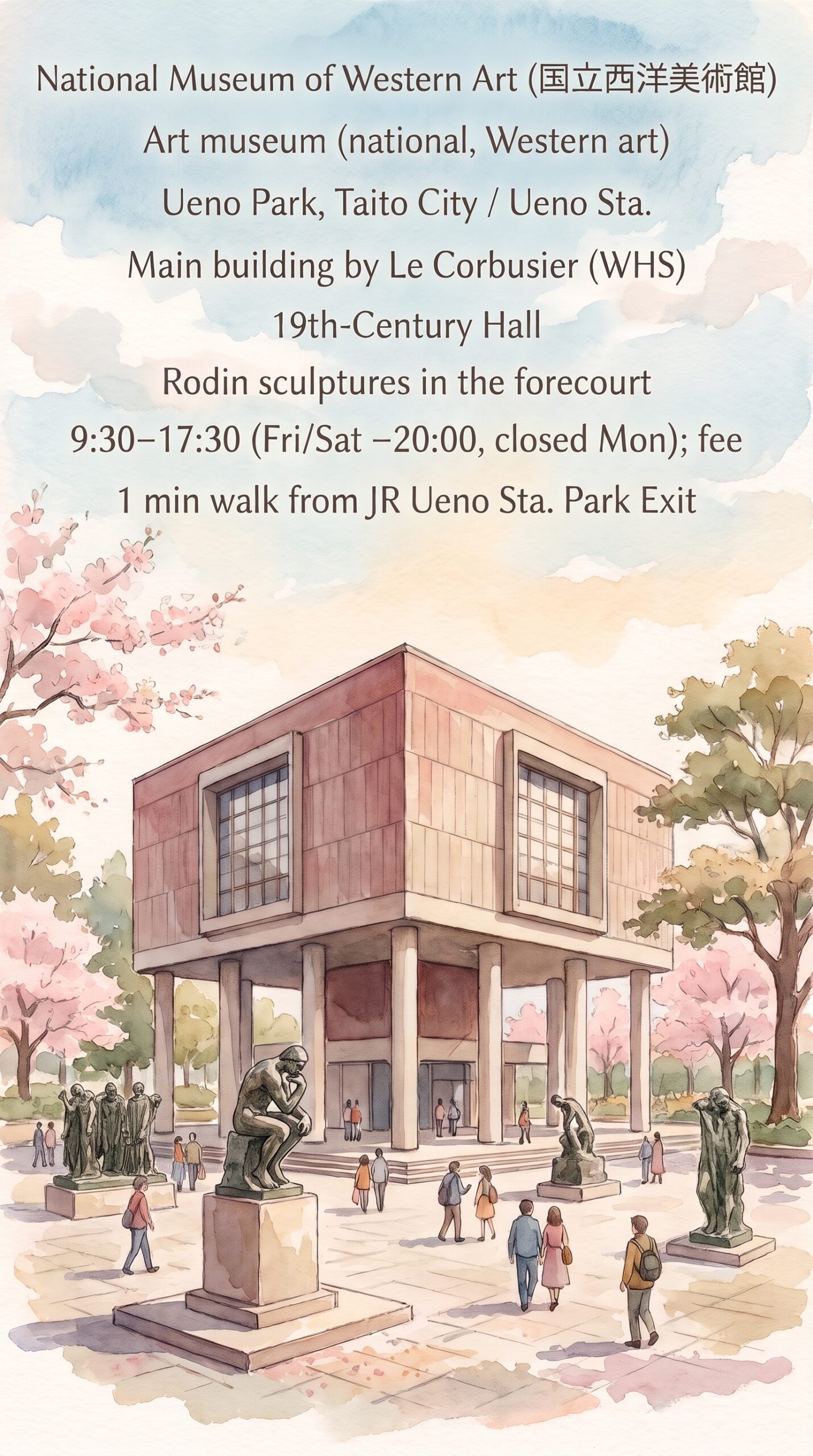
The main building by Le Corbusier
Enter the park from the Park Exit of JR Ueno Station and the World Heritage main building is right there on your right. The ground floor is a pilotis, with columns lifting the building, and the outer walls are clad in panels set with small pebbles. The building itself is part of the experience: the permanent collection begins in the “19th-Century Hall” on the ground floor, an atrium lit through a triangular skylight, and a ramp leads up to the first-floor galleries, the view changing as you climb.
The permanent collection and the forecourt sculptures
The permanent collection covers Western painting from the late Middle Ages to the early 20th century and modern French sculpture centred on Rodin, the French sculptor active from the late 19th to the early 20th century. Rodin’s The Thinker and The Gates of Hell stand in the forecourt, where you can see them without entering. On a few free-admission days a year the permanent collection is free, and it gets crowded.
Access and opening hours
It is about 1 minute on foot from the Park Exit of JR Ueno Station, about 7 minutes from Keisei Ueno Station (京成上野駅) and about 8 minutes from Ueno Station on the Tokyo Metro Ginza and Hibiya lines.
Opening hours, last admission and closing days vary by day and season, so check the table above.
Allow about 1–1.5 hours for the permanent collection alone.
Best time to visit
With the galleries indoors, it is an easy visit on rainy days. It stays open later on Fridays and Saturdays, so you can walk the park or the zoo in the daytime and come to the museum in the evening. Popular special exhibitions can be crowded, with queues to enter, and the ticket window may stop selling same-day tickets when busy, so buying online in advance is safer. CAFÉ Suiren (すいれん) and the museum shop on the ground floor can be used without an admission ticket.
Nearby spots
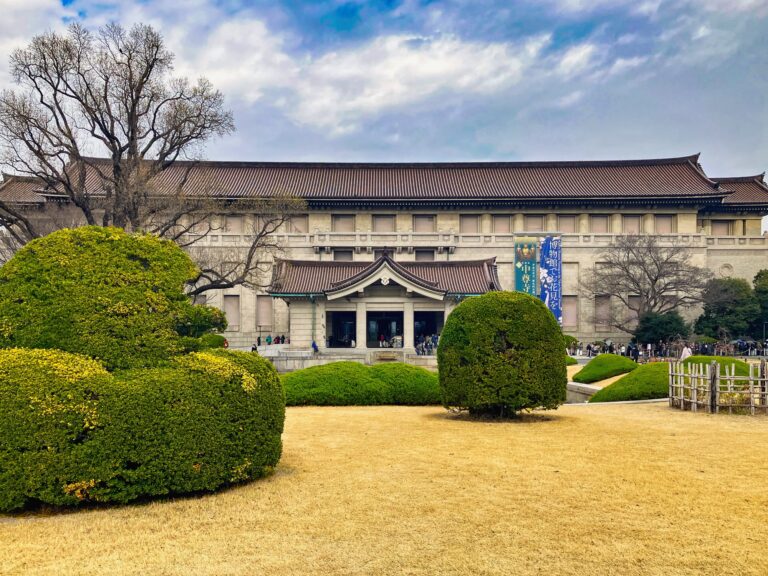
The museum is near the entrance of Ueno Park, and the Tokyo National Museum lies further into the park. Combining the museums makes a full day in Ueno.
Summary
The National Museum of Western Art opened in 1959 around the Matsukata Collection and is Japan’s national museum of Western art. Its World Heritage main building and the Rodin sculptures in the forecourt are right by the Park Exit of Ueno Station.
Basic information
| Name | National Museum of Western Art (国立西洋美術館) |
| Address | 7-7 Ueno-koen, Taito City, Tokyo |
| Opening hours | 9:30–17:30 (until 20:00 Fri & Sat; last entry 30 min before closing) |
| Closed | Mondays (next weekday if a holiday), 28 Dec–1 Jan |
| Admission | Permanent collection: adults 500 yen, university students 250 yen (free for high school students and under, under-18s, aged 65 and over) |
| Access | About 1 min walk from JR Ueno Station (Park Exit) |
| Phone | 050-5541-8600 (Hello Dial) |
| Official website | https://www.nmwa.go.jp/en/ |
Information checked on November 26, 2026 (opening hours, closing days and permanent exhibition fees) / Official source checked: The National Museum of Western Art, Tokyo official website
Google Map
Nearby sights

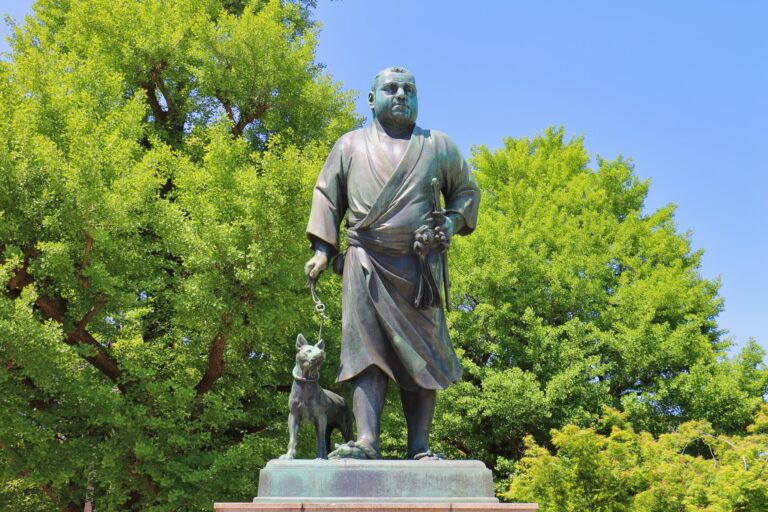
In the same park (a short walk)

About 5 min on foot

Head on from Tokyo to Kamakura
From Ueno, JR reaches Kamakura in about 1 hour 10 minutes. Change to the Yokosuka Line at Tokyo Station. Temples, shrines and the sea: discover the old capital in our Kamakura Travel Guide.