
Showa Kinen Park (国営昭和記念公園)
Flower fields and a Japanese garden on a former airfield
Quick facts
| Hours | March–October: 9:30–17:00 (until 18:00 on weekends and public holidays, April–September); November–February: 9:30–16:30. The free Midori-no-Bunka Zone opens at 8:30 |
|---|---|
| Last entry | Not stated for the park (Japanese Garden: until 30 minutes before closing) |
| Fees | Adults (high school age and over): 450 yen / seniors 65+: 210 yen / junior high school age and under: Free. The Midori-no-Bunka Zone is free |
| Closed | December 31, January 1, and from the third Monday to Friday of January. May close in bad weather |
| Reservations | Not needed for entry. Some events, such as the autumn night illumination of the Japanese Garden, need a separate ticket (see the official website) |
| Best time to visit | Weekdays. Gates and stations get crowded on weekends and holidays when flowers are at their best |
| Time needed (approx.) | Half a day for a few areas; a full day to see the flower fields and gardens widely |
| Access notes | Nishi-Tachikawa Gate: about 2 min on foot from the Park Exit of Nishi-Tachikawa Station (JR Ome Line). From the North Exit of JR Tachikawa Station: about 10 min to Akebono Entrance (free zone), about 18 min to Tachikawa Gate. Choose the entrance closest to where you want to go |
| Checked / official info | Checked on November 21, 2026 Official website |
What Is Showa Kinen Park (国営昭和記念公園)? | History and Origins
Showa Kinen Park (国営昭和記念公園) is a national government park of about 180 hectares spanning the cities of Tachikawa (立川) and Akishima (昭島) in western Tokyo. It was built on the site of the former Tachikawa Airfield used by the U.S. military, as a project to mark 50 years of the reign of Emperor Showa (昭和天皇), who reigned from 1926 to 1989. The first section opened in 1983. Under the theme “restoring greenery and enriching people’s lives,” it is divided into five zones of open lawns, flower fields, a Japanese garden around a pond, woodland and children’s play areas.
Besides the paid area, the Midori-no-Bunka Zone (みどりの文化ゾーン) near Tachikawa Station is free to enter and has the Showa Emperor Memorial Museum (昭和天皇記念館). A dedicated cycling course loops through the park, and you can get around by rental bicycle or on the Park Train, a road train that stops at the main facilities.
Highlights
Minna no Harappa Meadow and the Flower Fields
Minna no Harappa (みんなの原っぱ), meaning “everyone’s meadow,” is an 11-hectare lawn in the middle of the park, with a single giant zelkova tree more than 20 m tall at its center. In its flower fields and on Hana no Oka (花の丘), the park’s largest flower field, rapeseed blossoms and poppies bloom in spring and cosmos in autumn; the flowers and their locations change from year to year. In spring you can also see tulips at the Keiryu Plaza (渓流広場) and about 1,500 cherry trees across the park, including old Somei-yoshino trees in the Cherry Garden (桜の園) whose branches hang low.
The Box-Shaped Ginkgo Trees of the Canal
Leading in from Tachikawa Gate, the Canal (カナール) is a straight 200-meter waterway with five fountains, lined on both sides by 106 ginkgo trees planted symmetrically in double rows. The trees are trimmed flat on top and on the sides, like boxes. Because of the aviation height limit for Japan’s Self-Defense Forces runway next to the park, the trees must be kept to 7 m, so instead of simply cutting them off, the park shapes them to match the straight lines of the canal. In autumn they turn yellow, along with the Katarai Ginkgo Avenue (かたらいのイチョウ並木) in the plaza zone.
Japanese Garden and Bonsai Garden
The Japanese Garden (日本庭園) in the forest zone covers about 6 hectares and opened in 1997. It is a stroll garden laid out around a pond, designed so the view changes as you walk. To the north, an artificial hill rising 30 m was built and “borrowed” as a backdrop, a Japanese garden technique called shakkei that makes the garden feel deeper. By the pond stands Kanfutei (歓楓亭), a teahouse in the sukiya style, a refined, rustic architecture used for tea, where you can be served matcha green tea with a Japanese sweet. A bonsai garden sits inside the Japanese Garden. Visitors are asked not to eat or spread picnic sheets in the garden.
Children’s Forest
The Children’s Forest (こどもの森) has play equipment such as Kumo no Umi (雲の海), a white dome you bounce on like a giant trampoline (for junior high school age and under), the Rainbow Hammock (虹のハンモック), which the park calls the largest in Japan (for elementary school age and under), and the Mist Forest (霧の森), where white mist fills the woods. Kumo no Umi cannot be used when wet from morning dew or rain, and the mist runs from March to November.
Access and Opening Hours
The nearest station is Nishi-Tachikawa Station (西立川駅) on the JR Ome Line (青梅線); Nishi-Tachikawa Gate is about 2 minutes on foot from its Park Exit. From the North Exit of JR Tachikawa Station (立川駅), it is about 10 minutes to Akebono Entrance in the free zone and about 18 minutes to Tachikawa Gate; from Tachikawa-Kita Station (立川北駅) on the Tama Monorail, Akebono Entrance is about 8 minutes away. From Shinjuku Station, take a Chuo Special Rapid train on the JR Chuo Line to Tachikawa, then change to the Ome Line for one stop to Nishi-Tachikawa: about 45 minutes in total to Nishi-Tachikawa Gate. From Tokyo Station, the same route takes about 1 hour.
There are five entrances to the paid area and three to the free zone. The park is large, so choosing the entrance closest to where you want to go saves a lot of walking. At the automatic gates of Tachikawa, Nishi-Tachikawa and Sunagawa (砂川), you can tap a transport IC card such as Suica or PASMO to enter (adult fare only). You can re-enter on the same day if you tell the gate staff when you leave. Hours change with the season, and the park closes earlier from November to February. Wheelchairs and strollers can be borrowed free at each entrance, and the main paths of the Japanese Garden are passable with both. Packed lunches are welcome, but drones are not allowed. Allow about half a day for a few areas, or a full day to see the flower fields and gardens widely.
Best Time to Visit
In spring, rapeseed blossoms, cherry blossoms, tulips and nemophila bloom one after another. In autumn, the cosmos are followed by yellow ginkgo leaves, usually from late October to late November, and red maples in the Japanese Garden, usually from late October to early December. Gates and the stations on the way home get crowded on weekends and holidays when the flowers peak. In some years the Japanese Garden is lit up at night in autumn; night viewing needs a ticket separate from park admission.
Nearby Spots
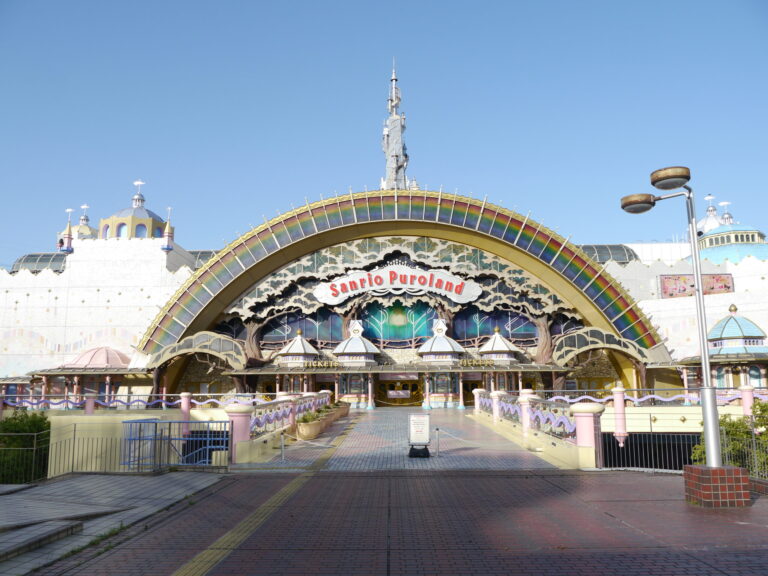
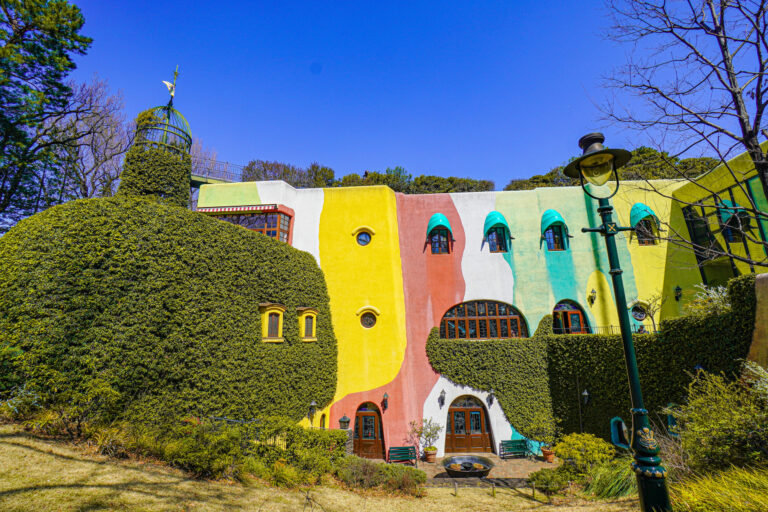
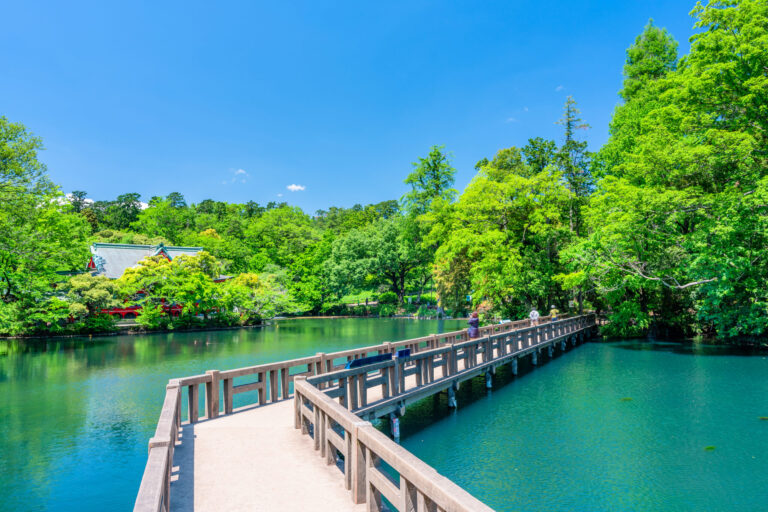
From Tachikawa-Kita Station, the Tama Monorail reaches Tama-Center Station in about 25 minutes, close to Sanrio Puroland (サンリオピューロランド), the indoor theme park of Hello Kitty and other Sanrio characters. Heading east from Tachikawa on the JR Chuo Line, you can stop at the Ghibli Museum, Mitaka (三鷹の森ジブリ美術館), the museum of the Studio Ghibli animation studio, about 15 minutes on foot from Mitaka Station (timed tickets booked in advance), or at Inokashira Park (井の頭恩賜公園), a short walk from Kichijoji Station.
Summary
Showa Kinen Park is a 180-hectare park on a former airfield where you can walk or cycle between seasonal flower fields, box-trimmed ginkgo trees and a pond-centered Japanese garden. Pick the entrance nearest to what you want to see before you set off.
Basic Information
| Item | Details |
|---|---|
| Name | Showa Kinen Park (国営昭和記念公園) |
| Address | 3173 Midoricho, Tachikawa-shi, Tokyo (東京都立川市緑町3173, park management center) |
| Highlights | Minna no Harappa meadow (giant zelkova), Hana no Oka flower field, Cherry Garden, ginkgo trees of the Canal, Katarai Ginkgo Avenue, Japanese Garden, bonsai garden, Children’s Forest |
| Things to do | Walking the flower fields and gardens, cycling (rental bicycles), Park Train, play equipment in the Children’s Forest, matcha at the Japanese Garden teahouse |
| Hours | March and October: 9:30–17:00 / April–September: 9:30–17:00 (weekends and public holidays until 18:00) / November–February: 9:30–16:30. Midori-no-Bunka Zone opens at 8:30 (until 18:00 April–September, 17:30 from the spring equinox to the end of March). Japanese Garden until 30 minutes before closing |
| Closed | December 31, January 1, third Monday to Friday of January; temporary closures in bad weather |
| Admission | Adults (high school age and over): 450 yen / seniors 65+: 210 yen / junior high school age and under: Free / groups (20+ people of elementary school age and over): adults 290 yen. Midori-no-Bunka Zone: Free |
| Reservations | Not needed for entry (separate tickets for some events) |
| Access | Nishi-Tachikawa Gate: JR Ome Line Nishi-Tachikawa Sta. Park Exit, about 2 min / Akebono Entrance: JR Tachikawa Sta. North Exit, about 10 min; Tama Monorail Tachikawa-Kita Sta., about 8 min / Tachikawa Gate: JR Tachikawa Sta. North Exit, about 18 min / Akishima Gate: JR Ome Line Higashi-Nakagami Sta. North Exit, about 10 min / Sunagawa Gate: Seibu Haijima Line Musashi-Sunagawa Sta., about 20 min |
| Parking | Yes (Tachikawa, Nishi-Tachikawa and Sunagawa entrances; no reservations) |
| Notes | Transport IC cards work at the automatic gates of Tachikawa, Nishi-Tachikawa and Sunagawa for the adult fare only. Please refrain from eating, using picnic sheets or bringing pets in the Japanese Garden. No drones. Pets allowed with a signed pledge form. Same-day re-entry (ask gate staff) |
| Restrooms | Yes (accessible restrooms near the main facilities; baby rest rooms) |
| Official website | https://www.showakinen-koen.jp/ (Japanese) |
Information checked on November 21, 2026 (opening hours, closed days and admission fees) / Official source checked: Showa Kinen Park (Showa Memorial Park) official website
Google Map
Nearby sights

Tama Monorail, Tachikawa-Kita to Tama-Center, about 25 min

JR Chuo Line, Tachikawa to Mitaka, about 20 min + about 15 min walk
JR Chuo Line, Tachikawa to Kichijoji, about 25 min + about 5 min walk

Head on from Tokyo to Kamakura
From Tachikawa Station, the JR Nambu Line and the JR Yokosuka Line reach Kamakura in about 1 hour 40 minutes. Change from the Nambu Line to the Yokosuka Line at Musashi-Kosugi. Temples, shrines and the sea: discover the old capital in our Kamakura Travel Guide.