
Meiji Jingu (明治神宮)
A shrine to Emperor Meiji in a forest of donated trees
Quick facts
| Gate hours | Set by sunrise and sunset, so they change every month. Gates open between 5:00 (May–August) and 6:40 (December–January) and close between 16:00 (December) and 18:30 (June). See the monthly table below |
|---|---|
| Fees | Free to visit (Inner Garden: 500 yen maintenance fee; museum charged separately) |
| Closed | Open every day |
| Reservations | Not needed (individual prayer rituals are booked on the day) |
| Best time to visit | Right after the gates open, or weekday mornings. Irises usually bloom in June |
| Time needed (approx.) | 1 hour for the shrine; 2 hours with the garden or museum |
| Access notes | The Harajuku Gate is right by JR Harajuku Station and Meiji-jingumae (Harajuku) Station (Tokyo Metro). From any gate it is about a 10-minute walk to the main shrine |
| Checked / official info | Checked on November 17, 2026 Official website |
What Is Meiji Jingu (明治神宮)? | History and Origins
Meiji Jingu (明治神宮) is a Shinto shrine dedicated to Emperor Meiji (明治天皇), who reigned from the late 19th to the early 20th century as Japan modernized, and his wife, Empress Shoken (昭憲皇太后). It was founded in 1920 in Yoyogi (代々木), an area closely tied to the couple, in response to wishes from people across the country. Entry is free, and it is open every day of the year.
The shrine forest covers about 70 hectares and was planted by hand with around 100,000 trees donated from all over Japan. Forestry scholar Honda Seiroku (本多静六) and his colleagues designed it with the forest of a hundred years later in mind. The name Yoyogi is said to come from the great fir trees that stood here for generations.
Highlights
The Forest Approach and the Great Torii
The approach runs through the planted forest, so even though Harajuku Station is just outside, once you pass the first torii (the gate marking a shrine’s sacred ground) the woods close in, and even in summer the shade feels cool. From the Harajuku Gate the path dips gently downhill, crosses a bridge and continues along a gravel approach. Near the main shrine stands the Otorii (大鳥居), the largest wooden torii of its style in Japan: 12 m tall and made of cypress over 1,500 years old found in Taiwan.
The Main Shrine
The present main shrine was rebuilt after the war, the original buildings having been lost in wartime fires. Photography is prohibited in front of the main shrine where people are praying, and visitors are asked not to take photos at the amulet counters. On weekends you may see a Shinto wedding procession crossing the grounds. A ramp gives wheelchair access to the main shrine.
The Inner Garden and Kiyomasa’s Well
Meiji Jingu Gyoen (明治神宮御苑), the Inner Garden, is said to have been laid out by Emperor Meiji for Empress Shoken, and visitors pay a maintenance fee to enter. Its iris field holds about 1,500 plants of some 150 varieties, usually at their best in June. Kiyomasa’s Well (清正井) is said to have been dug by Kato Kiyomasa (加藤清正), a warlord of the late 16th and early 17th centuries, but nobody knows whether he really did; it is a natural spring fed by shallow groundwater. About 60 liters a minute flow out at around 15°C all year, and lines form in iris season and on holidays.
Meiji Jingu Museum and the Treasure House
Designed by architect Kengo Kuma (隈研吾), the Meiji Jingu Museum (明治神宮ミュージアム) displays the shrine’s treasures. There is an admission fee, and preschool children enter free. The Treasure House (宝物殿), an Important Cultural Property (a national designation for valuable buildings and objects), is normally closed and opens only at certain times.
Omikuji and Goshuin
Omikuji are paper fortunes drawn at shrines. Meiji Jingu’s version, Omigokoro (大御心), gives a waka poem written by Emperor Meiji or Empress Shoken with an explanation, instead of good or bad luck. Goshuin, handwritten shrine seals collected in a special book, are issued at the goshuin counter until the gates close. Individual prayer rituals are held at the Kaguraden (神楽殿), the hall where priests perform prayers for visitors, and are booked on the day with no reservation. See the basic information table for reception hours and the prayer fee. Credit cards are not accepted at the amulet counters, the Kaguraden or the goshuin counter, but restaurants and shops take them.
Access and Opening Hours
The southern Harajuku Gate (原宿口) is right by JR Harajuku Station and Meiji-jingumae (Harajuku) Station (明治神宮前〈原宿〉駅) on the Tokyo Metro. There are also the northern Yoyogi Gate (代々木口) and the western Sangubashi Gate (参宮橋口), and from any of them it is about a 10-minute walk to the main shrine. The approaches are gravel with paved strips along the edges, though these break off in places and the western approach has none. The Inner Garden has dirt paths with steps and roots, which are difficult in a wheelchair. There is nowhere to leave suitcases on the grounds. Mosquitoes appear in the woods from around May, so long sleeves or insect repellent help. Allow about 1 hour for the shrine, or about 2 hours if you add the garden or museum.
Gate times follow sunrise and sunset and change each month, as shown below; New Year’s visiting days have special hours. The Inner Garden and the museum keep shorter hours than the shrine gates, and the garden stays open longer in June for the irises. The museum has regular closing days. Check the basic information table for their hours and closing days.
| Month | Gates open | Gates close |
|---|---|---|
| January | 6:40 | 16:20 |
| February | 6:20 | 16:50 |
| March | 5:40 | 17:20 |
| April | 5:10 | 17:50 |
| May | 5:00 | 18:10 |
| June | 5:00 | 18:30 |
| July | 5:00 | 18:20 |
| August | 5:00 | 18:00 |
| September | 5:20 | 17:20 |
| October | 5:40 | 16:40 |
| November | 6:10 | 16:10 |
| December | 6:40 | 16:00 |
Best Time to Visit
Right after the gates open and on weekday mornings the grounds are quiet. The first three days of the New Year, weekends and holiday periods are crowded, and entry is restricted during the New Year days. Each January, usually in the first part of the month, a yokozuna (sumo grand champion) performs a ring-entering ceremony as an offering, and June is iris season in the Inner Garden.
Nearby Spots
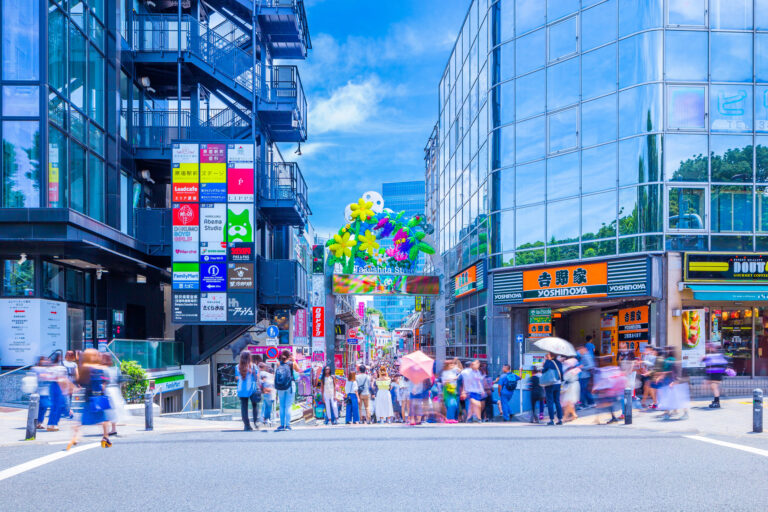
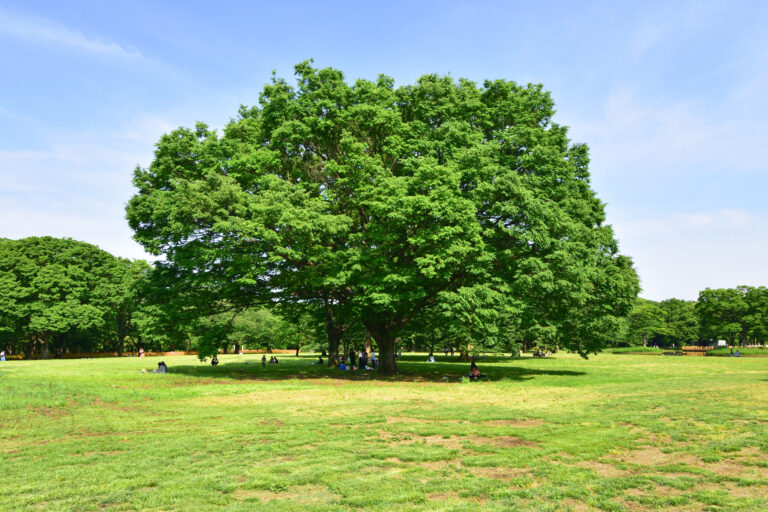
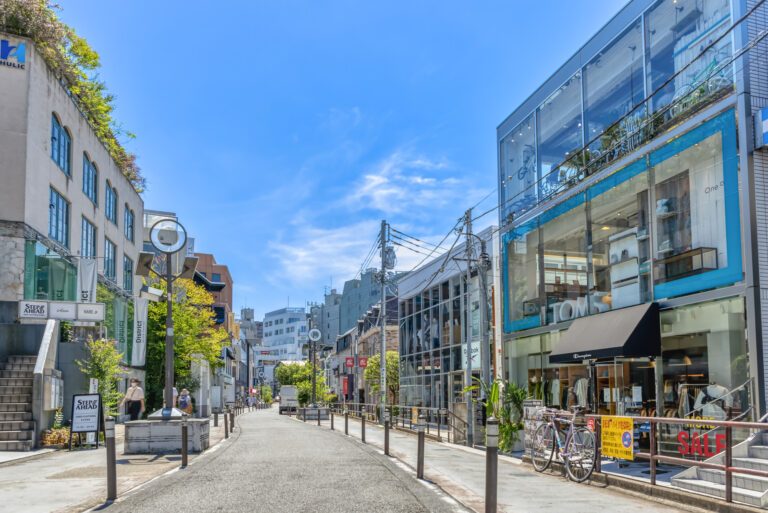
Takeshita Street (竹下通り) is across from the Harajuku Gate, and Yoyogi Park (代々木公園) is next door. Walk down Omotesando to reach Cat Street (キャットストリート) and Omotesando Hills (表参道ヒルズ), turning a morning shrine visit into a Harajuku stroll.
Summary
Meiji Jingu is the 1920 shrine of Emperor Meiji and Empress Shoken, standing in a forest planted from about 100,000 donated trees. Entry is free, and gate hours change by month.
Basic Information
| Item | Details |
|---|---|
| Name | Meiji Jingu (明治神宮) |
| Address | 1-1 Yoyogi Kamizonocho, Shibuya-ku, Tokyo (東京都渋谷区代々木神園町1-1) |
| Enshrined | Emperor Meiji and Empress Shoken |
| Highlights | Planted forest of about 100,000 donated trees (about 70 ha), the Otorii (Japan’s largest wooden torii of its style), the main shrine, irises and Kiyomasa’s Well in the Inner Garden, Meiji Jingu Museum |
| Things to do | Worship, goshuin, Omigokoro omikuji, prayer rituals (no reservation), forest walk, Inner Garden |
| Gate hours | Change monthly with sunrise and sunset (January 6:40–16:20 … June 5:00–18:30 … December 6:40–16:00; see table). Special hours at New Year. Goshuin 9:00 until the gates close; prayer rituals 9:00–16:20 (Kaguraden). Inner Garden 9:00–16:30 (March–October), 9:00–16:00 (November–February), 8:00–17:00 in June (until 18:00 on weekends). Museum 10:00–16:30 (last entry 16:00) |
| Admission | Free / Inner Garden: 500 yen / Museum: Adults 1,000 yen / high school students and younger 900 yen / preschool children free / Prayer rituals: from 5,000 yen |
| Closed | Open every day (museum closed Thursdays, open if a holiday, and between exhibitions) |
| Access | Harajuku Gate right by JR Harajuku Station and Meiji-jingumae (Harajuku) Station. About 10 min walk from any gate to the main shrine |
| Notes | No photography in front of the main shrine. No suitcase storage. No credit cards at amulet counters, Kaguraden or goshuin counter. Entry restricted during the first three days of the New Year. Mosquitoes from around May (bring repellent) |
| Phone | +81-3-3379-5511 |
| Official website | https://www.meijijingu.or.jp/en/visit/ |
Information checked on November 26, 2026 (opening and closing times, Inner Garden and museum hours, closures and fees) / Official source checked: Meiji Jingu official website
Google Map
Nearby sights

about 15 min walk
about 15 min walk

about 20 min walk

Head on from Tokyo to Kamakura
From Harajuku Station, take the JR Yamanote Line one stop to Shibuya, then the JR Shonan-Shinjuku Line to reach Kamakura in about 1 hour 10 minutes. Trains bound for Zushi or Yokosuka run straight through; on trains bound for Odawara, change to the Yokosuka Line at Ofuna. Temples, shrines and the sea: discover the old capital in our Kamakura Travel Guide.