
Ginza (銀座)
Ginza’s main street of department stores, car-free on weekends
Quick facts
| Hours | Street open at all times. Pedestrian zone on Sat, Sun and holidays 12:00–18:00 (Apr–Sep) / 12:00–17:00 (Oct–Mar) |
|---|---|
| Last entry | None |
| Fees | Free |
| Closed | None (the pedestrian zone may be canceled in bad weather, over the New Year and at other times) |
| Reservations | Not needed |
| Best time to visit | Weekend and holiday afternoons in the pedestrian zone / evening lights |
| Time needed (approx.) | 20 min just to walk the stretch, half a day with shopping |
| Access notes | Nearest stations: Ginza and Ginza-itchome (Tokyo Metro) and Higashi-Ginza. For the 4-chome crossing, Ginza Sta. Exits A7/A8 (Ginza Mitsukoshi side) and A9 (SEIKO HOUSE GINZA side). For other blocks, choose the exit nearest your destination |
| Checked / official info | Checked on Nov 19, 2026 Official website / Tokyo Metropolitan Police (pedestrian zones, in Japanese) |
What Is Ginza (銀座)? | History and Origins
Ginza-dori Avenue (銀座通り) is the stretch of Chuo-dori Avenue (中央通り) running north to south through Ginza (銀座) 1-chome to 8-chome in Tokyo, the main street of Ginza, lined on both sides with department stores, international brand boutiques and long-established specialty shops.
The name “Ginza” comes from the ginza, a silver coin mint that the Edo shogunate, the samurai government founded by Tokugawa Ieyasu (徳川家康), set up here in the early 17th century. The official name of the town was Shin-Ryogaecho (新両替町), and even after the mint moved toward Nihonbashi at the end of the 18th century, only the name “Ginza” stayed with the town. In the Edo period (17th to mid-19th century), when the Tokugawa shoguns ruled from Edo, present-day Tokyo, Ginza-dori was part of the Tokaido (東海道), the highway linking Edo and Kyoto, and was lined with large merchant houses. The town’s blocks were laid out at the beginning of the Edo period, and their grid-like pattern has stayed almost unchanged for about 400 years.
After a great fire in 1872, a Western-style brick town was built to a design by the British architect Thomas Waters, and Ginza-dori was widened, divided into roadway and sidewalks, and lined with gas lamps and street trees. A monument marking the “Birthplace of Ginza” (銀座発祥の地) stands in Ginza 2-chome. In the 1910s and 1920s, the word “Gin-bura” (銀ぶら) appeared, meaning a leisurely stroll along the streets of Ginza. A story that the word comes from “drinking Brazilian coffee in Ginza” is also widely told, but it is considered a folk etymology.
Highlights
The Weekend Pedestrian Zone
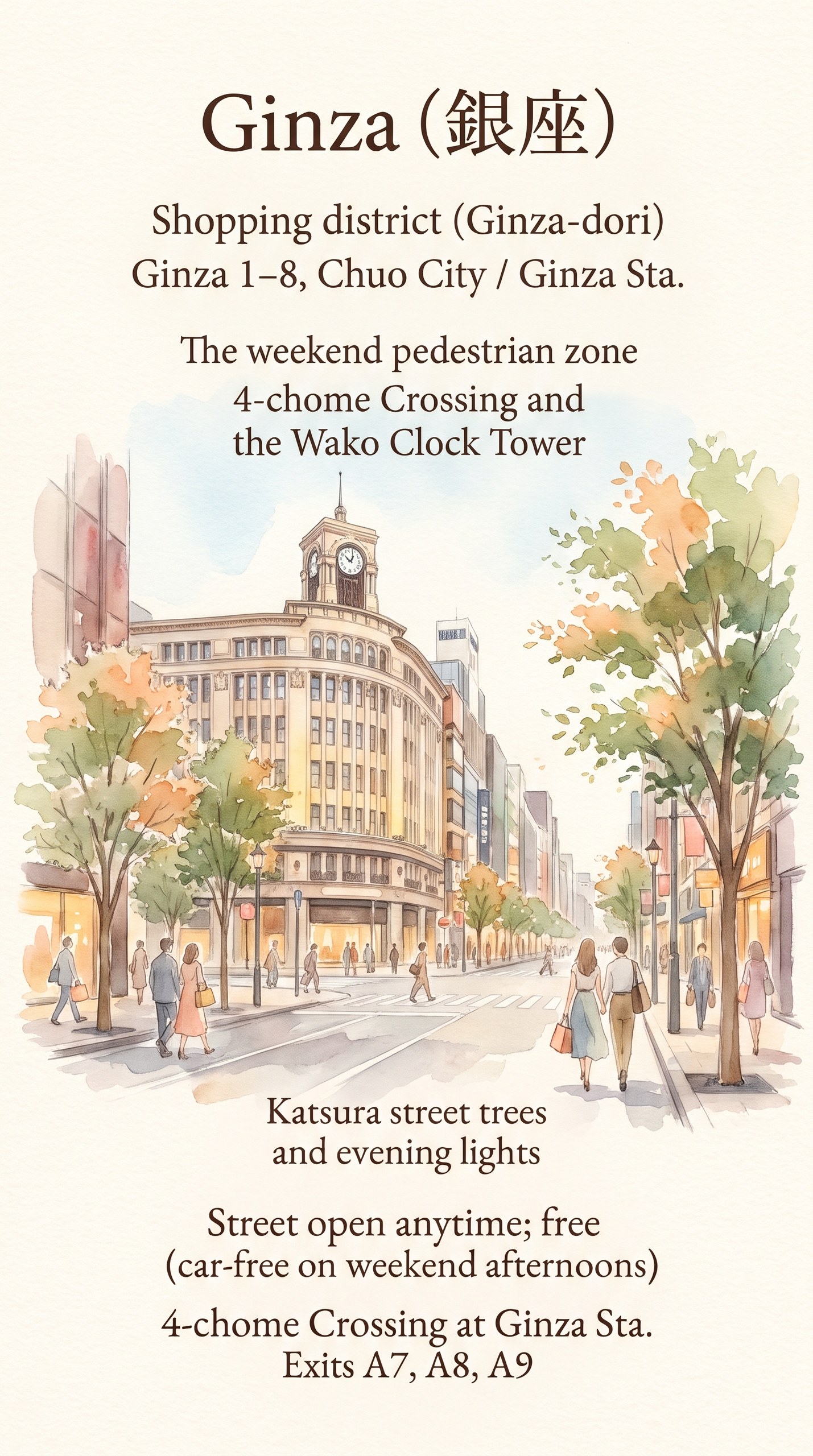
The pedestrian zone began in 1970. On Saturday, Sunday and holiday afternoons, the roughly 1.1 km from the Ginza-dori-guchi crossing to the Ginza 8-chome crossing becomes car-free, so you can walk down the middle of the closed roadway and take in the buildings on both sides and the long view down the street from the center of the road. Parasols and chairs are sometimes set out on the road where you can sit and rest. Many international travelers take souvenir photos in the middle of the street.
Kamakura’s Shopping Street by the Station
Ginza-dori is wide enough to stroll down the middle of the roadway. By contrast, Komachi-dori Street (小町通り) in Kamakura (鎌倉) is a narrow shopping street that runs north from the East Exit of Kamakura Station, lined with some 250 souvenir shops, restaurants and other stores.
The 4-chome Crossing and the Clock Tower of SEIKO HOUSE GINZA (Former Wako Main Building)
In front of SEIKO HOUSE GINZA (セイコーハウス銀座), formerly the Wako Main Building, the building with a clock tower on the corner of the Ginza 4-chome crossing, many people take photos with the clock tower behind them, and around noon its bell rings.
Katsura Street Trees and Evening Lights
The street trees are katsura, which grow heart-shaped leaves in summer, turn yellow in autumn and drop their leaves in winter, when they are decorated with illuminations. At night the street takes on a different look in the light of shop windows and signs, and on rainy days that light is reflected on the wet road and buildings.
Rooftops and Terraces Overlooking the Street
To look down on the street, go up to the rooftop garden of the GINZA SIX shopping complex or the 9th-floor terrace of Ginza Mitsukoshi (銀座三越), where you can view the townscape for free.
Access and Opening Hours
The nearest stations are Ginza and Ginza-itchome on Tokyo Metro, and Higashi-Ginza on Tokyo Metro and Toei Subway. For the Ginza 4-chome crossing, Exits A7 and A8 of Ginza Station come out on the Ginza Mitsukoshi side and Exit A9 on the SEIKO HOUSE GINZA side. Check the location of elevators from the subway stations to street level on Ginza’s barrier-free map before you go.
Walking the street is free and needs no reservation. The pedestrian zone runs on Saturday, Sunday and holiday afternoons, and it closes at a different time in April–September than in October–March (see Quick facts for the hours). It may be canceled in bad weather or over the New Year, sometimes at short notice. Allow about 20 minutes just to walk the roughly 1.1 km pedestrian zone from end to end, or about half a day if you stop at shops along the way.
You cannot ride a bicycle in the pedestrian zone; get off and walk it. Unauthorized performances, selling goods and handing out flyers are also not allowed. The sidewalks have few steps and are manageable with a stroller or wheelchair, though harder to push through crowds. At G Info, Ginza’s tourist information center, you can get help in English and pick up maps and brochures in several languages, mainly English.
Best Time to Visit
On weekends and holidays, the area around the 4-chome crossing and Ginza Mitsukoshi is the most crowded, while the 8-chome end is quieter. Golden Week, the string of holidays from late April to early May, and the Christmas season at the end of the year are especially busy. The summer midday pedestrian zone gets strong sun with little shade, so many people walk on the shaded sidewalks.
Nearby Spots
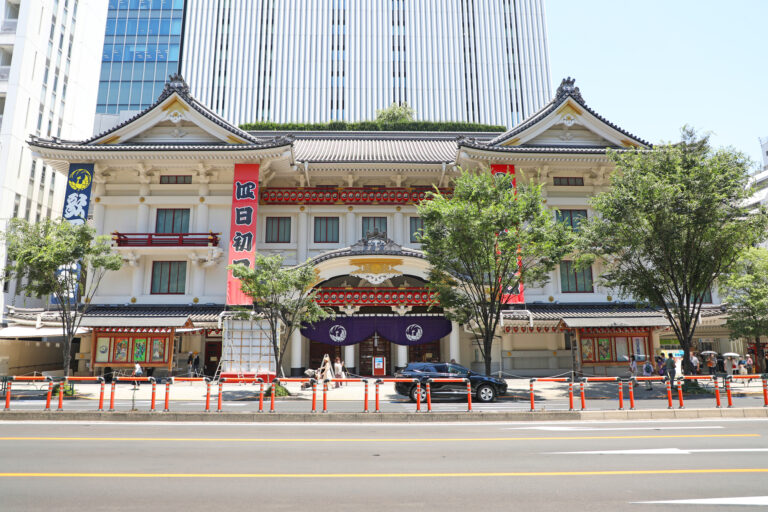
Head east along Harumi-dori Avenue (晴海通り) and you reach the Kabukiza Theatre (歌舞伎座), a theater dedicated to kabuki, Japan’s traditional stage drama, about a 5-minute walk from Exit A7 of Ginza Station, so you can combine a stroll along Ginza-dori with a kabuki show or a visit to the Kabukiza’s rooftop garden.
Summary
Ginza-dori Avenue is Ginza’s main street, named after an Edo-period silver mint. On Saturday, Sunday and holiday afternoons it becomes a pedestrian zone, and you can walk down the middle of the roadway taking in the townscape.
Basic Information
| Item | Details |
|---|---|
| Name | Ginza-dori Avenue (銀座通り; Chuo-dori, Ginza) |
| Address | Ginza 1–8 chome, Chuo City, Tokyo (Chuo-dori Avenue) |
| Highlights | The street seen from the middle of the roadway in the pedestrian zone / 4-chome crossing and the clock tower of SEIKO HOUSE GINZA (former Wako Main Building) / katsura street trees / “Birthplace of Ginza” monument |
| Things to do | Stroll the pedestrian zone (Gin-bura) / rest under the parasols and chairs on the road / look down on the townscape from the GINZA SIX rooftop garden or the Ginza Mitsukoshi 9F terrace |
| Pedestrian zone | Sat, Sun and holidays, Apr–Sep 12:00–18:00 / Oct–Mar 12:00–17:00 (Ginza-dori-guchi crossing to Ginza 8-chome crossing, about 1,100 m). Street open at all times |
| Suspension | The pedestrian zone may be suspended in bad weather, over the New Year and at other times (sometimes at short notice) |
| Admission | Free (public road) |
| Access | Tokyo Metro Ginza Sta. and Ginza-itchome Sta.; Tokyo Metro / Toei Subway Higashi-Ginza Sta. / For the 4-chome crossing: Ginza Sta. Exits A7/A8 (Ginza Mitsukoshi side), Exit A9 (SEIKO HOUSE GINZA side) |
| Official website | https://www.ginza.jp/ |
Information checked on November 26, 2026 (pedestrian-zone days, hours and suspensions) / Official source checked: GINZA OFFICIAL, "Pedestrian Zone (歩行者天国)"
Google Map
Nearby sights

about 5 min walk
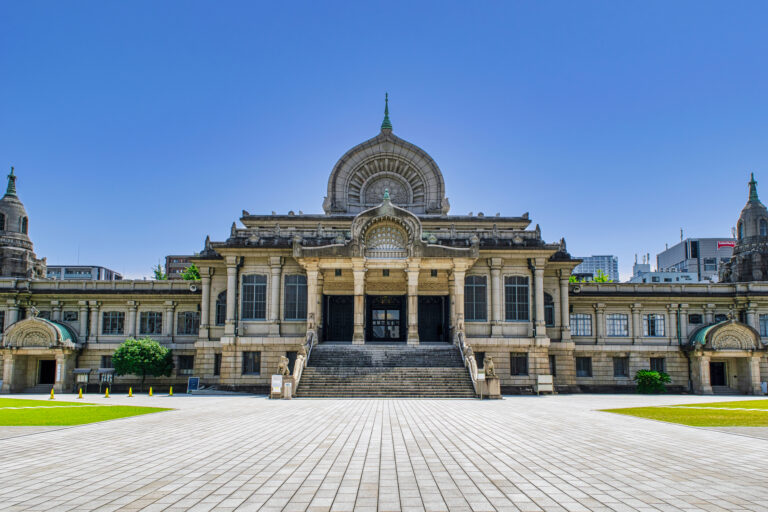
2 stops on the Tokyo Metro Hibiya Line (Ginza to Tsukiji)

Head on from Tokyo to Kamakura
From Ginza, the Tokyo Metro Ginza Line and the JR Yokosuka Line reach Kamakura in about 1 hour 5 minutes. Change from the Ginza Line to the Yokosuka Line at Shimbashi. Temples, shrines and the sea: discover the old capital in our Kamakura Travel Guide.