
Kabukiza Theatre (歌舞伎座)
A kabuki-only theater in Ginza, open even for a single act
Quick facts
| Hours | Curtain times vary by program and performance (check the performance information) |
|---|---|
| Last entry | Varies by performance (plan to be seated before curtain) |
| Fees | Vary by program and seat type. Single-act seats are priced per act. The rooftop garden and Kobikicho Plaza are free to enter |
| Closed | Rest days in each month’s run and periods with no performances |
| Reservations | Required (tickets). Kabukiza ticket page / Kabuki Bito. Single-act seats bookable online on a dedicated site from 12:00 the day before (same-day box office tickets are also reserved seats; cards accepted). Wheelchair spaces through Ticket Phone Shochiku |
| Best time to visit | Arrive well before curtain (crowded during intermissions, after the show and between the matinee and evening programs) |
| Time needed (approx.) | One act for single-act seats / the whole program for a full performance / 30 min–1 hour to look around without seeing a show |
| Access notes | Exit 3 of Higashi-Ginza Sta. (Tokyo Metro Hibiya Line, Toei Asakusa Line) connects directly to the theater’s B2 level. About 5 min walk from Exit A7 of Ginza Sta. (Tokyo Metro) |
| Checked / official info | Checked on Nov 19, 2026 Official website |
What Is the Kabukiza Theatre (歌舞伎座)? | History and Origins
The Kabukiza Theatre (歌舞伎座) in Ginza, Tokyo, is a theater dedicated to kabuki, a traditional Japanese stage art born in the Edo period (17th–19th centuries) and performed only by male actors. Shochiku (松竹), the company that produces kabuki, stages the performances, and the program changes every month.
The first Kabukiza opened in 1889. The theater’s crest, the Hououmaru (鳳凰丸), a design of a phoenix drawn in a circle that appears on treasures of Horyuji Temple (法隆寺) in Nara, has been used ever since. The theater has since burned down in fires and wartime air raids and been rebuilt each time.
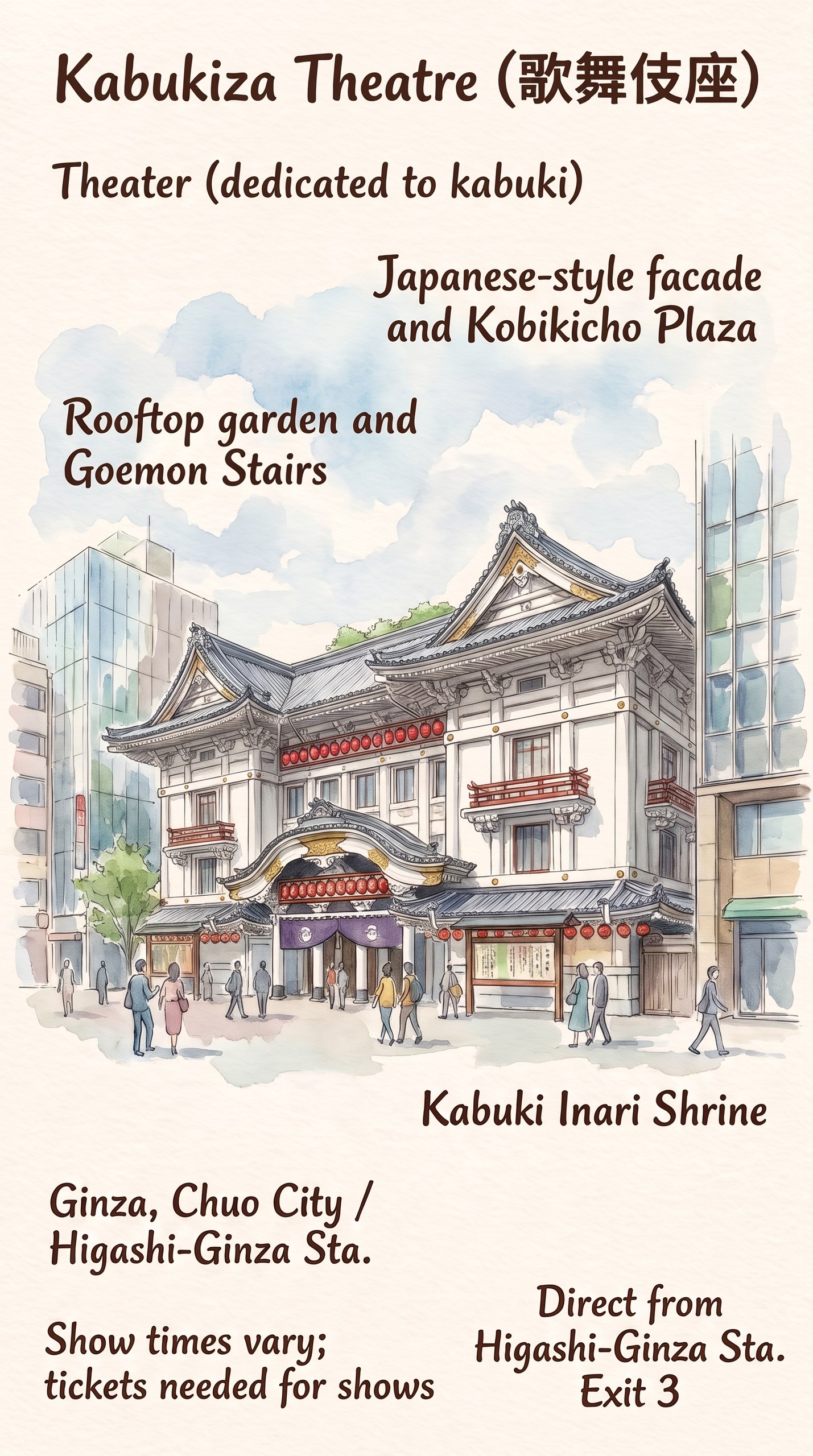
The current building, which opened in 2013, is the fifth Kabukiza. It recreates the exterior of the previous theater as closely as possible and reuses parts such as the metal ornaments of its hafu (破風), the traditional Japanese gables with triangular or curved decorative boards at the ends of a tiled roof. Behind the Japanese-style facade, the Kabukiza Tower (歌舞伎座タワー) office high-rise is built as one with the theater.
Highlights
Kobikicho Plaza, Open Without a Ticket
The B2 level, connected directly to Higashi-Ginza Station, is a plaza called Kobikicho Plaza (木挽町広場), after Kobikicho, the old name of this neighborhood. It is lined with shops selling bento boxes and souvenirs, and the ticket counter is here too. You can enter without seeing a show.
The Rooftop Garden and Goemon Stairs
The rooftop garden on the 5th floor of the Kabukiza Tower is also open without a ticket, and you can rest on benches under the eaves. The garden holds the Senjin no Hi (先人の碑), a monument honoring kabuki’s past masters, and the Mokuami stone lantern and tsukubai (黙阿弥の石燈籠と蹲踞). Kawatake Mokuami (河竹黙阿弥) was a playwright who wrote many kabuki plays from the 1850s to the Meiji era (1868–1912), and a tsukubai is a stone basin for rinsing your hands. From the vermilion Goemon Stairs (五右衛門階段), which lead down from the garden to the 4th-floor corridor, you can see the tiles of the theater’s great roof up close; hidden among them is a single phoenix tile facing the opposite way.
The Omoide no Kabukiza Corridor
The 4th-floor corridor called Omoide no Kabukiza (想い出の歌舞伎座), “Memories of the Kabukiza,” displays models of the first to fourth theaters and photos of actors from the past.
Kabuki Inari Shrine
Kabuki Inari Shrine (歌舞伎稲荷神社), a shrine to Inari, the Shinto deity of good harvests and prosperous business, stands to the right of the theater’s front as you face it, facing Harumi-dori Avenue (晴海通り), and is open to everyone, including those not seeing a show. A festival is held every February on Hatsuuma (初午), the first Day of the Horse in February.
Watching a Show and Spending the Intermissions
For the performance, you can rent an Earphone Guide that explains the story, actors and costumes, and a subtitle guide that shows subtitles in Japanese, English and Chinese, both for a fee; many people find the story hard to follow without a guide. Rows are close together and performances are long, so you watch with breaks called intermissions (makuai, 幕間) in between.
You may eat bento in your seat during intermissions, and during intermissions of 30 minutes or more you can pick up a boxed bento you have reserved. The 3rd floor has a restaurant and a stand selling Medetai-yaki (めでたい焼), a fish-shaped cake filled with red and white rice-flour dumplings. Bento and Medetai-yaki sometimes sell out before the show starts.
Single-Act Seats
Single-act seats (一幕見席) are 4th-floor seats that let you see just one act of your choice, handy when you want a short taste of kabuki. From the 4th floor you look down over the whole stage, but it is far away, so binoculars help you see the actors’ expressions. The seats are closer together than on the 1st and 2nd floors, and you can see only part of the hanamichi (花道), the walkway through the audience that actors use to reach the stage.
Access and Opening Hours
Exit 3 of Higashi-Ginza Station on the Tokyo Metro Hibiya Line and Toei Asakusa Line connects directly to the theater’s B2 level, so you can enter without going outside. From Ginza Station on Tokyo Metro, it is about a 5-minute walk from Exit A7.
Each day is divided into several programs, so curtain times and prices vary by performance. Tickets are sold on the Kabukiza ticket page and Kabuki Bito. Single-act seats can be booked online on a dedicated site from the day before (see Quick facts for the opening time), and on the day they are also sold at the theater’s box office. Both are reserved seats chosen when you buy, and credit cards are accepted at the box office too. Single-act seat holders go up to the 4th floor by a dedicated elevator outside the theater and cannot enter the lobbies or shops on floors 1 to 3.
Time needed depends on how you watch: one act with a single-act seat, or the full program including intermissions if you see a whole performance, which varies widely by program. If you only look at the exterior, the rooftop garden and Kobikicho Plaza without seeing a show, allow about 30 minutes to 1 hour.
Photos and recordings of the stage are not allowed during the performance, but you can take photos during intermissions. Silence your phone, and be careful with rustling paper or plastic bags, which carry through the auditorium. There are up to two wheelchair spaces where you can watch from your wheelchair; apply to Ticket Phone Shochiku (チケットホン松竹) on a first-come basis between the day advance sales open and the day before the performance.
Best Time to Visit
The program changes every month, so you can choose your month by the play you want to see. Restrooms and shops get crowded during intermissions, and the building and entrance are busy during breaks, after the show and at the changeover between the matinee and evening programs, so arriving well before curtain makes for a relaxed visit. Before curtain, people in kimono and travelers gather around the entrance.
Nearby Spots
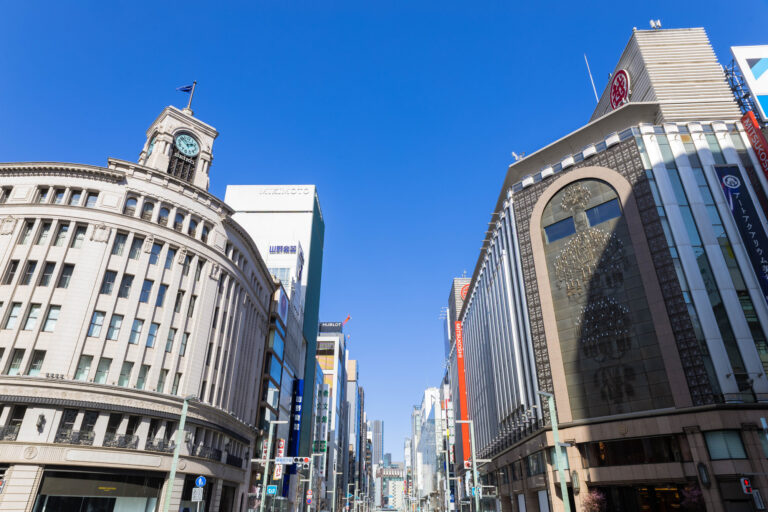
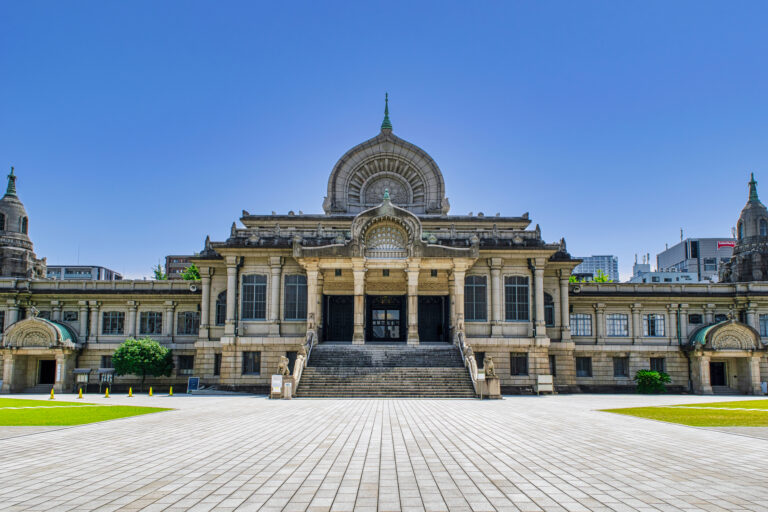
Tsukiji Hongwanji Temple (築地本願寺) is about a 5-minute walk from Exit 5 of Higashi-Ginza Station, and Tsukiji Outer Market (築地場外市場) about 5 minutes from Exits 5 and 6, so you can combine either with a show. Walk toward Ginza Station and you reach the streets along Ginza-dori Avenue (銀座通り).
Summary
The Kabukiza Theatre, opened in 2013, is the fifth theater of its name dedicated to kabuki, and besides the performances it has places you can visit without a ticket, such as the rooftop garden and Kobikicho Plaza. With a single-act seat, you can experience kabuki in a short time.
Basic Information
| Item | Details |
|---|---|
| Name | Kabukiza Theatre (歌舞伎座) |
| Address | 4-12-15 Ginza, Chuo City, Tokyo 104-0061 |
| Highlights | Japanese-style exterior recreating the previous theater / rooftop garden and Goemon Stairs (reversed phoenix tile) / 4th-floor corridor Omoide no Kabukiza / Kabuki Inari Shrine |
| Things to do | Watch kabuki (Earphone Guide; subtitle guide in Japanese, English and Chinese) / see one act from a single-act seat / eat bento in your seat at intermission / bento and souvenirs at Kobikicho Plaza |
| Hours | Curtain times vary by program and performance (check the month’s performance information) |
| Closed | Each month’s run has rest days and periods with no performances (check the performance information) |
| Admission | Varies by program and seat type (single-act seats priced per act). Earphone Guide, floors 1–3: 700 yen booked in advance (plus 2% fee), 800 yen on the day; for single-act seats on the 4th floor 500 yen (same day, cash only). Subtitle guide 1,500 yen; for single-act seats 1,000 yen (same day, cash only). Rooftop garden, Kobikicho Plaza and Kabuki Inari Shrine open without a ticket |
| Access | Tokyo Metro Hibiya Line / Toei Asakusa Line Higashi-Ginza Sta. Exit 3, direct connection / Tokyo Metro Ginza Sta. Exit A7, about 5 min walk |
| Restrooms | Yes (barrier-free restrooms; for ticket holders). Wheelchair spaces for watching (up to 2; reservation required) |
| Official website | https://www.kabuki-za.co.jp/ |
Information checked on November 27, 2026 (Earphone Guide and subtitle guide prices) / Official source checked: Earphone Guide official website, Kabukiza Theatre earphone guide and captioning service notice
Google Map
Nearby sights

about 5 min walk
about 5 min walk

Head on from Tokyo to Kamakura
From Tokyo Station, the JR Yokosuka Line reaches Kamakura in about 1 hour. Temples, shrines and the sea: discover the old capital in our Kamakura Travel Guide.