
Kameido Tenjin Shrine (亀戸天神社)
A Tenjin shrine of plum and wisteria, over arched bridges
Quick facts
| Hours | Main Hall 6:00–17:00. The grounds are open 24 hours |
|---|---|
| Last entry | Until the Main Hall closes |
| Fees | Free |
| Closed | None (open every day) |
| Reservations | Not needed (prayer rituals cannot be booked; same-day reception about 9:00–16:00) |
| Best time to visit | Weekday daytime without festivals. Plum, wisteria and chrysanthemum seasons get crowded |
| Time needed | About 20 min (30 min or more to see the sub-shrines and stone monuments) |
| Access notes | About 15 min walk from the North Exits of JR Kameido and Kinshicho (錦糸町) stations. There are stone steps at the main torii; for step-free entry use the east gate |
| Checked / official info | Checked on Nov 15, 2026 Official website |
What is Kameido Tenjin Shrine (亀戸天神社)? | History and origins
Kameido Tenjin Shrine (亀戸天神社) in Kameido, Koto City (江東区), Tokyo enshrines Tenman Okami (天満大神), the deified scholar Sugawara no Michizane (菅原道真), a 9th-century statesman worshipped after his death as the god of learning. Ame-no-Hohi-no-Mikoto (天菩日命), ancestral deity of the Sugawara family, is enshrined alongside him. According to the shrine’s history, in the mid-17th century Sugawara Otorii Shinsuke (菅原大鳥居信祐), a priest of Dazaifu Tenmangu (太宰府天満宮) in Kyushu (the central Tenjin shrine, built over Michizane’s grave) and a descendant of Michizane, carved an image of Tenjin from a branch of Michizane’s “flying plum tree”, which legend says flew from Kyoto to Dazaifu to follow him into exile, travelled the provinces with it, and finally enshrined it in a small Tenjin shrine in Kameido village in Honjo (本所).
As Honjo was developed after the Great Meireki Fire (明暦の大火), which burned most of Edo (present-day Tokyo) in the mid-17th century, the fourth shogun Tokugawa Ietsuna (徳川家綱), Japan’s military ruler at the time and a devoted follower of Tenjin, donated the land for a guardian shrine, and the main hall, corridors, Shinji-ike Pond (心字池) and arched Taikobashi bridges (太鼓橋) were built in the manner of Dazaifu. The shrine was long known as “Higashi Dazaifu Tenmangu (東宰府天満宮)”, the Dazaifu of the east; it took its present official name in 1936. It is also counted among the “Tokyo Jissha” (東京十社), ten major shrines of Tokyo.
Highlights
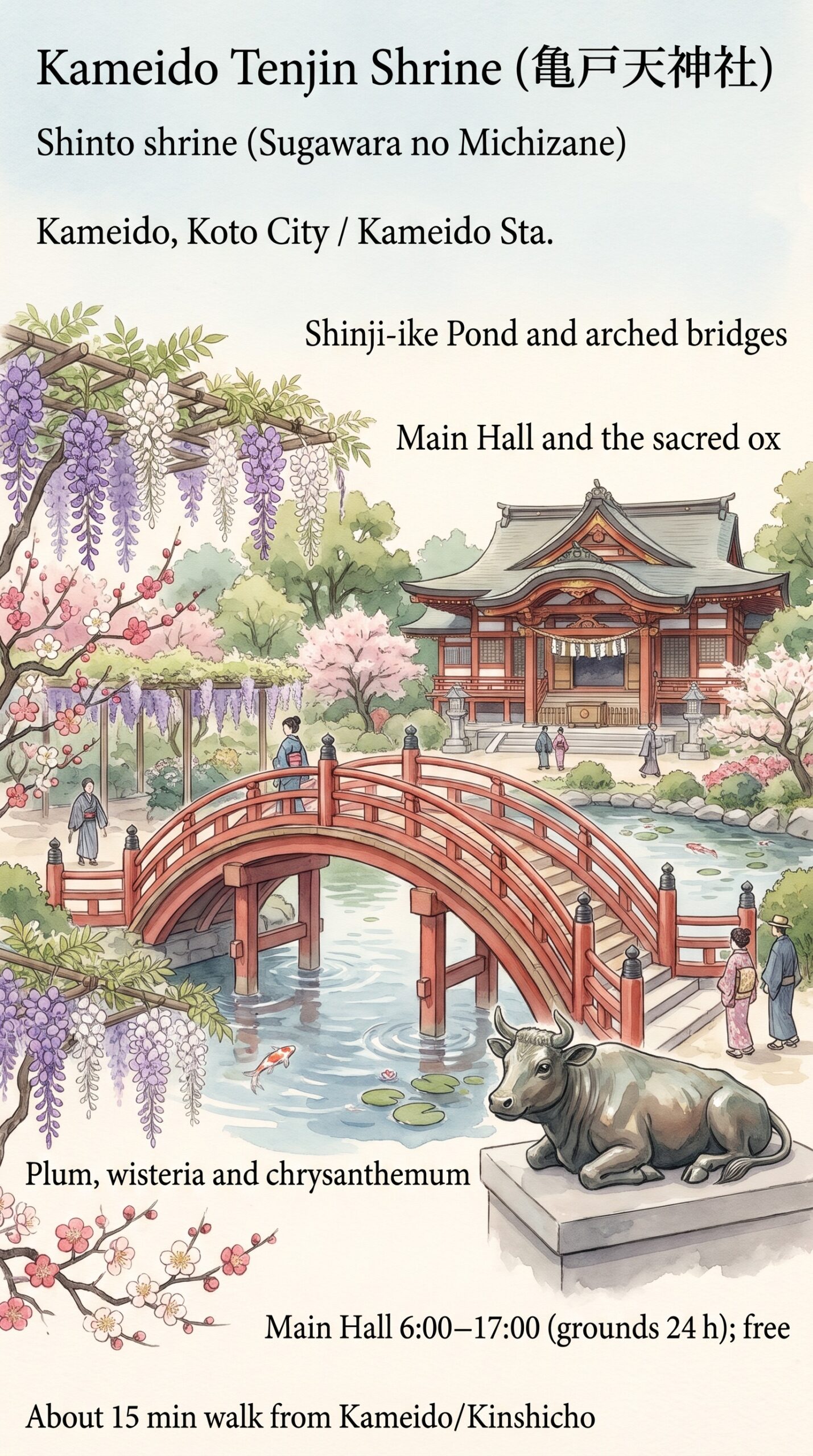
The grounds are laid out like Dazaifu Tenmangu: from the great torii you cross the three bridges over Shinji-ike Pond to reach the Main Hall.
Shinji-ike Pond and the arched bridges
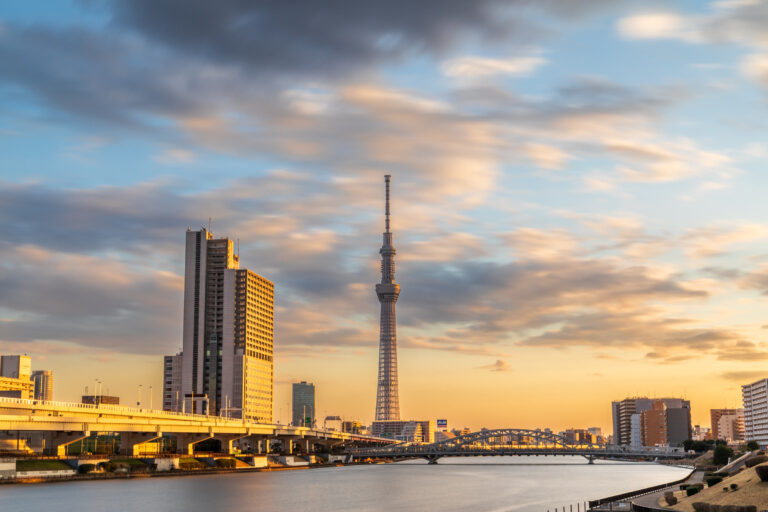
The three bridges over the pond are said to stand for the past, the present and the future, and crossing them purifies you before you approach the deity. The vermilion arched bridges, Otokobashi and Onnabashi (男橋・女橋), curve steeply and have steps at both ends. From the top you look out over the pond and grounds, and on a clear day Tokyo Skytree (東京スカイツリー) rises beyond the shrine buildings.
The Main Hall and the sacred ox
To the left as you face the Main Hall stands a statue of the sacred ox (神牛); touching it is said to cure illness and bring wisdom. Oxen have long been revered as messengers of Tenjin, partly because Michizane was born in the year of the ox. Prayers at the Main Hall are offered from the foot of its steps.
Sub-shrines and stone monuments
By the pond stand Hanazono-sha (花園社), dedicated to Michizane’s wife Nobukiko (宣来子) and their 14 children, and Benten-sha (弁天社), for a deity who protects water. East of the Main Hall are Mitake Jinja (御嶽神社), honoring the monk Son’i, said to have been Michizane’s teacher, and Kobaiden (紅梅殿), which enshrines a seedling of the flying plum tree. More than 100 stone monuments are scattered around the grounds, including Fudezuka (筆塚), where worn-out writing brushes are laid to rest, and a haiku stone of Matsuo Basho (松尾芭蕉), the 17th-century haiku poet.
Kamakura’s Tenjin shrine
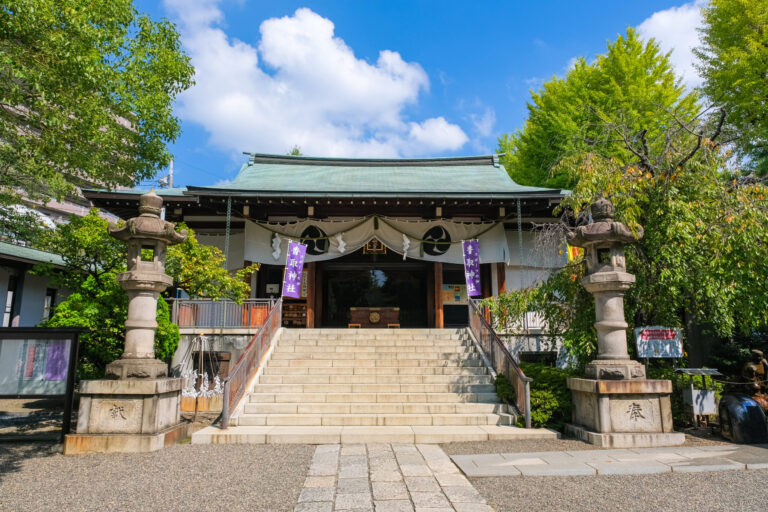
Kamakura also has a shrine to Sugawara no Michizane, Egara Tenjin Shrine (荏柄天神社).
Festivals and seasonal highlights
Known as the “Tenjin of flowers”, the shrine is famous for plum, wisteria and chrysanthemum. The shrine’s own guide gives mid-February for plum, mid-April for wisteria and early November for chrysanthemum, but the timing can shift a lot from year to year. The wisteria trellises surround the pond, so the blossoms are reflected in the water. Every year on January 24 and 25 the Usokae ritual (鷽替え) is held, in which people exchange carved wooden bullfinches (uso) to turn the past year’s bad luck into a “lie”.
Blessings and cultural significance
Dedicated to Michizane, the god of learning, the shrine draws many people praying to pass exams. Its wisteria and arched bridge appear in “One Hundred Famous Views of Edo (名所江戸百景)”, a woodblock print series by the 19th-century artist Utagawa Hiroshige (歌川広重), and it has been known for its flowers since the Edo period (17th–19th centuries). Prayer rituals cannot be booked; they are received on the day at the shrine office to the right of the Main Hall.
Goshuin and amulets
Goshuin stamps, talismans and amulets are available at the shrine office. Check the hours for talismans and amulets in the table.
Access and opening hours
Kameido Tenjin Shrine is about a 15-minute walk on level streets from the North Exit of JR Kameido Station (Sobu Line), or from the North Exit of Kinshicho Station (JR Sobu Line, Tokyo Metro Hanzomon Line). Toei Bus (都営バス) routes Ue-26 (Kameido Station – Ueno Park) and Kusa-24 (to Asakusa Kotobukicho) stop at Kameido Tenjin-mae (亀戸天神前) on Kuramae-bashi-dori (蔵前橋通り) in front of the shrine.
The Main Hall has set opening hours, while the grounds are always open. Admission is free. There are stone steps under the main torii, so with a wheelchair or stroller enter through the east gate, which gives step-free access. The arched bridges have steps, so use the path along the side of the pond. There is a wheelchair-accessible public toilet in the grounds and a free car park for worshippers. The shrine office has a room for changing nappies and nursing.
Best time and season to visit
On weekdays outside festivals and flower seasons you can walk the grounds in peace. Weekends at plum and wisteria time are crowded, and in wisteria season photographers and worshippers gather from early morning. During wisteria season the trellises are also lit up at night when the flowers are at their best. Blooming varies from year to year, so check the shrine’s announcements before you go.
Nearby spots and how to combine them
Kameido Katori Shrine (亀戸香取神社) is about a 10-minute walk away, so you can visit both shrines on a walk from Kameido Station. Tokyo Skytree is about 20 minutes on foot, or about 10 minutes on Toei Bus Ue-26 from Kuramae-bashi-dori. Walking from the Kinshicho side, you can drop in at the Sumida Edo Kiriko Museum (すみだ江戸切子館) on the way.
Summary
At Kameido Tenjin Shrine you cross the bridges of a Dazaifu-style pond to pray to Michizane. The grounds take about 20 minutes to see, and in plum, wisteria and chrysanthemum seasons the flowers frame a view that reaches to Skytree.
Basic information
| Item | Details |
|---|---|
| Name | Kameido Tenjin Shrine (亀戸天神社) |
| Reading | Kameido Tenjinsha |
| Deities | Tenman Okami (Sugawara no Michizane), Ame-no-Hohi-no-Mikoto |
| Address | 3-6-1 Kameido, Koto City, Tokyo |
| Highlights | Shinji-ike Pond and arched bridges, Main Hall and sacred ox, Hanazono-sha, Benten-sha, Mitake Jinja, Kobaiden, Fudezuka and stone monuments |
| Things to do | Worship, goshuin, prayer rituals, plum, wisteria and chrysanthemum viewing |
| Hours | Main Hall 6:00–17:00 (grounds 24 hours) / talismans & amulets 9:00–18:00 / prayer rituals about 9:00–16:00 |
| Fees | Free |
| Access | About 15 min walk from the North Exits of Kameido Station (JR Sobu Line) and Kinshicho Station (JR Sobu Line, Tokyo Metro Hanzomon Line). Toei Bus “Kameido Tenjin-mae” |
| Parking | Yes (free, worshippers only) |
| Restrooms | Yes (wheelchair-accessible public toilet) |
| Phone | 03-3681-0010 |
| Official website | https://kameidotenjin-sha.jp/ |
Information checked on November 26, 2026 (gate hours and prayer and amulet office hours) / Official source checked: Kameido Tenjin Shrine official website
Google Map
Nearby spots

about 10 min walk

about 15 min walk
about 20 min walk / about 10 min by Toei Bus


Head on from Tokyo to Kamakura
From Kinshicho Station, the JR Sobu Rapid Line reaches Kamakura in about 1 hour 10 minutes. It runs through onto the Yokosuka Line, so no change is needed. Temples, shrines and the sea: discover the old capital in our Kamakura Travel Guide.