
National Museum of Nature and Science (国立科学博物館)
Japan’s natural history and dinosaurs, in a national museum
Check first
| Opening hours | 9:00–17:00 |
|---|---|
| Last admission | 16:30 |
| Admission | Permanent exhibitions: adults and university students 630 yen. Free for high school students and under, those under 18 and those aged 65 and over (bring proof of age if you are under 18 or 65 and over). Permanent exhibitions are free on 18 May and 3 November. Special exhibitions are charged separately |
| Closed | Mondays (Tuesday if Monday is a public or substitute holiday), 28 December–1 January. Closed for fumigation (pest control) for a period around June every year. Occasional extra closures. Global Gallery B3 and part of 2F closed for now |
| Booking | Not needed for the permanent exhibitions. Special exhibitions may need timed tickets; check each exhibition’s page |
| Best time to visit | Mornings, right after opening |
| Time needed (approx.) | 2–3 hours for the permanent exhibitions |
| Access notes | About 5 min on foot from the Park Exit of JR Ueno Station (上野駅). No parking |
| Checked / official site | Checked on 16 November 2026 Official website |
What is the National Museum of Nature and Science (国立科学博物館)? | History
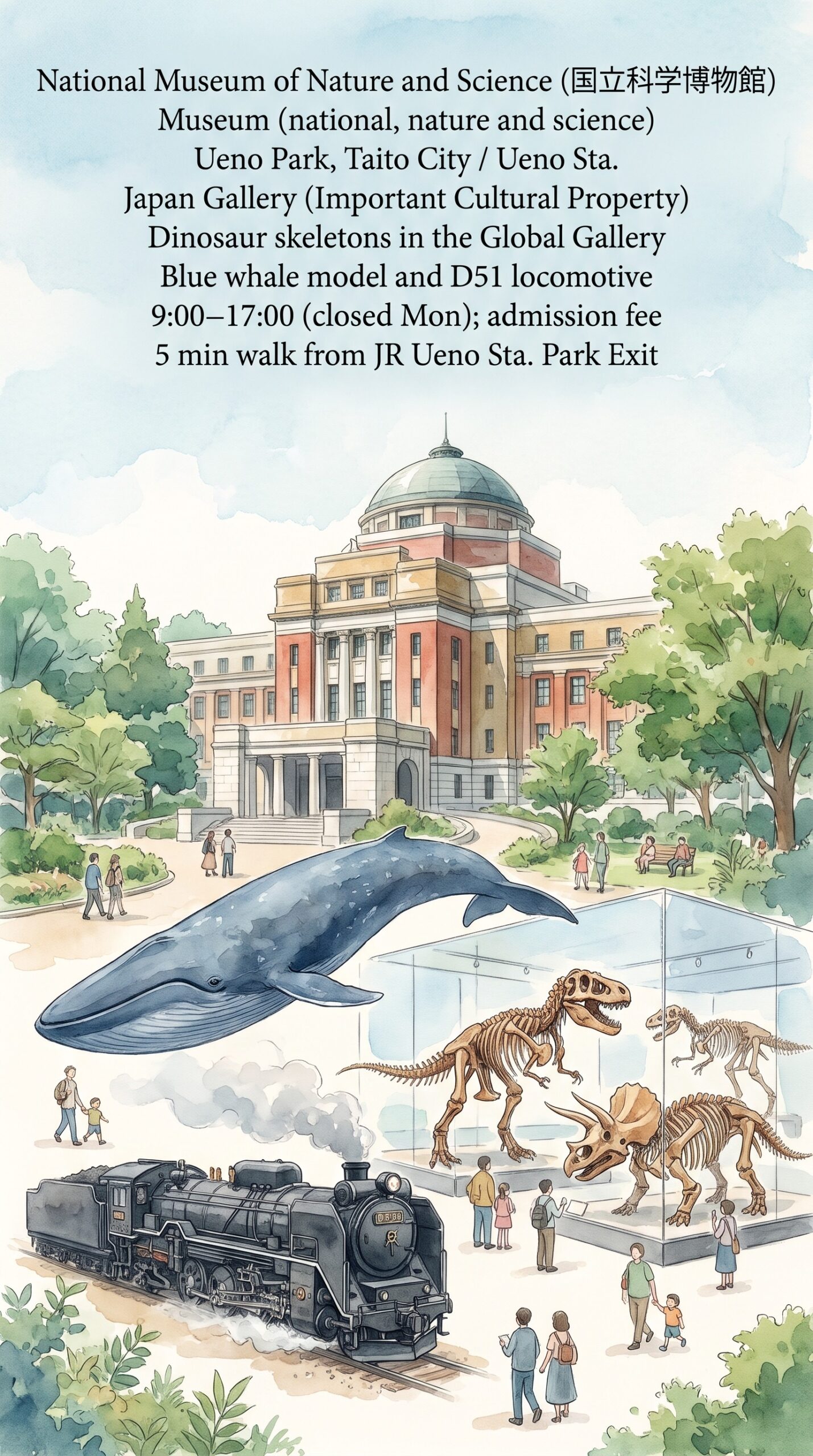
The National Museum of Nature and Science (国立科学博物館) is Japan’s national museum of natural history and the history of science and technology, in Ueno Park (上野恩賜公園). Founded in 1877, it is one of the oldest museums in Japan.
The Ueno exhibitions are housed in two buildings, the Japan Gallery (日本館) and the Global Gallery (地球館); the Japan Gallery building is an Important Cultural Property (a national designation for cultural heritage).
Highlights
The Japan Gallery
The Japan Gallery was built after the Great Kanto Earthquake (a major earthquake that struck the Tokyo region) destroyed the museum’s buildings and specimens, and opened in 1931. Its exhibits trace the natural history of Japan: how the islands formed and the history of the living things and people of Japan. The atrium of the central hall has a stained-glass ceiling depicting a phoenix, and a Foucault pendulum is on display. On the first floor you can see the Man-nen Dokei (万年時計), a multi-function clock made in the mid-19th century with traditional Japanese clockmaking skills and designated an Important Cultural Property. The second floor of the Japan Gallery also displays the stuffed body of Hachiko (忠犬ハチ公), an Akita dog said to have kept waiting at Shibuya Station for his late owner in the 1920s and 1930s.
The Global Gallery
The Global Gallery covers the history of life on Earth, dinosaur skeletons and the progress of science and technology over several floors. The third basement floor is closed for the time being while its displays are renewed, as is part of the ‘Progress of Science and Technology’ gallery on the second floor. On the roof are a herb garden and a sky deck, rest areas where food and drink are allowed (closed in bad weather).
Theater 36○
Theater 36○, on the first basement floor of the Japan Gallery, projects images over the entire inside of a dome, and visitors watch a film of about six minutes while standing on a bridge. It is included in regular exhibition admission; each showing takes 40 people on a first-come, first-served basis. Check the official website for screening times.
Outdoor exhibits
In front of the museum stand a life-size model of a blue whale and a D51 steam locomotive, which you can see from outside without entering.
Access and opening hours
It is about 5 minutes on foot from the Park Exit of JR Ueno Station, and about 10 minutes from Ueno Station on the Tokyo Metro Ginza and Hibiya lines or Keisei Ueno Station (京成上野駅). There is no parking, so come by public transport.
Closing days shift with public holidays, and there are year-end and occasional closures, so check the table above. Some special exhibitions stay open into the evening. Regular exhibition tickets can be bought at the ticket window without a reservation, and e-tickets are also available. For families, the Compass (コンパス) gallery is for children from age 0 to sixth grade together with a guardian aged 18 or over, and everyone who enters needs a paid, timed reservation. Allow about 2–3 hours for the permanent exhibitions.
Best time to visit
With everything indoors, it suits rainy, hot or cold days. The exhibitions are large and take time to see, so arriving at opening in the morning lets you go round at an easy pace. There is more than can be seen in one day, so deciding which galleries to see before you start keeps the walking down. It gets crowded on weekends, holidays and during special exhibitions, and some galleries may be closed for renovation.
Nearby spots
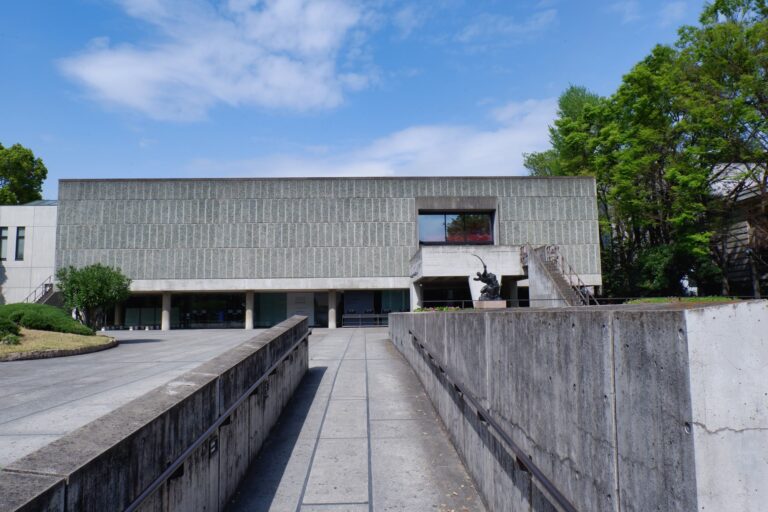
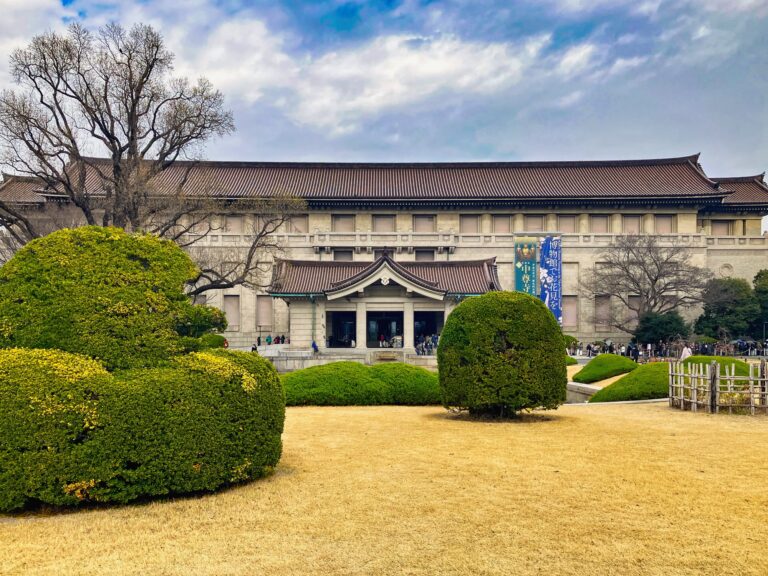
The National Museum of Western Art and the Tokyo National Museum are close by, so you can visit several museums within Ueno Park.
Summary
The National Museum of Nature and Science, founded in 1877, is Japan’s national science museum, with natural history and technology shown in the Japan Gallery and the Global Gallery. It is about 5 minutes on foot from the Park Exit of JR Ueno Station and fits easily into a rainy day in Ueno.
Basic information
| Name | National Museum of Nature and Science (国立科学博物館) |
| Address | 7-20 Ueno-koen, Taito City, Tokyo |
| Opening hours | 9:00–17:00 (last entry 16:30) |
| Closed | Mondays (Tuesday if Monday is a public or substitute holiday), 28 December–1 January. Closed for fumigation (pest control) for a period around June every year |
| Admission | Permanent exhibitions: adults and university students 630 yen (free for high school students and under, those under 18 and those aged 65 and over, with proof of age for under 18 and 65 and over; free for all on 18 May and 3 November) |
| Access | About 5 min walk from JR Ueno Station (Park Exit) |
| Parking | None |
| Phone | 050-5541-8600 (Hello Dial) |
| Official website | https://www.kahaku.go.jp/english/ |
Information checked on November 26, 2026 (opening hours, closing days and permanent exhibition fees) / Official source checked: National Museum of Nature and Science official website
Google Map
Nearby sights

About 3 min on foot

About 3 min on foot
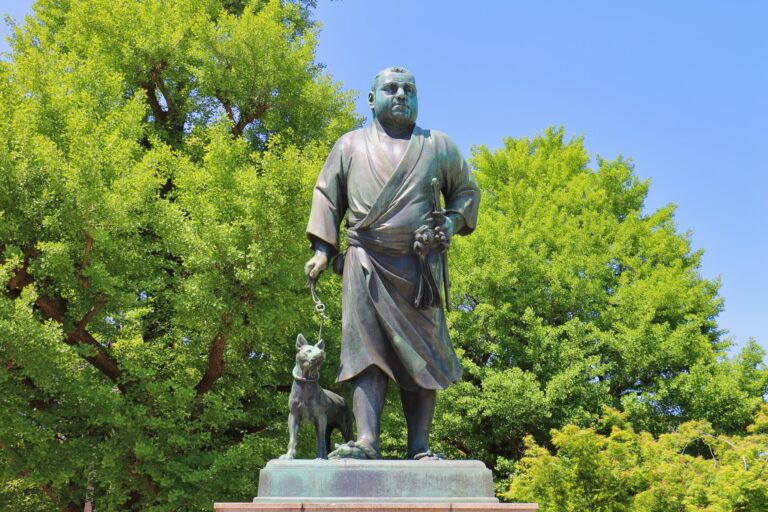
In the same park (a short walk)

Head on from Tokyo to Kamakura
From Ueno, JR reaches Kamakura in about 1 hour 10 minutes. Change to the Yokosuka Line at Tokyo Station. Temples, shrines and the sea: discover the old capital in our Kamakura Travel Guide.