
Former Tokaido Shinagawa-juku (旧東海道品川宿)
Walk the Tokaido’s first post town by signs and old shops
Quick facts
| Hours | The street is always open. Shinagawa-juku Koryukan 10:00–16:00 |
|---|---|
| Last entry | None |
| Fees | Free |
| Closed | The street never closes (Shinagawa-juku Koryukan: closed Mondays (Tuesday if Monday is a holiday); check the official website for other closing days) |
| Reservations | Not needed |
| Best time to visit | Daytime, when the shops are open. Cherry blossoms on the Meguro River in spring; the post-town festival in late September |
| Time needed (approx.) | 2 hours (Kita-Shinagawa Sta. to Aomono-yokocho Sta., 2 km) |
| Access notes | Keikyu Kita-Shinagawa Station (north entrance) to Aomono-yokocho Station (south). The honjin site is about 6 min on foot from Shimbamba Station. Some sections have no sidewalk |
| Checked / official info | Checked on Nov 19, 2026 Shinagawa Tourism Association / Shinagawa City |
What Is Former Tokaido Shinagawa-juku (旧東海道品川宿)? | History and Origins
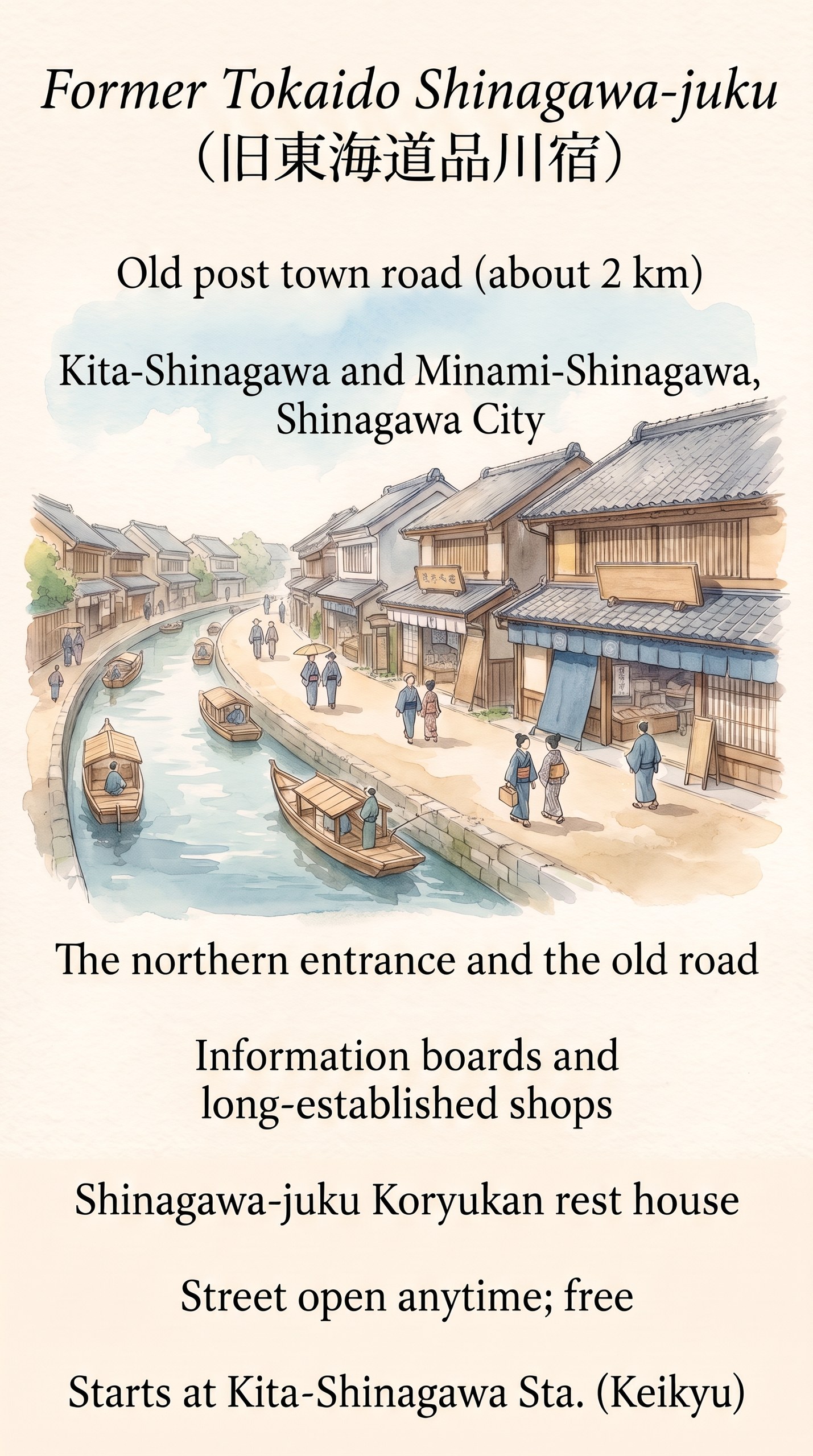
Former Tokaido Shinagawa-juku (旧東海道品川宿) was the first shukuba, or post town, counting from Nihonbashi (日本橋) in Edo, present-day Tokyo, on the Tokaido (東海道), the highway that linked Edo with Kyoto. Post towns were where travellers stayed the night and changed horses and porters. Shinagawa lay 2 ri, about 8 km, from Nihonbashi. Today a shopping street runs for about 2 km along the old road, from around Kita-Shinagawa Station to Aomono-yokocho Station on the Keikyu Line, and you can trace the post town on foot.
Even before it became a post town, Shinagawa thrived as a port at the mouth of the Meguro River (目黒川). Old documents record that in the late 14th century a tax called hobetsusen (帆別銭) was levied on ships using Shinagawa and other ports, and that it went toward rebuilding the fire-damaged halls of Engakuji Temple (円覚寺), a Zen temple in Kamakura. Shinagawa’s life as a post town began in the early 17th century, when Tokugawa Ieyasu (徳川家康), who established the Edo shogunate, the warrior government that ruled Japan from Edo, set up the system of post towns along the highways. The post town was divided by the Meguro River into Kita-Shinagawa-shuku and Minami-Shinagawa-shuku. The site of the honjin, the inn where feudal lords and other dignitaries stayed, is now Shoseki Park (聖蹟公園), where a monument stands.
Highlights
The Northern Entrance and the Line of the Old Road
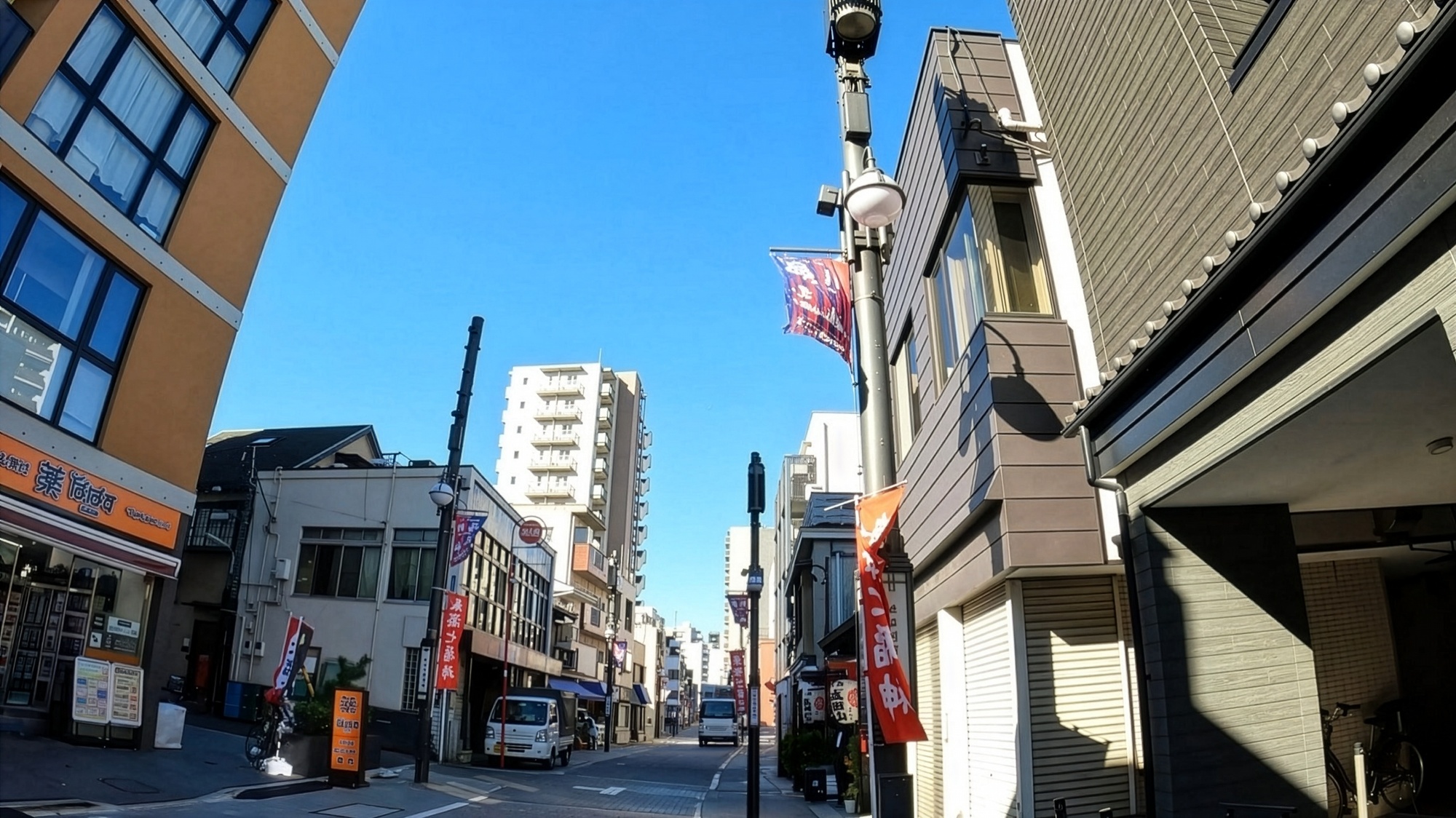
The northern entrance to the post town is just north of Kita-Shinagawa Station. The station has a single ticket gate, on the National Route 15 side; cross the railway level crossing and the shopping street begins, with a marker at the crossing reading “従是南 品川宿 地内” (“from here south lies Shinagawa-juku”). On the footpath beside Yatsuyama Bridge (八ツ山橋) stand a signpost naming the post towns and models in the shape of Mt. Fuji and Lake Biwa, Japan’s largest lake. The street, about 7 m wide, is said to keep nearly the same width and line as in the Edo period (17th to mid-19th century), and it curves gently as it runs south. Side streets running east toward the sea slope gently downhill, a trace of the shoreline the road once followed.
Information Boards and a Street of Long-Established Shops
The old road today is a shopping street where people from Kita-Shinagawa and Minami-Shinagawa do their everyday shopping, and almost no Edo-period buildings remain. Instead, information boards describing the post town in its heyday stand at intervals along the way. There are long-established shops selling nori seaweed, kimono fabrics, footwear, festival goods and tea, along with a book café and shops selling local souvenirs such as Shinagawa-maki (rice crackers wrapped in nori). Opening days and hours vary from shop to shop. Along the road are also small rest spots such as Kaido Matsu no Hiroba (街道松の広場), planted with pines given by other post towns.
Shinagawa-juku Koryukan Honjuku Oyasumidokoro
In Kita-Shinagawa, Shinagawa-juku Koryukan Honjuku Oyasumidokoro (品川宿交流館 本宿お休み処) has a free rest area, tourist information and an old-fashioned sweet shop on the 1st floor, and displays on Shinagawa-juku on the 2nd floor.
Access and Opening Hours
The northern end of the post town is Kita-Shinagawa Station (北品川駅) on the Keikyu Line, and the southern end is Aomono-yokocho Station (青物横丁駅). Shoseki Park, the honjin site, is about a 6-minute walk from Shimbamba Station (新馬場駅). Around Kita-Shinagawa Station, work is under way to raise the Keikyu Line onto an elevated track.
You can walk the street at any time, free of charge, with no reservation needed. Shinagawa-juku Koryukan has set opening hours and closing days, so check the Quick facts table before you stop by. Walking from Kita-Shinagawa Station to Aomono-yokocho Station at a relaxed pace with stops takes about 2 hours. Some sections have a one-way lane in the middle with footpaths on both sides, while others are narrow with no footpath, and cars and bicycles also use the road, so take care as you walk.
Best Time to Visit
Opening days and hours differ from shop to shop, so walking in the daytime, when the shops are open, gives you a feel for the shopping street. In spring, cherry trees bloom along the banks of the Meguro River, which crosses the post town. Every year in late September the Shinagawa Shukuba Matsuri (しながわ宿場まつり) is held, with people in Edo-period costume parading along the Tokaido in an oiran dochu, a procession of richly dressed courtesans, and a post-town procession, and large crowds gather. There is no parking or bicycle parking on festival days.
Nearby Spots
Step a little off the old road and you reach the boat basin of Shinagawa-ura (品川浦), where yakatabune, traditional pleasure boats with tatami-matted cabins, and fishing boats are moored, with the high-rises around Shinagawa Station visible beyond the old houses. Honsenji Temple (品川寺) has the first of the Edo Roku Jizo (江戸六地蔵), six statues of Jizo, a guardian of travellers and children, placed at the entrances to Edo. Shinagawa Shrine (品川神社) has a Fuji-zuka, a mound modelled on Mt. Fuji, and you can climb its steep stone steps to the top.
Summary
Former Tokaido Shinagawa-juku is the first post town on the Tokaido, where a shopping street follows the Edo-period road and you can walk past information boards and long-established shops. Some sections have no footpath, so keep an eye out for cars and bicycles as you walk south from Kita-Shinagawa Station.
Basic Information
| Item | Details |
|---|---|
| Name | Former Tokaido Shinagawa-juku (旧東海道品川宿; Tokaido Shinagawa-juku) |
| Address | Kita-Shinagawa and Minami-Shinagawa, Shinagawa City, Tokyo (honjin site, Shoseki Park: 2-7-21 Kita-Shinagawa; Shinagawa-juku Koryukan: 2-28-19 Kita-Shinagawa) |
| Highlights | Line and width of the old road, honjin site (Shoseki Park), Shinagawa-ura boat basin, Edo Roku Jizo at Honsenji Temple, Fuji-zuka at Shinagawa Shrine |
| Things to do | Town walk along the information boards, resting and viewing displays at Shinagawa-juku Koryukan, long-established shops and souvenirs, the post-town festival in September |
| Hours | Street open at all times. Shinagawa-juku Koryukan Honjuku Oyasumidokoro 10:00–16:00 |
| Closed | Street: never. Shinagawa-juku Koryukan: Mondays (Tuesday if Monday is a holiday); check the official website for other closing days |
| Admission | Free (public road, town walk). Shinagawa-juku Koryukan: Free |
| Reservations | Not needed |
| Access | Keikyu Kita-Shinagawa Sta. (north entrance) to Aomono-yokocho Sta. (south end) / honjin site: Keikyu Shimbamba Sta., about 6 min walk |
| Notes | Some narrow sections have no footpath; watch for cars and bicycles. Opening days and hours vary by shop. No parking or bicycle parking on the late-September festival days. Construction to raise the Keikyu Line onto an elevated track is under way around Kita-Shinagawa Station |
| Official website | https://shinagawa-kanko.or.jp/ |
Google Map
Nearby sights

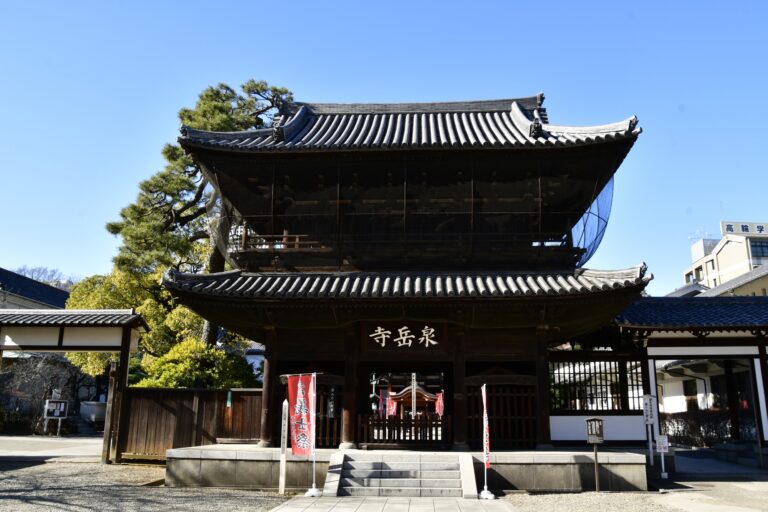
2 stops on the Keikyu Main Line (Kita-Shinagawa to Sengakuji)

5 stops on the Keikyu Main Line (Kita-Shinagawa to Omorikaigan)

Head on from Tokyo to Kamakura
From Kita-Shinagawa Station, the Keikyu Main Line and the JR Yokosuka Line reach Kamakura in about 1 hour. Change from the Keikyu Main Line to the JR Yokosuka Line at Shinagawa. Temples, shrines and the sea: discover the old capital in our Kamakura Travel Guide.