
Akihabara Electric Town (秋葉原電気街)
An electronics and anime town that began with radio-parts stalls
Quick facts
| Hours | Vary by shop. Parts shops and specialty stores often close around 18:00–20:00; large electronics stores are usually open until about 22:00 |
|---|---|
| Last entry | None (the streets are open to walk at any time) |
| Fees | Free to walk around |
| Closed | No closing day for the area (each shop has its own days off) |
| Reservations | Not needed |
| Best time to visit | Midday to late afternoon, when the parts shops and specialty stores are also open. On Sundays from 13:00, Chuo-dori Avenue becomes a pedestrian zone |
| Time needed (approx.) | 2–3 hours |
| Access notes | Leave JR Akihabara Station by the Electric Town Gate and take the Electric Town South Exit (Akihabara Radio Kaikan side) or North Exit (Akihabara UDX side). You can also walk from Suehirocho Station on the Tokyo Metro Ginza Line |
| Checked / official info | Checked on November 21, 2026 Akihabara Electric Town Organization (Japanese) |
What Is Akihabara Electric Town (秋葉原電気街)? | History and Origins
Akihabara Electric Town (秋葉原電気街) is the district on the west side of JR Akihabara Station, in Sotokanda (外神田), Chiyoda City, where shops selling home electronics, computers and electronic parts stand alongside stores for anime, manga, video games and figures. People often call it simply “Akiba.” There is no gate or admission fee for the area. It began after the Second World War, when street stalls selling radio parts gathered here; when the stalls were cleared from the streets, the traders moved under the railway tracks by the station, and the electric town grew from there. Over the decades the goods shifted from household appliances to computers and then to games and anime, and today many visitors know Akihabara as a town of anime and maid cafés, where staff dressed as maids serve customers. The site of the Akihabara UDX building on the east side of the station was once Kanda’s wholesale fruit and vegetable market.
The name goes back to a great fire in the early Meiji era, the period of rapid modernization that began in 1868. Afterwards the authorities cleared an open space here to stop future fires from spreading, and built a Shinto shrine to a fire-protection deity on it. Local people called the shrine “Akiba-sama,” and the open ground around it became known as Akiba-sama’s field. It was first pronounced something like “Akibappara,” and the present reading “Akihabara” became fixed through the name of the station; the nickname “Akiba” is closer to the old pronunciation. The shrine was moved north to Matsugaya (松が谷) in Taito City when the station was built.
Highlights
The specialty-store buildings of Chuo-dori Avenue
Chuo-dori Avenue (中央通り) is the main street of the electric town. It is lined with large electronics stores and buildings full of anime, game, figure and trading-card shops, their walls covered with big signboards. In front of the station, Akihabara Radio Kaikan (秋葉原ラジオ会館) has specialty shops for figures, trading cards and models on floor after floor. Some of the large stores have staff who speak foreign languages and offer tax-free shopping. Shops change often, so each visit tends to turn up new ones.
A shopping street to stroll in Kamakura
Where Akihabara is about electronics and anime shops, Komachi Street (小町通り) in Kamakura (鎌倉), a historic seaside town south of Tokyo, is lined with souvenir shops and street-food stalls: a very different kind of shopping walk.
Electronic-parts stalls under the tracks
Under the railway tracks by the station is a corner packed with tiny electronic-parts shops, a reminder of the post-war days when the stalls moved here. Small components are piled up at the shopfronts, and some aisles are so narrow that two people can hardly pass, so going in with a large bag or suitcase is hard work. Many parts shops close in the early evening, so visit them early.
The Sunday pedestrian zone
On Sunday afternoons, Chuo-dori Avenue is closed to cars between the Sotokanda 5-chome crossing and the Manseibashi (万世橋) crossing, and you can look up at the electric town’s buildings from the middle of the road. The closing time changes with the season, and the pedestrian zone may be cancelled when rain, strong wind or bad weather is expected. Selling goods, performing, street concerts and cycling are not allowed inside the zone.
How to Explore the Area
Akihabara is easiest to explore if you treat the main street and the back streets separately. Chuo-dori Avenue has the big stores and specialty-store buildings, while one block in, the side streets are home to shops for retro video games and second-hand computer parts, often sold as “junk” items. The specialty-store buildings are tall and narrow, so a good way to see everything is to take the elevator to the top floor and work your way down by the stairs.
Walking from shop to shop is tiring, and there are not many places to sit down. There are benches on the second-floor deck of Akihabara UDX, on the station side. Trash bins have been placed from around the station along Chuo-dori Avenue to near Suehirocho Station (末広町駅).
Access and Opening Hours
The quickest way to Chuo-dori Avenue is the Electric Town Gate of JR Akihabara Station. Outside the gate, the Electric Town South Exit is on the Akihabara Radio Kaikan side and the North Exit on the Akihabara UDX side, and both lead straight to the avenue. The north end of the electric town is near Suehirocho Station on the Tokyo Metro Ginza Line.
The area itself has no opening hours and needs no booking; each shop sets its own hours. Parts shops and specialty stores tend to close from early evening, while the large electronics stores stay open late. To cover the main street, the back streets and the stalls under the tracks, allow about 2–3 hours.
Best Time to Visit
Midday to late afternoon is the easiest time to go round, as both the parts shops and the specialty stores are open. On weekends and during long holidays, lines can form at shop entrances, and the stores get crowded inside. On Sunday afternoons the pedestrian zone gives you room to walk, but crowds are larger too. From dusk the shops’ illuminated signs come on and the town takes on a different look. The large stores have many floors, so you can spend a long time in one building on a rainy day.
Nearby Spots
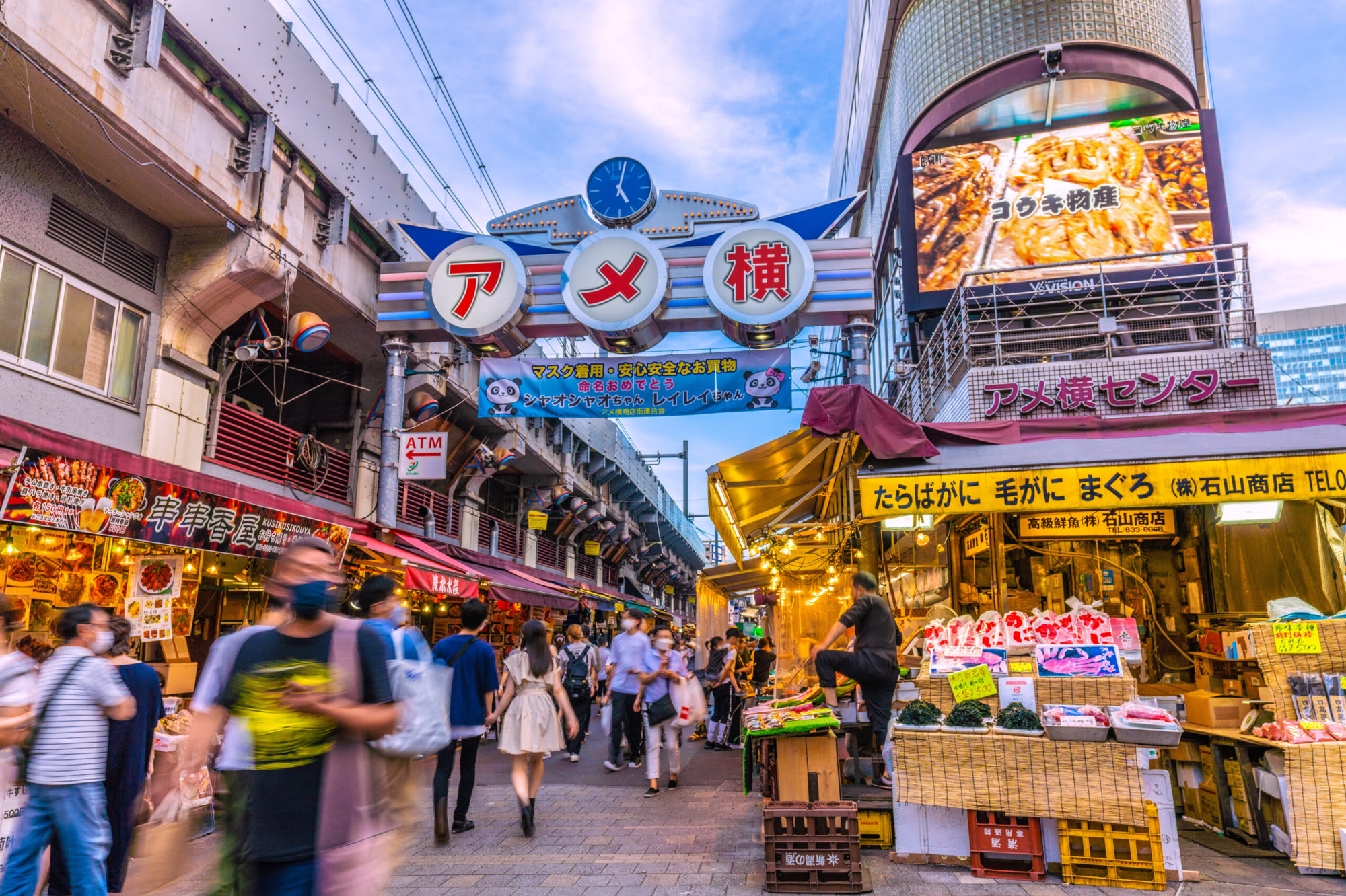
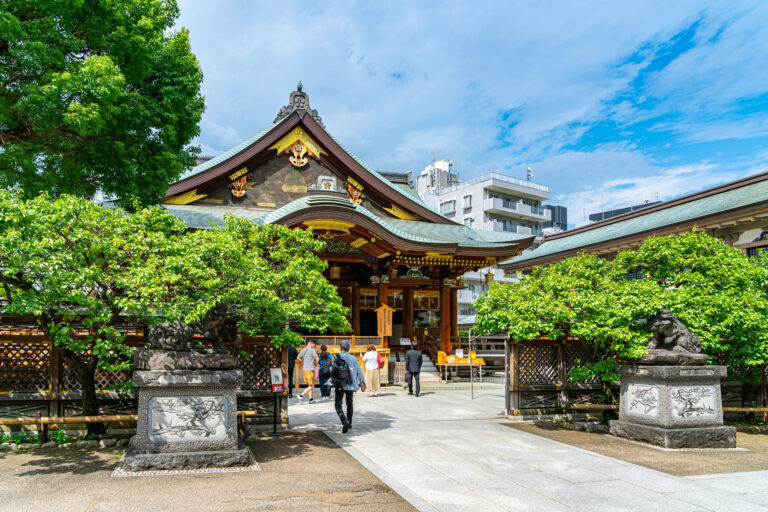
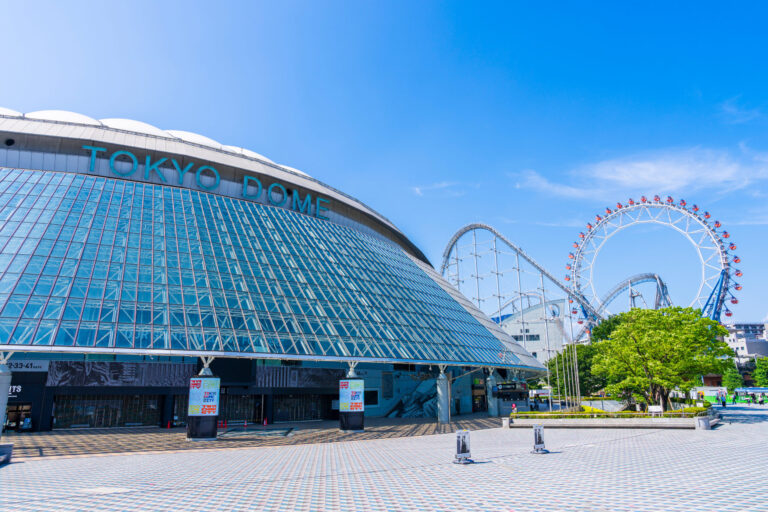
West of the electric town, within walking distance, is Kanda Myojin Shrine (神田明神), long known as the guardian shrine of Edo, the old name for Tokyo. One stop from Akihabara on the JR Yamanote or Keihin-Tohoku Line is Okachimachi Station (御徒町駅), where the market street of Ameyoko (アメ横) runs along the tracks to Ueno Station. Two stops away on the local Chuo-Sobu Line, Suidobashi is the station for Tokyo Dome City (東京ドームシティ), and a walk northwest from Suehirocho Station brings you to Yushima Tenmangu Shrine (湯島天満宮) in Yushima.
Summary
Akihabara Electric Town began with post-war radio-parts stalls and grew into a district of electronics, computer, anime and game shops. Walk the specialty-store buildings of Chuo-dori Avenue and the small shops in the back streets and under the tracks, ideally from midday to late afternoon.
Basic Information
| Item | Details |
|---|---|
| Name | Akihabara Electric Town (秋葉原電気街) |
| Address | Sotokanda, Chiyoda City, Tokyo |
| Highlights | Specialty-store buildings on Chuo-dori Avenue (electronics, anime, games, figures, trading cards), Akihabara Radio Kaikan, retro-game and used-parts shops in the back streets, electronic-parts stalls under the tracks, the Sunday pedestrian zone, illuminated signs at night |
| Things to do | Shopping, walking around, tax-free shopping (participating stores only) |
| Hours | Vary by shop, building and floor (parts shops and specialty stores often close around 18:00–20:00; large electronics stores are usually open until about 22:00) |
| Pedestrian zone | Sundays 13:00–18:00 (April–September) / 13:00–17:00 (October–March), on Chuo-dori Avenue between the Sotokanda 5-chome and Manseibashi crossings (about 570 m). May be cancelled in rain, storms, strong wind or when bad weather is expected |
| Closed | Varies by shop |
| Admission | Free |
| Access | Right outside the Electric Town Gate (South and North Exits) of JR Akihabara Station / walk from Suehirocho Station (Tokyo Metro Ginza Line) |
| Notes | No selling, performing, street concerts or cycling in the pedestrian zone. Aisles under the tracks are narrow. Few places to sit (benches on the 2F deck of Akihabara UDX) |
| Official website | Akihabara Electric Town Organization (Japanese) |
Information checked on November 21, 2026 (pedestrian paradise hours) / Official source checked: Metropolitan Police Department, "Pedestrian Paradise"
Google Map
Nearby sights

1 stop on JR (Akihabara to Okachimachi)

about 15 min walk
2 stops on the JR Chuo-Sobu Line local (Akihabara to Suidobashi)
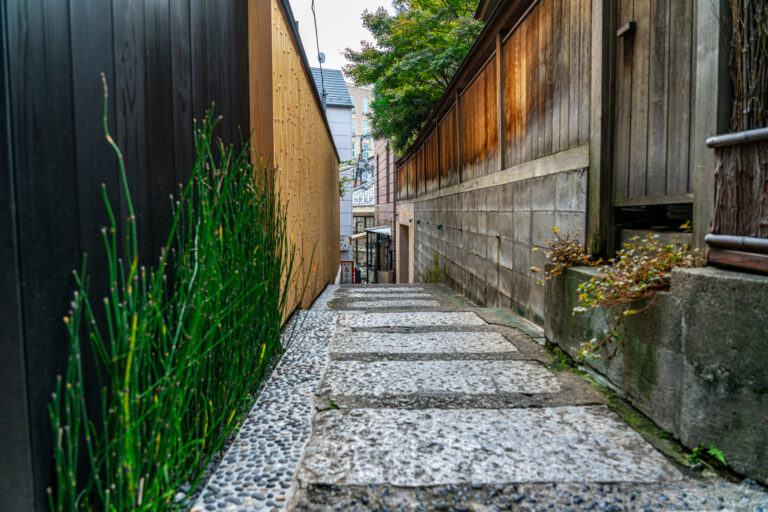
3 stops on the JR Chuo-Sobu Line local (Akihabara to Iidabashi)

Head on from Tokyo to Kamakura
From Akihabara, the JR Yamanote or Keihin-Tohoku Line reaches Kamakura in about 1 hour 10 minutes. Change to the Yokosuka Line at Tokyo Station. Temples, shrines and the sea: discover the old capital in our Kamakura Travel Guide.