
Kagurazaka (神楽坂)
A former geisha district of stone-paved, black-fenced alleys
Quick facts
| Hours | The streets are open at all times. Kagurazaka-dori between Kagurazaka-shita and Kagurazaka-ue is pedestrian-only 12:00–13:00 Monday to Saturday and 12:00–19:00 on Sundays and holidays (bicycles excepted). Shop hours vary |
|---|---|
| Last entry | None |
| Fees | Free (food and shopping at each shop) |
| Closed | Never (shops set their own closing days) |
| Reservations | Not needed |
| Best time to visit | Weekday afternoons into early evening, or at night when the alley shops are lit. The main street is crowded at midday on weekends and holidays |
| Time needed (approx.) | 1–2 hours for the main street, the alleys, Zenkokuji Temple and Akagi Shrine |
| Access notes | For the bottom of the slope: JR Iidabashi Station West Exit or Tokyo Metro Iidabashi Station Exit B3. For the top: Kagurazaka Station (Tokyo Metro Tozai Line) or Ushigome-kagurazaka Station (Toei Oedo Line). Starting at the top lets you walk downhill |
| Checked / official info | Checked on November 21, 2026 Tokyo Metropolitan Police, Ushigome Station (traffic rules, Japanese) |
What Is Kagurazaka (神楽坂)? | History and Origins
Kagurazaka (神楽坂) is a sloping street in Shinjuku City that climbs northwest from near Iidabashi Station (飯田橋駅), together with the neighborhood around it. Shops selling Japanese sweets, everyday goods and food line both sides of the slope. Step one block off the main street and you are in yokocho (横丁), narrow stone-paved side alleys lined with black wooden fences, where ryotei (料亭), traditional restaurants with private rooms, and small shops sit close together.
The name means “kagura slope.” Kagura is sacred music and dance performed at Shinto shrines, and one theory says the music of a nearby shrine could be heard here, but nobody knows for sure. After Ushigome Station (牛込停車場) opened at the foot of the slope in 1895, on the railway that later became the JR Chuo Line, shops gathered along the street. From the early 20th century it grew into a hanamachi (花街), a district where geisha, women trained in traditional music and dance, entertained guests at the ryotei. After the Great Kanto Earthquake of 1923, which did little damage here, shops from Nihonbashi and Ginza moved in, and the street was busy enough to be nicknamed “the Ginza of the Yamanote,” the hilly residential side of the city.
Halfway up the slope stands Zenkokuji Temple (善國寺), known locally as “the Bishamon of Kagurazaka” and a landmark of the street. It enshrines Bishamonten (毘沙門天), a Buddhist guardian figure believed to bring good fortune and protect against harm. The temple was founded elsewhere at the end of the 16th century, moved several times after great fires in Edo, the old name of Tokyo, and settled here in the late Edo period (17th to mid-19th century). It belongs to the Nichiren school of Buddhism, founded by Nichiren (日蓮), a 13th-century monk who preached in Kamakura, the seat of Japan’s first samurai government. According to tradition, it was founded by the head priest of Ikegami Honmonji Temple (池上本門寺), a major Nichiren temple in Tokyo’s Ota City. At that time the head priest of Ikegami Honmonji also served as head priest of Myohonji Temple (妙本寺) in Kamakura, a temple linked to Nichiren.
Highlights
Zenkokuji’s Red Pillars and Stone Tigers
From the street you can see the bright red pillars of Zenkokuji’s main hall. Instead of the usual pair of guardian lion-dogs, a pair of stone tigers flanks the hall; they were carved in the late Edo period. The statue of Bishamonten itself is shown to the public only on a few set days.
Hyogo Yokocho (兵庫横丁)
Hyogo Yokocho (兵庫横丁) is a stone-paved alley of ryotei and inns. Its name is said to come from an armory (hyogo) of Ushigome Castle that stood nearby in the 16th century, though the alley took its present shape only around 1960. Wakana (和可菜), an inn famous as a place where writers and screenwriters shut themselves in to finish manuscripts, no longer operates as an inn, but its renovated building still stands.
Kakurenbo Yokocho (かくれんぼ横丁)
Kakurenbo Yokocho (かくれんぼ横丁), “Hide-and-Seek Alley,” is a narrow, winding lane between black fences. The name is said to come from how easily someone being followed could vanish around its corners. Look down: among the paving stones are a few cut in the shapes of a heart, a star and a diamond, said to have been set in when the paving was relaid. The lane next to it also keeps the feel of the old geisha district.
Kenban Yokocho and Honda Yokocho
Kenban Yokocho (見番横丁) is named after the kenban (見番), the office that books geisha for engagements and runs their lessons, which stands on this lane; now and then you can hear a shamisen, the three-stringed instrument geisha play, from the practice rooms. Honda Yokocho (本多横丁), named after the residence of the Honda family, retainers of the shogun, is the largest of the alleys and is packed with places to eat.
Akagi Shrine (赤城神社)
Just past the top of the slope is Akagi Shrine (赤城神社), regarded as the guardian shrine of the whole Ushigome area. Rebuilt in 2010 with design input from the architect Kengo Kuma (隈研吾), its hall uses plain wooden pillars and glass for a modern look.
Getting Around the Area
Kagurazaka-dori is an unusual street where the direction of one-way traffic switches with the time of day: cars run downhill in the morning and uphill in the afternoon. At set times around midday, the stretch from the bottom to the top of the slope becomes pedestrian-only. The alleys are also where people live, and the local shopping street association asks visitors to be especially considerate in the morning, since this is a neighborhood that wakes up late. The lanes twist and are easy to get lost in, and with stone paving and steps, strollers and wheelchairs need to choose their route. The street is home to the Institut français du Japon – Tokyo (アンスティチュ・フランセ東京), a French government cultural center formerly called the Institut franco-japonais de Tokyo, and its many French restaurants and language schools have earned Kagurazaka the nickname “Little Paris.”
Access and Opening Hours
The bottom of the slope meets Sotobori-dori Avenue, a short walk from the West Exit of JR Iidabashi Station or Exit B3 of Tokyo Metro Iidabashi Station. The top is near Kagurazaka Station (神楽坂駅) on the Tokyo Metro Tozai Line, and Ushigome-kagurazaka Station (牛込神楽坂駅) on the Toei Oedo Line is also close. Walking from Iidabashi means climbing the slope as you go; get off at Kagurazaka Station and you can explore on the way down.
The streets are open at any hour, with no fee or booking. Allow about 1–2 hours to walk the main street and alleys and stop at Zenkokuji Temple and Akagi Shrine.
Best Time to Visit
The main street gets crowded at midday and lunchtime on weekends and holidays, while weekdays and evenings are calmer. At night the lights of the alley restaurants come on and the district takes on a different mood from the daytime. In summer (usually July), the Kagurazaka Festival brings a ground-cherry market to the Zenkokuji grounds and Awa Odori dancing, a lively street dance from Tokushima, to the street.
Nearby Spots
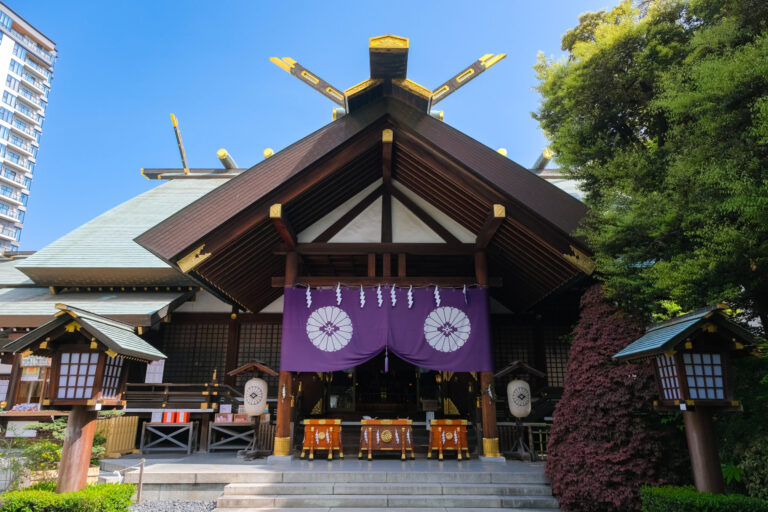
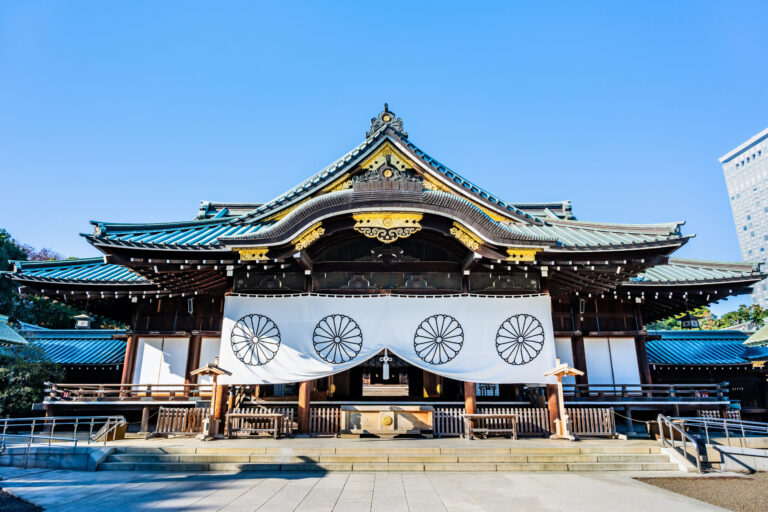
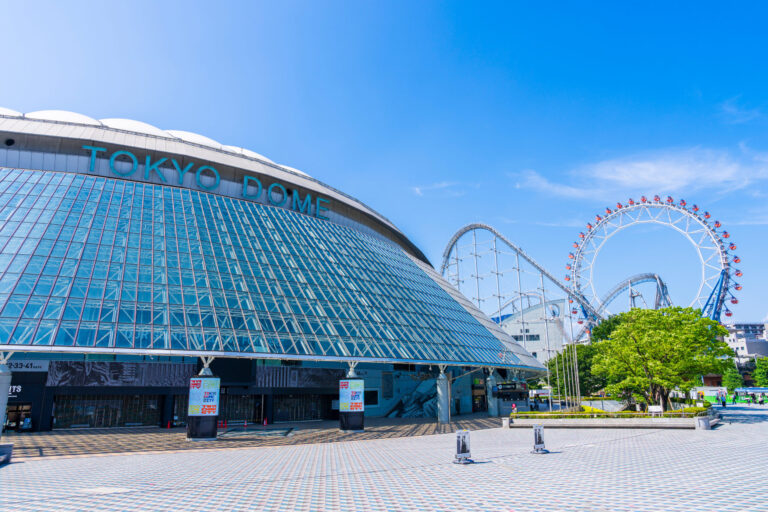
From the foot of the slope, cross the moat past Iidabashi Station to reach Tokyo Daijingu Shrine (東京大神宮), an easy add-on to a Kagurazaka walk. Two stops on the Tozai Line take you to Kudanshita for Yasukuni Shrine (靖国神社), and one stop on the JR Chuo-Sobu Line takes you to Suidobashi for Tokyo Dome City (東京ドームシティ).
Summary
Kagurazaka is a hillside neighborhood that flourished as a geisha district from the early 20th century, with stone-paved, black-fenced alleys of ryotei and small shops one block off the main street. Start at the top station and walk down, taking in Akagi Shrine, the alleys and Zenkokuji Temple along the way.
Basic Information
| Item | Details |
|---|---|
| Name | Kagurazaka (神楽坂), Kagurazaka-dori and its side alleys |
| Address | Kagurazaka, Shinjuku City, Tokyo (from Kagurazaka-shita crossing on Sotobori-dori to Kagurazaka-ue crossing on Okubo-dori) |
| Highlights | Kagurazaka-dori, Zenkokuji Temple (Bishamonten, stone tigers), Hyogo Yokocho, Kakurenbo Yokocho, Kenban Yokocho, Honda Yokocho, Akagi Shrine |
| Things to do | Walking the slope and alleys, spotting the shaped paving stones, visiting Zenkokuji Temple and Akagi Shrine |
| Pedestrian-only hours | Mon–Sat 12:00–13:00 (Kagurazaka-shita to Kagurazaka-ue) / Sundays and holidays 12:00–19:00 (Kagurazaka-shita to Kagurazaka-ue, and Kagurazaka-ue to Akagi-jinja-mae). Bicycles excepted. The area can be walked at any time |
| Closed | Never (shops set their own closing days) |
| Admission | Free |
| Access | JR Iidabashi Sta. West Exit / Tokyo Metro Iidabashi Sta. Exit B3 (bottom of the slope) / Tokyo Metro Tozai Line Kagurazaka Sta. (top) / Toei Oedo Line Ushigome-kagurazaka Sta. Exit A3. About 5–7 min on foot to Zenkokuji Temple from any of them |
| Notes | The alleys are residential; please keep quiet, especially in the morning. Lanes are easy to get lost in, with stone paving and steps. One-way traffic switches at noon (0:00–12:00 downhill, 12:00–24:00 uphill) |
| Related info | Tokyo Metropolitan Police, Ushigome Station traffic rules (Japanese) |
Information checked on November 21, 2026 (pedestrian-only hours) / Official source checked: Metropolitan Police Department, Ushigome Police Station, "Traffic Regulations"
Google Map
Nearby sights

about 8 min walk from Kagurazaka-shita
2 stops on the Tokyo Metro Tozai Line (Kagurazaka to Kudanshita)
1 stop on the JR Chuo-Sobu Line (Iidabashi to Suidobashi)

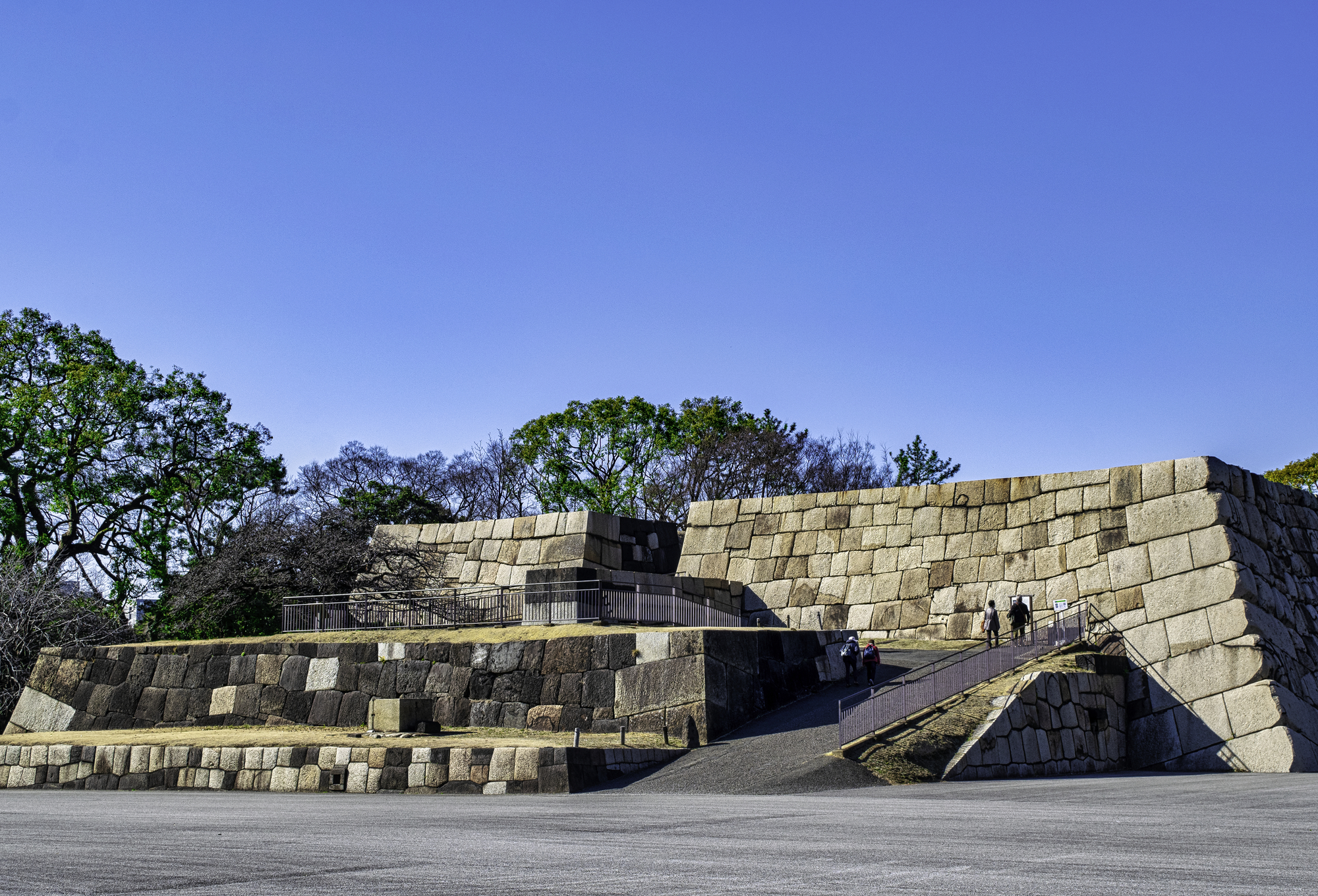
3 stops on the Tokyo Metro Tozai Line (Kagurazaka to Takebashi)

Head on from Tokyo to Kamakura
From Iidabashi, the JR Chuo-Sobu Line, Chuo Line Rapid and Yokosuka Line reach Kamakura in about 1 hour 20 minutes. Change to the Chuo Line Rapid at Ochanomizu and to the Yokosuka Line at Tokyo Station. Temples, shrines and the sea: discover the old capital in our Kamakura Travel Guide.