
Yasukuni Shrine (靖国神社)
A Kudan hilltop shrine with a long approach from a giant torii
Quick facts
| Hours | Gates open at 6:00 all year and close at 18:00 (March–October) or 17:00 (January, February, November, December); times may change on festival days. Yushukan museum 9:00–16:30 |
|---|---|
| Last entry | Grounds: until the gates close. Yushukan: last entry 16:00 |
| Fees | The shrine is free. Yushukan: adults 1,000 yen / university students 500 yen / junior high and high school students 300 yen (free in July and August) / elementary school students free |
| Closed | Open every day. Yushukan closes for a few days at the end of June and the end of December |
| Reservations | Not needed. Individuals and families can also join a formal prayer inside the main hall (shoden sanpai) without booking: apply at the Sanshuden hall on the day (sessions on the hour from 9:00 to 16:00; apply by 15 minutes before). Groups must apply in advance |
| Best time to visit | Early morning or any time before noon, when it is quieter. Ginkgo trees and garden maples usually turn from mid-November to early December |
| Time needed (approx.) | 30 minutes to 1 hour for the grounds; 2 to 2.5 hours with the Yushukan |
| Access notes | About 5 min on foot (uphill) from Exit 1 of Kudanshita Station (Tokyo Metro Tozai and Hanzomon Lines, Toei Shinjuku Line) to the first torii. About 10 min from Iidabashi or Ichigaya Station (JR and subway) |
| Checked / official info | Checked on November 21, 2026 Official website |
What Is Yasukuni Shrine (靖国神社)? | History and Origins
Yasukuni Shrine (靖国神社, officially written 靖國神社) is a Shinto shrine at the top of the Kudan (九段) slope in Chiyoda City. A torii, the gate that marks the entrance to a Shinto shrine, about 25 m tall, opens onto a straight approach about 400 m long that leads to the worship hall. The shrine was founded in 1869 at the wish of Emperor Meiji (明治天皇), who reigned as Japan modernized in the late 19th century, under the name Tokyo Shokonsha (東京招魂社). He later gave it its present name; the shrine explains that the name expresses the wish to bring peace to the nation.
The shrine honors about 2,466,000 people who died in Japan’s wars and conflicts from the 1860s to World War II, enshrined as kami (Shinto deities). They include not only soldiers but also military employees, civil officials and civilians. In 1978, 14 people designated “Class-A war criminals” at the Tokyo Trial, the Allied tribunal held after World War II, were also enshrined, and this and visits by politicians are debated in Japan and abroad.
Highlights
The First Torii and the Approach
Walking up the slope from Kudanshita Station, the first thing you see is the First Torii (第一鳥居), also called the Great Torii; the present one was rebuilt in 1974. The center of the approach is paved with stone, and in autumn the row of ginkgo trees running from the First Torii toward the worship hall turns yellow. Partway along stands a statue of Omura Masujiro (大村益次郎), who built the system of Japan’s modern army; it is said to be the first Western-style statue in Tokyo.
The Bronze Second Torii and the Worship Hall
The Second Torii (第二鳥居) in front of the worship hall was put up in 1887 and is said to be the largest bronze torii in Japan. Beyond it, you pass through the Shinmon Gate (神門) to the worship hall (haiden, 拝殿), where visitors normally pray from the front. For a formal prayer inside the main hall (shoden sanpai, 昇殿参拝), apply at the Sanshuden hall (参集殿); a priest leads each group at set times, and it takes about 40 minutes. For the formal prayer, the shrine asks visitors to avoid revealing clothing and bare feet.
Yushukan Museum
Behind the worship hall to the right, the Yushukan (遊就館) is the shrine’s museum, opened in 1882. It displays wills and belongings of the people enshrined, as well as a Zero fighter aircraft and other items. Its name comes from a phrase in the Xunzi (荀子), an ancient Chinese philosophical text. The entrance hall, where the Zero fighter and other large items stand, is free to enter. Photos are allowed only in permitted areas such as the entrance hall and the large exhibition room; the other galleries do not allow photos or recording, and video is not allowed anywhere in the museum. Exhibit labels include English, and a free smartphone guide in Japanese and English is available through QR codes in the museum.
Shinchi Garden
Behind the main hall, Shinchi Garden (神池庭園) is a stroll garden, a Japanese garden designed to be walked around a pond, laid out in the early Meiji era (late 19th century). It has a waterfall built of arranged rocks, large koi swim in the pond, and a tea house stands nearby. The maples color in autumn.
The Noh Stage and Tokyo’s Sample Cherry Tree
The shrine’s Noh stage, a stage for Japan’s classical masked drama, was moved here from Shiba Park in 1903. Near it grows the sample tree that the Japan Meteorological Agency’s Tokyo office watches to announce when Tokyo’s cherry blossoms (Somei-yoshino) have opened. About 500 cherry trees grow in the grounds.
Goshuin
Goshuin are handwritten shrine and temple seals collected in a special book. At Yasukuni Shrine you receive them at the seal office in the Sanshuden hall, which also offers goshuin books in white and navy.
Access and Opening Hours
The closest station is Kudanshita Station (九段下駅) on the Tokyo Metro Tozai and Hanzomon Lines and the Toei Shinjuku Line; from Exit 1 it is about a 5-minute walk uphill to the First Torii. Iidabashi Station (飯田橋駅) and Ichigaya Station (市ケ谷駅), served by JR and subway lines, are each about 10 minutes away: the North Gate is closest from Iidabashi and the South Gate from Ichigaya. Wheelchairs can be borrowed, and there are ramps and an elevator. Allow 30 minutes to 1 hour for the grounds and 1 to 1.5 hours for the Yushukan, about 2 to 2.5 hours in all.
The gates open early in the morning all year, but closing time depends on the season and is earlier in winter. Hours can change on festival days. The Yushukan opens later and stops admitting visitors before the gates close, and it closes for a few days twice a year. If you plan to see the museum, arriving by late morning or early afternoon leaves enough time.
Photography is not allowed inside the main hall or the worship hall, and the shrine asks visitors not to take photos from the center in front of the worship hall or on its stone steps. Cosplay costumes and military dress (uniforms and gear) are prohibited in the grounds, and picnicking on sheets and flying drones are not allowed in the inner precinct.
Best Time to Visit
Early morning and the rest of the morning before noon are quieter. The cherry trees bloom in spring, and during the Mitama Matsuri (みたままつり), a summer festival for the spirits held each year from July 13 to 16, about 30,000 lanterns are lined up in the grounds. In autumn the ginkgo trees and the garden maples usually color from mid-November to early December. The grounds are especially crowded at cherry blossom peak, on Mitama Matsuri evenings, on August 15 (the anniversary of the end of World War II in Japan) and during the first three days of the New Year.
Nearby Spots
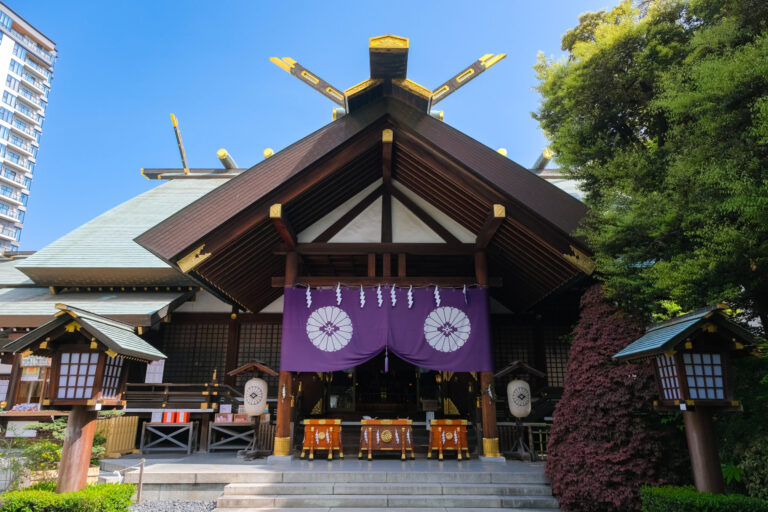
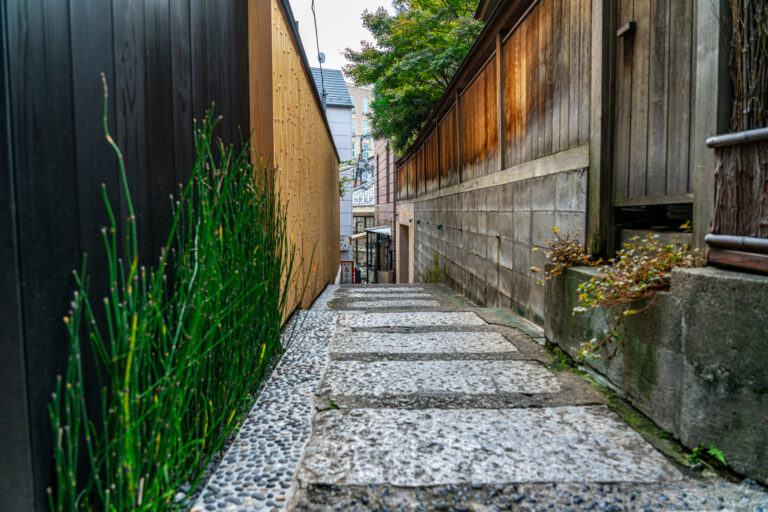
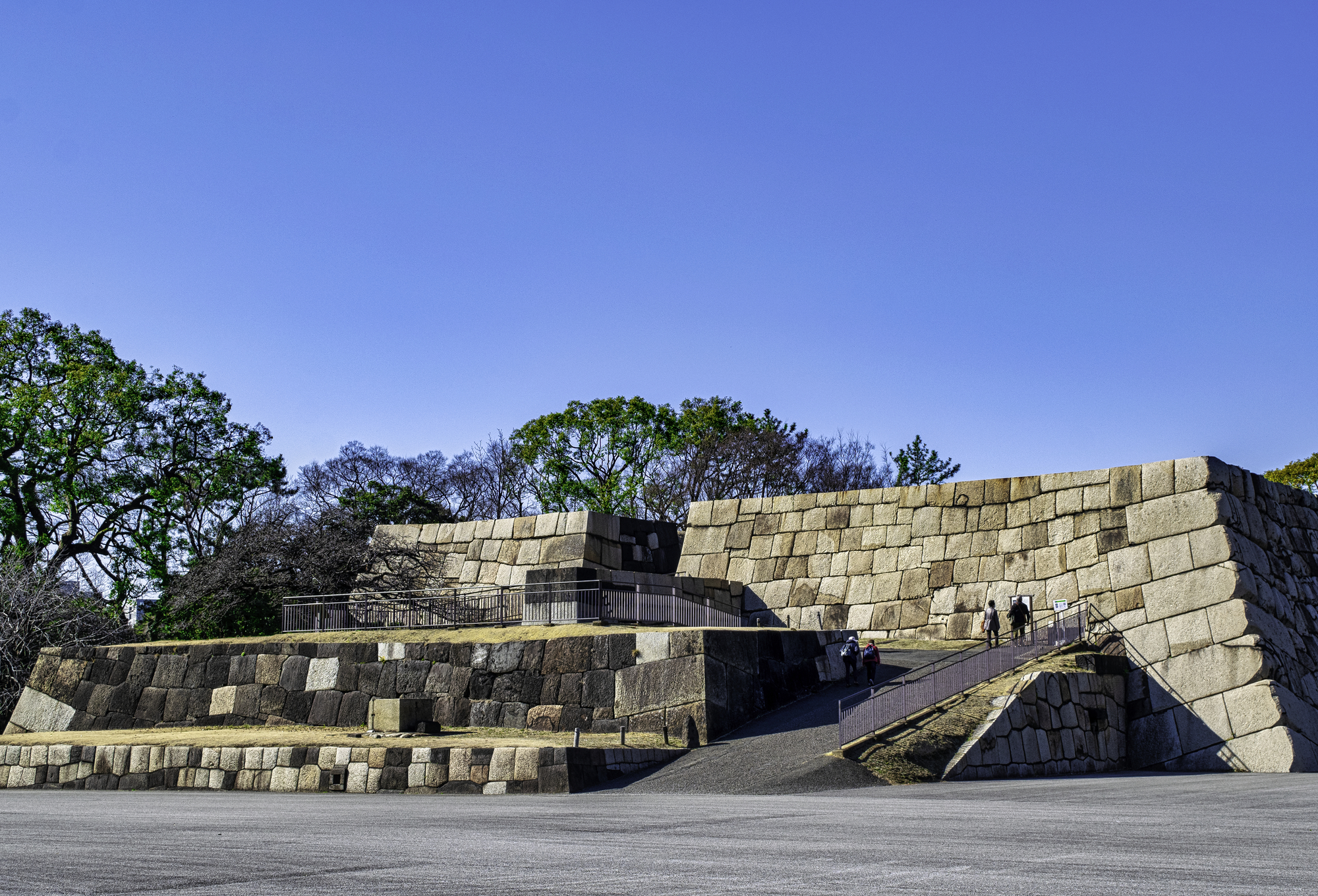
From the North Gate, walk toward Iidabashi to reach Tokyo Daijingu Shrine (東京大神宮) in about 10 minutes and Kagurazaka (神楽坂) in about 15 minutes. To the south, a walk through Kitanomaru Park (北の丸公園) brings you to the East Gardens of the Imperial Palace (皇居東御苑), the grounds of Edo Castle’s inner citadel, in about 20 minutes.
Summary
Yasukuni Shrine sits at the top of the Kudan slope, with the bronze Second Torii and the worship hall at the end of its approach and the Yushukan and Shinchi Garden behind. If you want to see the museum, come early enough to get in before last entry.
Basic Information
| Item | Details |
|---|---|
| Name | Yasukuni Shrine (靖國神社 / 靖国神社) |
| Address | 3-1-1 Kudankita, Chiyoda City, Tokyo |
| Enshrined | About 2,466,000 war dead and others, from the 1860s to World War II |
| Highlights | First Torii (about 25 m) and the approach, statue of Omura Masujiro, bronze Second Torii, Shinmon Gate and worship hall, Yushukan museum, Shinchi Garden, Noh stage, Tokyo’s sample cherry tree |
| Things to do | Praying at the shrine, formal prayer inside the main hall, goshuin seals, visiting the Yushukan, walking in Shinchi Garden, cherry blossoms and autumn leaves |
| Hours | Gates open 6:00 all year / close 18:00 (March–October), 17:00 (January, February, November, December); may change on festival days / Yushukan 9:00–16:30 (last entry 16:00) / formal prayer on the hour 9:00–16:00 (apply at the Sanshuden hall by 15 minutes before) |
| Closed | Open every day (Yushukan closes for a few days at the end of June and the end of December) |
| Admission | Shrine: Free. Yushukan: Adults: 1,000 yen / university students: 500 yen / junior high and high school students: 300 yen (free in July and August) / elementary school students: Free (group discount for 20 or more) |
| Access | Tokyo Metro Tozai and Hanzomon Lines, Toei Shinjuku Line: Kudanshita Sta. Exit 1, about 5 min / JR and subway Iidabashi Sta., about 10 min (North Gate) / JR and subway Ichigaya Sta., about 10 min (South Gate) |
| Notes | No photography inside the main hall or worship hall. In the Yushukan, photos only in permitted areas such as the entrance hall and large exhibition room; no video anywhere. Cosplay costumes and military dress are prohibited in the grounds. No picnicking on sheets or drones in the inner precinct. Avoid revealing clothing and bare feet for the formal prayer |
| Facilities | Wheelchair loan, ramps, elevator, accessible toilets, diaper-changing tables |
| Phone | 03-3261-8326 |
| Official website | https://www.yasukuni.or.jp/ |
Information checked on November 26, 2026 (gate hours, Yushukan museum hours, closing days and fees, and formal worship hours) / Official source checked: Yasukuni Shrine official website
Google Map
Nearby sights

about 10 min walk
about 15 min walk

about 20 min walk

Head on from Tokyo to Kamakura
From Kudanshita, the Tokyo Metro Tozai Line and the Yokosuka Line reach Kamakura in about 1 hour 20 minutes. Walk through the underground passage from Otemachi to JR Tokyo Station and change to the Yokosuka Line. Temples, shrines and the sea: discover the old capital in our Kamakura Travel Guide.