
Tokyo Daijingu Shrine (東京大神宮)
The Iidabashi shrine to Ise’s gods where Shinto weddings began
Quick facts
| Gate hours | 6:00–21:00 (when you can enter the grounds and pray) |
|---|---|
| Counter hours | Amulet and omikuji counter 8:00–19:00; goshuin 9:00–17:00; prayer ceremonies 9:00–16:30. Hours may change during festivals, weddings and the New Year period |
| Fees | Free to visit (amulets, goshuin and prayer ceremonies require an offering) |
| Closed | Open every day |
| Reservations | Not needed to visit. For prayer ceremonies, check how to apply on the official website |
| Best time to visit | Weekday mornings. Lines form around midday on weekends and holidays and at New Year |
| Time needed (approx.) | 30 minutes (1 hour with omikuji and goshuin) |
| Access notes | About 5 min on foot from Iidabashi Station: West Exit for JR, Exit B2a for the Tokyo Metro Yurakucho and Namboku Lines, Exit A4 for the Tokyo Metro Tozai and Toei Oedo Lines. No parking |
| Checked / official info | Checked on November 21, 2026 Official website |
What Is Tokyo Daijingu Shrine (東京大神宮)? | History and Origins
Tokyo Daijingu Shrine (東京大神宮) was built so that people in Tokyo could worship the gods of Ise Jingu (伊勢神宮), the shrine in Mie Prefecture regarded as the most sacred in Japan, and it is known as “the Ise of Tokyo.” Shinto is Japan’s native faith, which honors many gods in nature and in the land. The shrine enshrines the same main deities as Ise: Amaterasu Sume Okami (天照皇大神), the sun goddess regarded as the ancestor of the imperial family, and Toyouke no Okami (豊受大神), a goddess who protects food, clothing and shelter. It also enshrines Yamatohime no Mikoto (倭比賣命), who is said to have founded Ise’s Inner Shrine, and the Zoka no Sanshin (造化の三神), three gods of creation believed to bring all things into being and help them grow. Because modern Shinto weddings began here, many visitors come to pray for a good match in love and marriage.
The shrine was founded in 1880 in Hibiya, in central Tokyo, with the approval of Emperor Meiji (明治天皇), who reigned as Japan modernized in the late 19th and early 20th centuries. Its purpose was to let Tokyo residents pray toward Ise from afar, and it was first called Hibiya Daijingu (日比谷大神宮). After the Great Kanto Earthquake (関東大震災), which destroyed much of Tokyo in 1923, it moved to its present site in Fujimi (富士見) as Iidabashi Daijingu (飯田橋大神宮), and it took its current name after World War II.
The Shinto wedding, a ceremony held before the gods of a shrine and now common across Japan, was started by this shrine in its Hibiya days. After the crown prince, later Emperor Taisho (大正天皇), married in a ceremony at the imperial palace, the shrine shaped a form of the rite that ordinary couples could hold. The novelist Natsume Soseki (夏目漱石), one of Japan’s best-known modern writers, described a wedding at Hibiya Daijingu in his novel Kojin (行人, published in English as The Wayfarer). Weddings are still held in the grounds, with receptions in the Daijingu Kaikan (大神宮会館) hall next door.
Highlights
A Compact Shrine Among Office Buildings
Tokyo Daijingu’s grounds are small and surrounded by buildings. From the street you climb stone steps, pass under the torii, the gateway that marks the entrance to sacred ground, and go through the shinmon (神門), the shrine’s inner gate, to find the main hall straight ahead. Trees fill the grounds, and it is quiet despite being a few minutes from a busy station. On weekends and holidays, when many weddings take place, you may see a bride in shiromuku (白無垢), the all-white traditional wedding kimono. It is polite not to point your camera at wedding guests.
Heart Shapes on the Gate and Hall
Look closely at the doors of the shinmon gate and the metal fittings of the shrine buildings for inome (猪目), a traditional motif that looks like a heart. The pattern is said to ward off evil and fire, and some visitors make a game of finding the hearts as they walk through.
The Small Inari Shrine in the Grounds
Inside the grounds stands a small Inari shrine (飯富稲荷神社), a shrine to Inari, the god associated with rice, food and business. It has been worshipped together with the main shrine since the Hibiya days and is said to protect daily life and trade. The kabuki actor Ichikawa Danjuro IX (九代目市川團十郎), a leading star of Japan’s traditional theater in the late 19th century, is said to have been a devoted follower, so performers also come to pray here.
Omikuji, Amulets and Goshuin
Tokyo Daijingu offers many kinds of omikuji, paper fortunes you draw at a shrine. The best known is the koi-mikuji (恋みくじ), a love fortune with advice on romance, and fortunes in English are also available. Among the amulets, the suzuran mamori (鈴蘭守) is shaped like white lily-of-the-valley flowers, linked to the flower’s meaning, “happiness will come.” Goshuin, handwritten shrine seals collected in a special book, are given at the goshuin office. The counters for amulets, fortunes and goshuin close well before the gate does, so plan ahead if you visit in the evening.
Access and Opening Hours
The nearest station is Iidabashi Station (飯田橋駅), about 5 minutes on foot from every line. Use the West Exit for the JR Chuo-Sobu Line, Exit B2a for the Tokyo Metro Yurakucho and Namboku Lines, and Exit A4 for the Tokyo Metro Tozai and Toei Oedo Lines. There is no parking, so come by train. The grounds are open from early morning until night, but the amulet, goshuin and prayer counters keep shorter hours, and times may change during festivals, weddings and the New Year period. Allow about 30 minutes for the grounds, or about an hour if you also draw a fortune and collect a goshuin.
Best Time to Visit
Weekday mornings are usually quieter, and you can sometimes pray without queuing. Around midday on weekends and holidays, and at New Year, the line to pray grows long and can stretch across the road; when it is crowded, the stone steps may be closed and you will be directed in by another route. In late June each year a large chinowa (茅の輪), a ring of grass that you walk through to purify yourself for the next half year, is set up, and in early July bamboo branches go up for Tanabata, the star festival, where visitors hang written wishes. In summer, wind chimes shaped like lily-of-the-valley flowers hang in the grounds. In autumn the shrine is busy with families for Shichi-Go-San (七五三), a celebration of young children’s growth. After dark the buildings are lit, and in some seasons patterns are projected onto them.
Nearby Spots
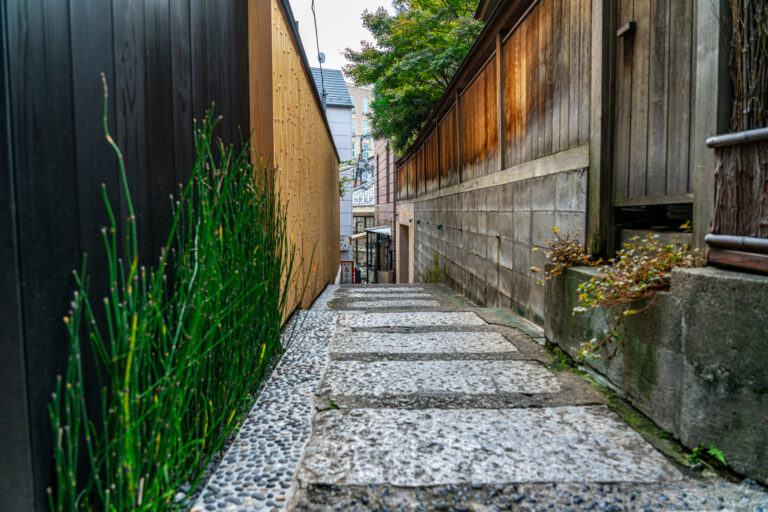
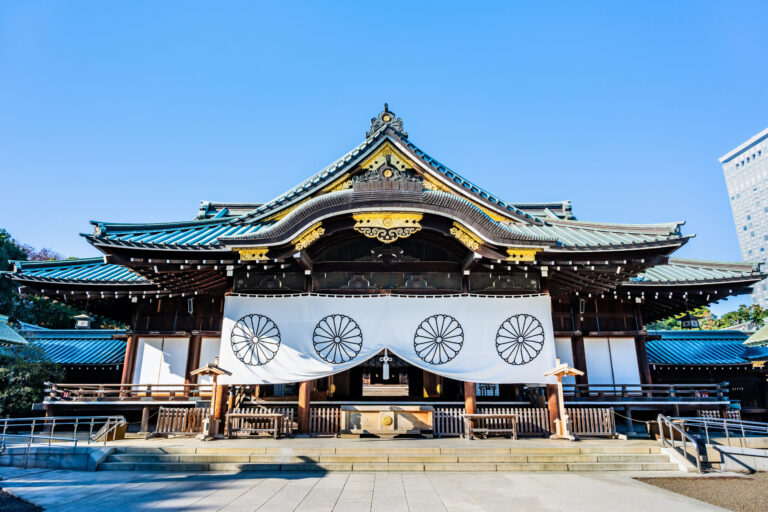
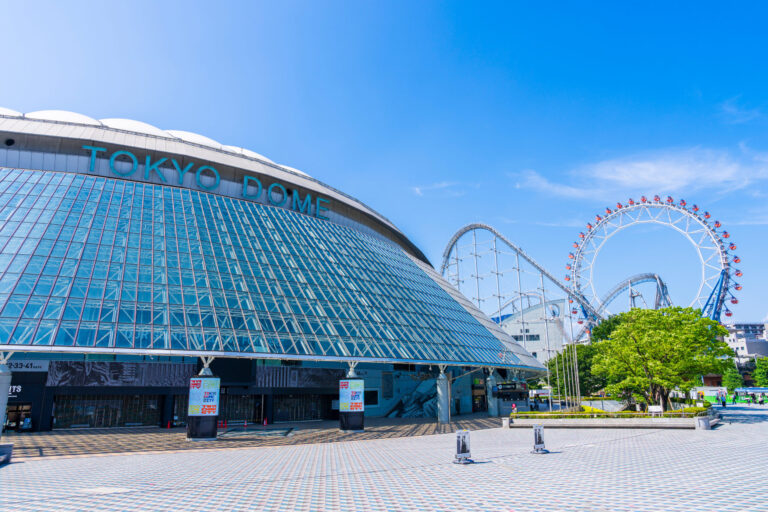
Just across the old outer moat of Edo Castle lies Kagurazaka (神楽坂), about 6 minutes on foot from the shrine to the foot of Kagurazaka Street, so a visit leads easily into a walk through its sloping streets and stone-paved lanes. About 15 minutes on foot toward Kudan is Yasukuni Shrine (靖国神社), and one stop from Iidabashi on the JR Chuo-Sobu Line, at Suidobashi, is Tokyo Dome City (東京ドームシティ).
Summary
Tokyo Daijingu Shrine enshrines the gods of Ise in central Tokyo and is where the modern Shinto wedding began, which draws visitors praying for love and marriage. It is about 5 minutes on foot from Iidabashi Station and free to visit. The amulet and goshuin counters close earlier than the gate, so leave yourself enough time.
Basic Information
| Item | Details |
|---|---|
| Name | Tokyo Daijingu Shrine (東京大神宮) |
| Address | 2-4-1 Fujimi, Chiyoda City, Tokyo |
| Deities | Amaterasu Sume Okami, Toyouke no Okami, Yamatohime no Mikoto, and the three gods of creation (Zoka no Sanshin) |
| Highlights | Shinmon gate and shrine buildings, heart-shaped inome motifs, the small Inari shrine in the grounds, Shinto weddings (often on weekends and holidays) |
| Things to do | Praying, omikuji (love fortunes, fortunes in English and more), amulets (such as the suzuran mamori), goshuin, prayer ceremonies |
| Gate hours | 6:00–21:00 |
| Counter hours | Amulets and omikuji 8:00–19:00; goshuin 9:00–17:00; prayer ceremonies 9:00–16:30 (may change during festivals, weddings and New Year) |
| Closed | Open every day |
| Admission | Free (offerings required for amulets, goshuin and prayer ceremonies) |
| Access | JR Chuo-Sobu Line Iidabashi Sta. West Exit, 5 min / Tokyo Metro Yurakucho and Namboku Lines Iidabashi Sta. Exit B2a, 5 min / Tokyo Metro Tozai Line and Toei Oedo Line Iidabashi Sta. Exit A4, 5 min |
| Notes | No parking. When crowded, the stone steps may close and visitors are directed by another route |
| Phone | +81-3-3262-3566 |
| Official website | https://www.tokyodaijingu.or.jp/ |
Information checked on November 21, 2026 (amulet counter, goshuin and prayer reception hours) / Official source checked: Tokyo Daijingu Shrine official website
Google Map
Nearby sights

about 6 min walk
about 15 min walk
1 stop on the JR Chuo-Sobu Line (Iidabashi to Suidobashi)

Head on from Tokyo to Kamakura
From Iidabashi, the JR Chuo-Sobu Line, Chuo Line Rapid and Yokosuka Line reach Kamakura in about 1 hour 20 minutes. Change to the Chuo Line Rapid at Ochanomizu and to the Yokosuka Line at Tokyo Station (Iidabashi Station is about 5 minutes on foot from the shrine). Temples, shrines and the sea: discover the old capital in our Kamakura Travel Guide.