
Edo-Tokyo Museum (江戸東京博物館)
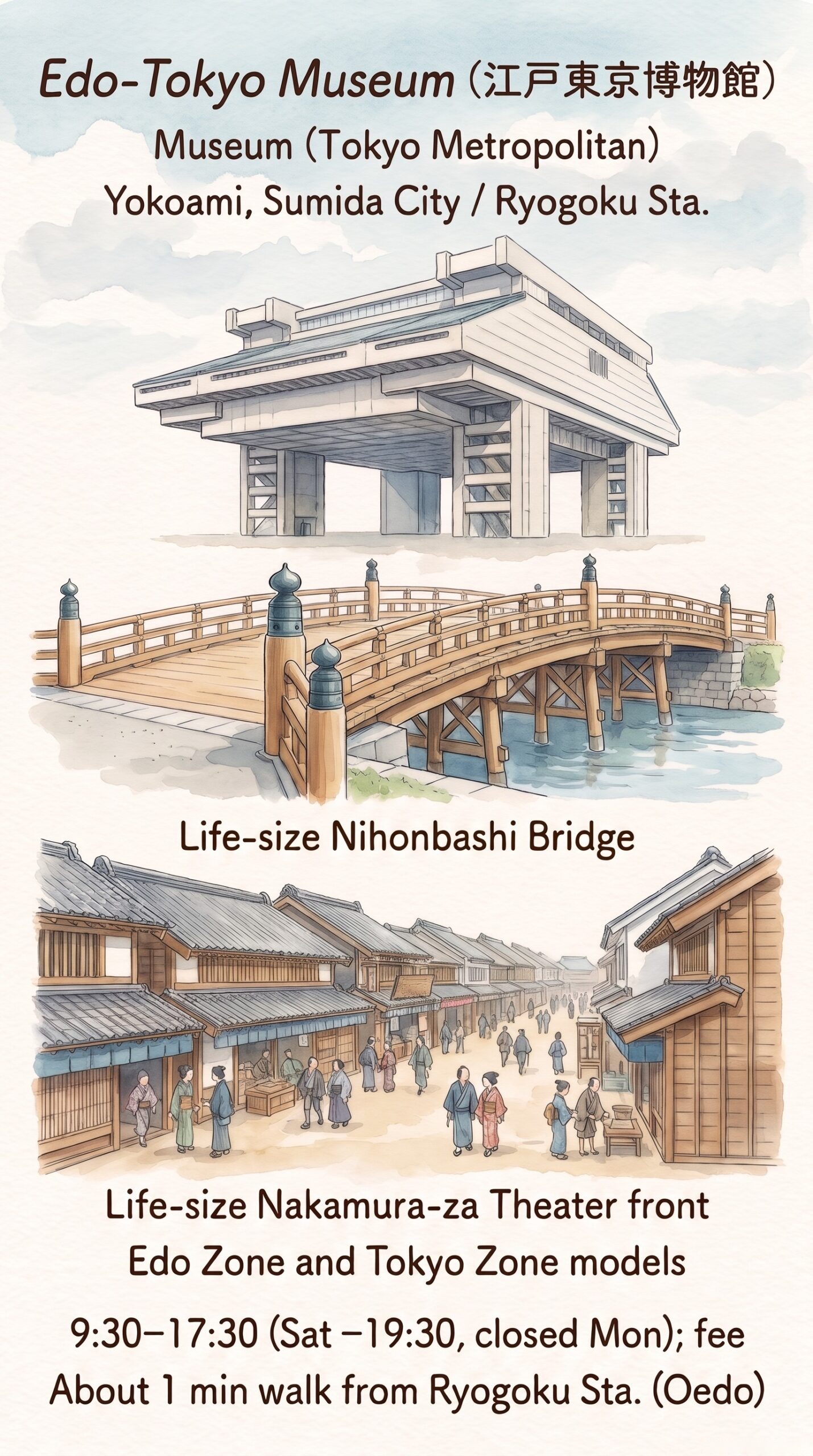
A museum of Tokyo history, entered over a life-size Nihonbashi
Quick facts
| Hours | 9:30–17:30 (Sat until 19:30). Closed Mon (next day if a holiday) and New Year holidays |
|---|---|
| Last entry | 30 min before closing |
| Fees | Permanent exhibition: general ¥800, 65+ ¥400, university ¥480, high school ¥300, junior high and under free |
| Closed | Mondays (next day if a holiday) and New Year holidays |
| Reservations | Not needed (tickets can also be bought online in advance) |
| Best time to visit | Right after opening in the morning. Open until 19:30 on Saturdays |
| Time needed (approx.) | 2–3 hours |
| Access notes | About 1 min from Exits A3/A4 of Ryogoku Station (Toei Oedo Line), about 3 min from the West Exit of JR Ryogoku Station |
| Checked / official info | Checked on Nov 15, 2026 Official website |
What Is the Edo-Tokyo Museum (江戸東京博物館)? | History and Origins
The Edo-Tokyo Museum (江戸東京博物館) in Ryogoku is a Tokyo Metropolitan museum that tells the history and culture of Tokyo from the Edo period (1603–1868) to the present. It reopened in 2026 after its first major renovation since opening.
The renovation refreshed the presentation of the permanent galleries and added new large models. Accessibility features such as tactile guide boards and touchable models were also added.
Highlights
Life-Size Nihonbashi Bridge and Nakamura-za Theater
The permanent exhibition spreads over the 5th and 6th floors. You enter the Edo Zone across a life-size reconstruction of the northern half of Nihonbashi Bridge (日本橋), the starting point of Japan’s old highways, and beyond it stands a life-size reconstruction of the front of the Nakamura-za (中村座), one of Edo’s officially licensed kabuki theaters.
Models of the Edo Zone and Tokyo Zone
The Edo Zone includes a model of the Honmaru and Ninomaru palaces of Edo Castle, the shoguns’ residence on the site of today’s Imperial Palace, at the end of the Edo period (1850s–1860s) and a model of Ryogoku Bridge bustling with about 1,500 figures. The Tokyo Zone follows the city from the Rokumeikan, a Western-style hall of the Meiji era (1868–1912) for entertaining foreign guests, and the brick streets of Ginza through the 1923 Great Kanto Earthquake, World War II and life in a postwar housing complex.
A museum in Kamakura, the earlier samurai capital
In Kamakura, seat of a samurai government long before Edo, the Kamakura Museum of National Treasures (鎌倉国宝館) displays Buddhist statues and crafts handed down in the city’s temples and shrines.
Access and Opening Hours
The museum is about a 1-minute walk from Exits A3 and A4 of Ryogoku (Edo-Tokyo Museum-mae) Station on the Toei Oedo Line, and about 3 minutes from the West Exit (7 minutes from the East Exit) of JR Ryogoku Station on the Sobu Line. Parking is limited, so public transport is the reliable choice.
Opening hours and closed days vary by day of the week, so check the Basic Information table. The permanent exhibition charges admission; junior high school students and younger enter free. Tickets are sold online and at the 1F counter on the day, where there can be a line at busy times. The galleries are large and a full visit often takes a few hours, so allow plenty of time.
Best Time to Visit
With most exhibits indoors, the museum is a good choice on rainy, hot or cold days. The galleries involve a lot of walking, so arriving early, right after opening, makes for a calmer visit. On Saturdays it stays open into the evening, which also suits an evening visit.
Nearby Spots
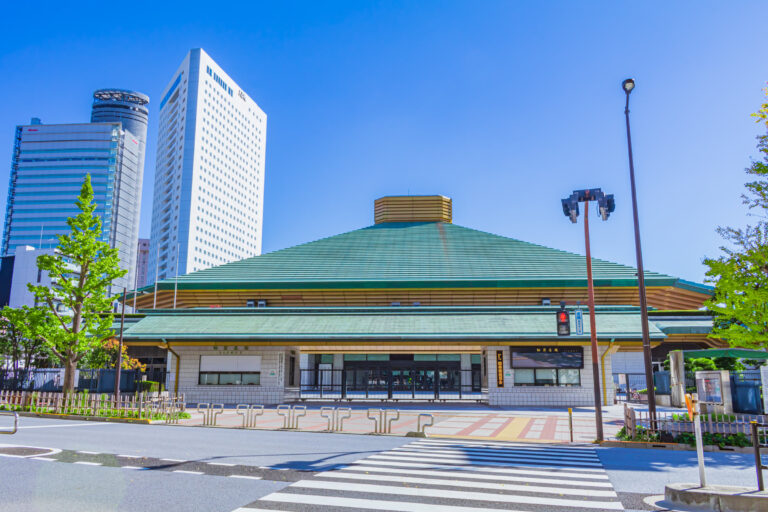
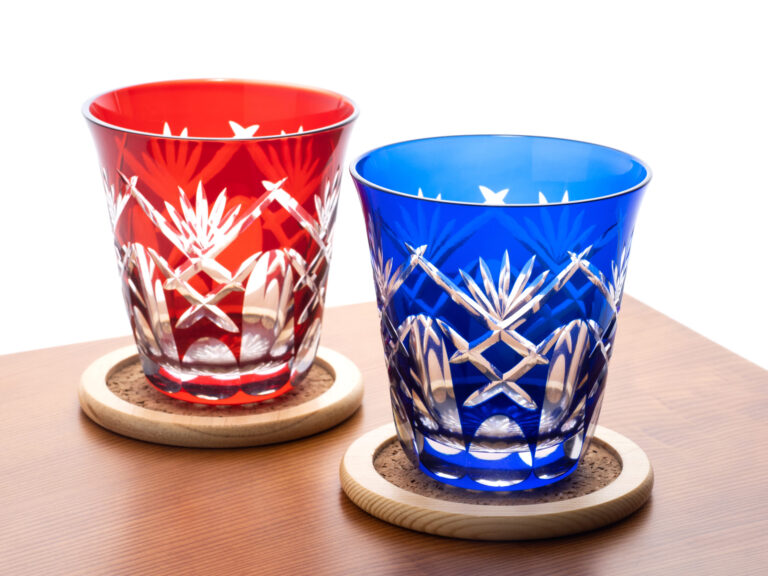
Ryogoku Kokugikan (両国国技館), the sumo arena, is right next door. Going on to Sumida Edo Kiriko Museum (すみだ江戸切子館), a cut-glass workshop and shop, in Kinshicho adds a look at Edo craftsmanship.
Summary
The Edo-Tokyo Museum reopened in 2026 and lets you experience the history of Edo and Tokyo through life-size reconstructions and detailed models. Its galleries are large, so give yourself plenty of time.
Basic Information
| Item | Details |
|---|---|
| Name | Edo-Tokyo Museum (江戸東京博物館) |
| Address | 1-4-1 Yokoami, Sumida City, Tokyo |
| Highlights | Life-size Nihonbashi (northern half), Nakamura-za front, Edo Castle palace model, Ryogoku Bridge model, Tokyo Zone |
| Things to do | Permanent and special exhibitions |
| Hours | 9:30–17:30 (Saturdays until 19:30; last entry 30 min before closing) |
| Closed | Mondays (next day if a holiday), New Year holidays |
| Admission | Permanent exhibition: adults ¥800, 65+ ¥400, university ¥480, high school ¥300, junior high and under free |
| Access | Toei Oedo Line Ryogoku Sta. Exits A3/A4, 1 min / JR Ryogoku Sta. West Exit, 3 min |
| Parking | Limited (public transport recommended) |
| Restrooms | Yes (accessible toilets) |
| Phone | +81-3-3626-9974 |
| Official website | https://www.edo-tokyo-museum.or.jp/en/ |
Information checked on November 15, 2026 (opening hours, visitor information and access) / Official source checked: Edo-Tokyo Museum official website
Google Map
Nearby sights

next door (about 3 min walk)

1 stop on the JR Sobu Line (Kinshicho–Ryogoku)
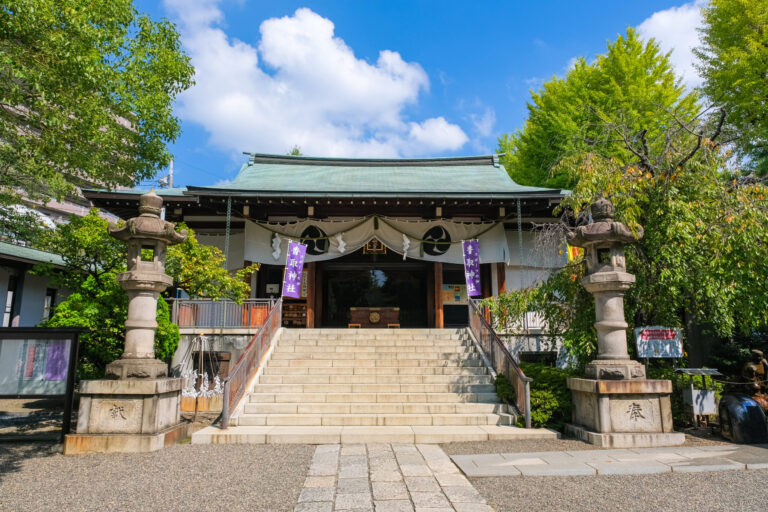
2 stops on the JR Sobu Line (Ryogoku to Kameido) + about 10 min walk

Head on from Tokyo to Kamakura
From Ryogoku, take the JR Sobu Line to Kinshicho and change to the Sobu Rapid Line, which runs through onto the Yokosuka Line, to reach Kamakura in about 1 hour 20 minutes. Temples, shrines and the sea: discover the old capital in our Kamakura Travel Guide.