
Roppongi Hills (六本木ヒルズ)
Tokyo Tower views head-on and contemporary art up high
Quick facts
| Hours | Tokyo City View 10:00–22:00 (varies with events). Mori Art Museum 10:00–22:00 (Tuesdays until 17:00) |
|---|---|
| Last entry | Tokyo City View 21:30. Mori Art Museum 21:30 (Tuesdays 16:30) |
| Fees | Tokyo City View: general 2,400 yen at the counter, 2,200 yen online (Nov 13, 2026–Feb 14, 2027; prices change by period, day and how you buy). Mori Art Museum: varies by exhibition |
| Closed | Tokyo City View closes on irregular days for exhibitions and events. Mori Art Museum is open every day during exhibitions, closed between exhibitions, and closed for renovation from Sep 24, 2027 to late April 2028 (planned) |
| Reservations | Tokyo City View uses timed-entry tickets booked in advance on the official website. If slots remain on the day, you can enter without booking |
| Best time to visit | Shortly before sunset, to see the sunset and the night view in one visit |
| Time needed (approx.) | Observatory 1–2 hours (Mori Art Museum depends on the exhibition) |
| Access notes | Directly connected by concourse to Exit 1C of Roppongi Station (Tokyo Metro Hibiya Line). Enter at the “Museum Cone” on 2F; tickets are on 3F |
| Checked / official info | Checked on Nov 17, 2026 Official website |
What Is Roppongi Hills (六本木ヒルズ)? | History and Origins
Roppongi Hills (六本木ヒルズ) is a complex in Roppongi, Minato City, built around Mori Tower (森タワー), which stands on high ground and holds an indoor observatory and a contemporary art museum on its upper floors: Tokyo City View (東京シティビュー) on the 52nd floor and the Mori Art Museum (森美術館) on the 53rd. Shops and restaurants surround the tower. The complex opened in 2003, and Mori Tower has 54 floors above ground.
The Mohri Garden (毛利庭園) on the grounds stands where the Mori family had their residence in the Edo period (17th to mid-19th century), when the Tokugawa family’s samurai government ruled Japan from Edo, present-day Tokyo. The Mori were the lords of the Chofu Domain (長府藩), a feudal territory around today’s Shimonoseki in Yamaguchi Prefecture, and the garden takes its name from them.
Highlights
Tokyo City View (52F Indoor Observatory)
Tokyo City View is an indoor observatory where Tokyo Tower (東京タワー) appears close and straight ahead from the east-facing windows. Because Roppongi Hills stands on high ground, the floor is 250 meters above sea level, about the same height as the tower’s Top Deck. In the distance you can see Tokyo Skytree (東京スカイツリー), a broadcasting tower taller than Tokyo Tower. On clear days you can see Mt. Fuji (富士山), though haze or cloud hides it on many days. The rooftop Sky Deck has ended general operation, so every view is through glass. At night, interior lights reflect in the windows, so hold your lens close to the glass. Tripods and monopods are not allowed.
Mori Art Museum (53F)
The Mori Art Museum shows contemporary art in exhibitions that change from one show to the next. It stays open into the evening except on Tuesdays, so you can pair it with the observatory at night. Admission depends on the exhibition. The museum plans to close for repairs and renovation from autumn 2027 to spring 2028; the exact dates are in the tables on this page.
Maman and Public Art
In 66 Plaza on the 2nd floor of Mori Tower stands Maman (ママン), a spider sculpture about 10 meters tall by the French-born artist Louise Bourgeois, made for Roppongi Hills. The marble eggs it carries are said to symbolize the mother, and other works in the same series are at the Guggenheim Museum Bilbao in Spain and Tate Modern in London.
Mohri Garden
The Mohri Garden is a Japanese garden around a pond, rebuilt with old trees and stones from the site when Roppongi Hills was developed. In the early 18th century, ten of the Ako Roshi (赤穂浪士), samurai who avenged their lord in an event later retold as the tale of the 47 Ronin, are said to have been held at this estate and to have taken their own lives here. In the mid-19th century, Nogi Maresuke (乃木希典), later an army general in the Meiji era (1868–1912), when Japan rapidly modernized, was born here. The site later became a whisky factory, and the factory’s “Nikka Pond” is preserved, buried beneath today’s pond. Descendants of medaka fish born aboard the Space Shuttle in 1994, known as “space medaka” (宇宙メダカ), were released into the pond. By the water stands Kin no Kokoro, a heart-shaped sculpture by French artist Jean-Michel Othoniel, and cherry trees bloom in spring.
A Zen temple garden in Kamakura
Where the Mohri Garden is laid out around a pond, Zuisenji Temple (瑞泉寺) in Kamakura has a garden said to have been carved into the rock of the hillside, with a cave and a pond, by the Zen monk Muso Soseki (夢窓疎石) in the 14th century. Long buried, it was restored to its original layout in 1970 and is designated a national Place of Scenic Beauty.
Access and Opening Hours
From Exit 1C of Roppongi Station (六本木駅) on the Tokyo Metro Hibiya Line, a concourse past the ticket gates leads straight into Roppongi Hills. Take the escalator up to Mori Tower 2F, walk past Maman to the glass “Museum Cone” (ミュージアムコーン), go up to the 3F ticket counter, then take the direct elevator to 52F; the museum is one escalator ride up on 53F. From Roppongi Station on the Toei Oedo Line, it is a 4-minute walk from Exit 3.
Tokyo City View stays open into the night, but it sometimes closes fully or partly for exhibitions and events. Entry is by advance timed ticket, but you can walk in if slots remain. Prices change by period, day and how you buy, and buying online costs less than at the counter. The Mori Art Museum closes early on Tuesdays. Check the tables on this page for current hours and prices. Strollers can be used throughout and borrowed at the Roppongi Hills General Information desk. Allow about 1–2 hours for the observatory if you stay from before sunset into the night.
Best Time to Visit
Arrive about 45 minutes to an hour before sunset to watch the city turn from daylight to sunset and then to night. Daytime is calmer than at other Tokyo observatories, with free spots by the windows, but evenings, weekends and holidays get crowded, so booking a timed ticket ahead is the safe choice.
Nearby Spots
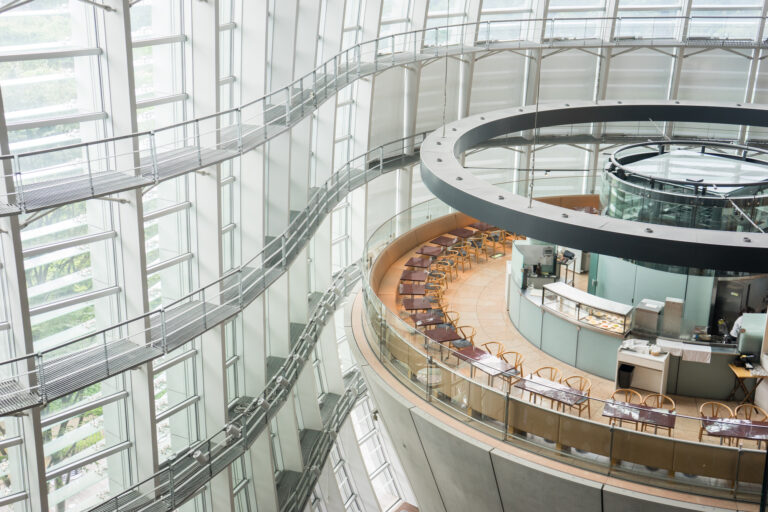
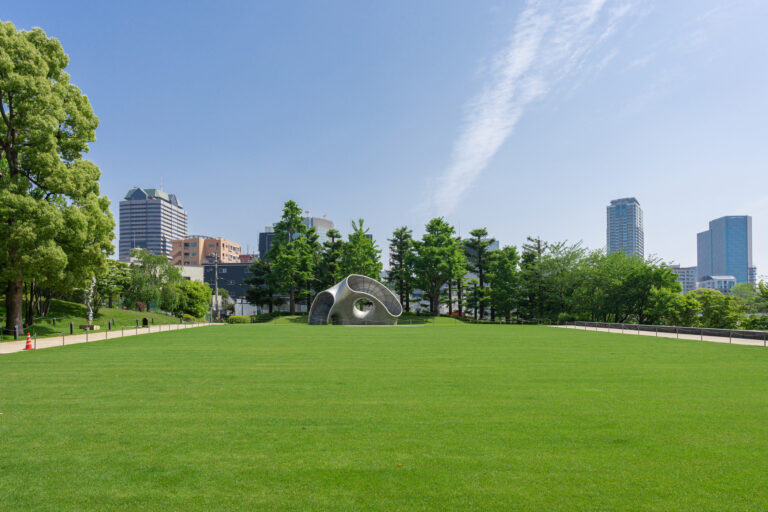
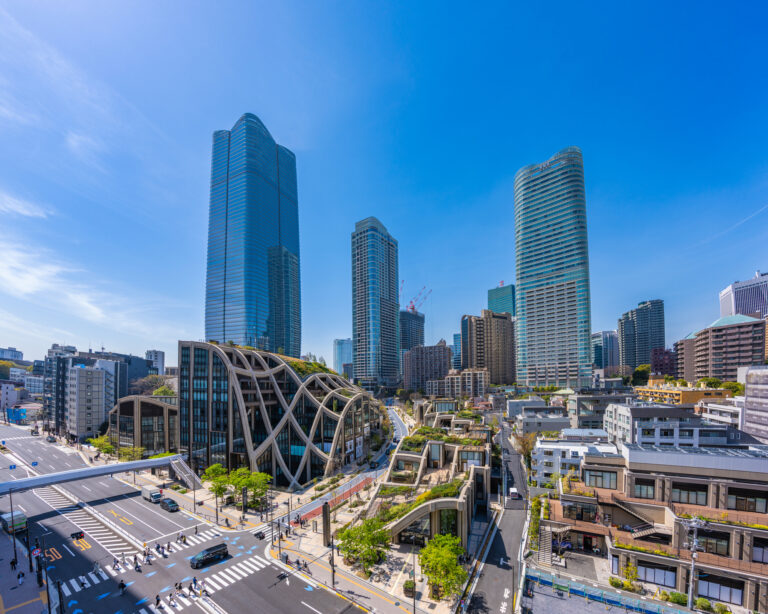
Within walking distance in Roppongi are the National Art Center, Tokyo (国立新美術館), known for its large temporary exhibitions, and Tokyo Midtown (東京ミッドタウン), with shops and green space. Tokyo Tower, which you see from the observatory, is two stops away on the Toei Oedo Line at Akabanebashi.
Summary
Roppongi Hills brings the Tokyo City View observatory on 52F and the Mori Art Museum on 53F together behind a single entrance. Both stay open into the night on most days (the museum closes early on Tuesdays), so you can go up before sunset and stay for the night view.
Basic Information
| Item | Details |
|---|---|
| Name | Roppongi Hills (六本木ヒルズ): Tokyo City View, Mori Art Museum |
| Address | 6-10-1 Roppongi, Minato City, Tokyo |
| Highlights | Tokyo City View (Mori Tower 52F, 250 m above sea level), Mori Art Museum (53F), Maman, Mohri Garden, space medaka, Kin no Kokoro |
| Things to do | Indoor observatory views, contemporary art exhibitions, a walk in Mohri Garden |
| Hours | Tokyo City View 10:00–22:00 (last entry 21:30; varies with events) / Mori Art Museum Mon, Wed–Sun 10:00–22:00 (last entry 21:30), Tue 10:00–17:00 (last entry 16:30) |
| Closed | Tokyo City View: irregular closures / Mori Art Museum: open daily during exhibitions, closed between exhibitions; closed for renovation Sep 24, 2027–late April 2028 (planned) |
| Admission | Tokyo City View (Nov 13, 2026–Feb 14, 2027): General: 2,400 yen counter / 2,200 yen online; Students: 1,700 yen / 1,600 yen; Ages 4 to junior high: 1,100 yen / 1,000 yen; 65 and over: 2,100 yen / 1,900 yen. Mori Art Museum: varies by exhibition |
| Reservations | Tokyo City View: advance timed-entry tickets (walk-in if slots remain) |
| Access | Tokyo Metro Hibiya Line Roppongi Sta. Exit 1C, direct concourse connection / Toei Oedo Line Roppongi Sta. Exit 3, 4 min walk |
| Notes | Rooftop Sky Deck has ended general operation. No tripods or monopods. The 52F cafe requires an admission ticket and takes no reservations |
| Phone | +81-3-6406-6652 (Tokyo City View) |
| Official website | https://www.roppongihills.com/ |
Information checked on November 26, 2026 (opening hours, closures and fees of Mori Art Museum and Tokyo City View) / Official source checked: Mori Art Museum and Tokyo City View official website
Google Map
Nearby sights

about 10 min walk
about 10 min walk

about 15 min walk

Head on from Tokyo to Kamakura
From Roppongi, the Tokyo Metro Hibiya Line and the JR Shonan-Shinjuku Line reach Kamakura in about 1 hour 10 minutes. Change to the Shonan-Shinjuku Line at Ebisu. Trains bound for Zushi or Yokosuka run straight through; on trains bound for Odawara, change to the Yokosuka Line at Ofuna. Temples, shrines and the sea: discover the old capital in our Kamakura Travel Guide.