AREA
I
AREA
I
Ofuna Area
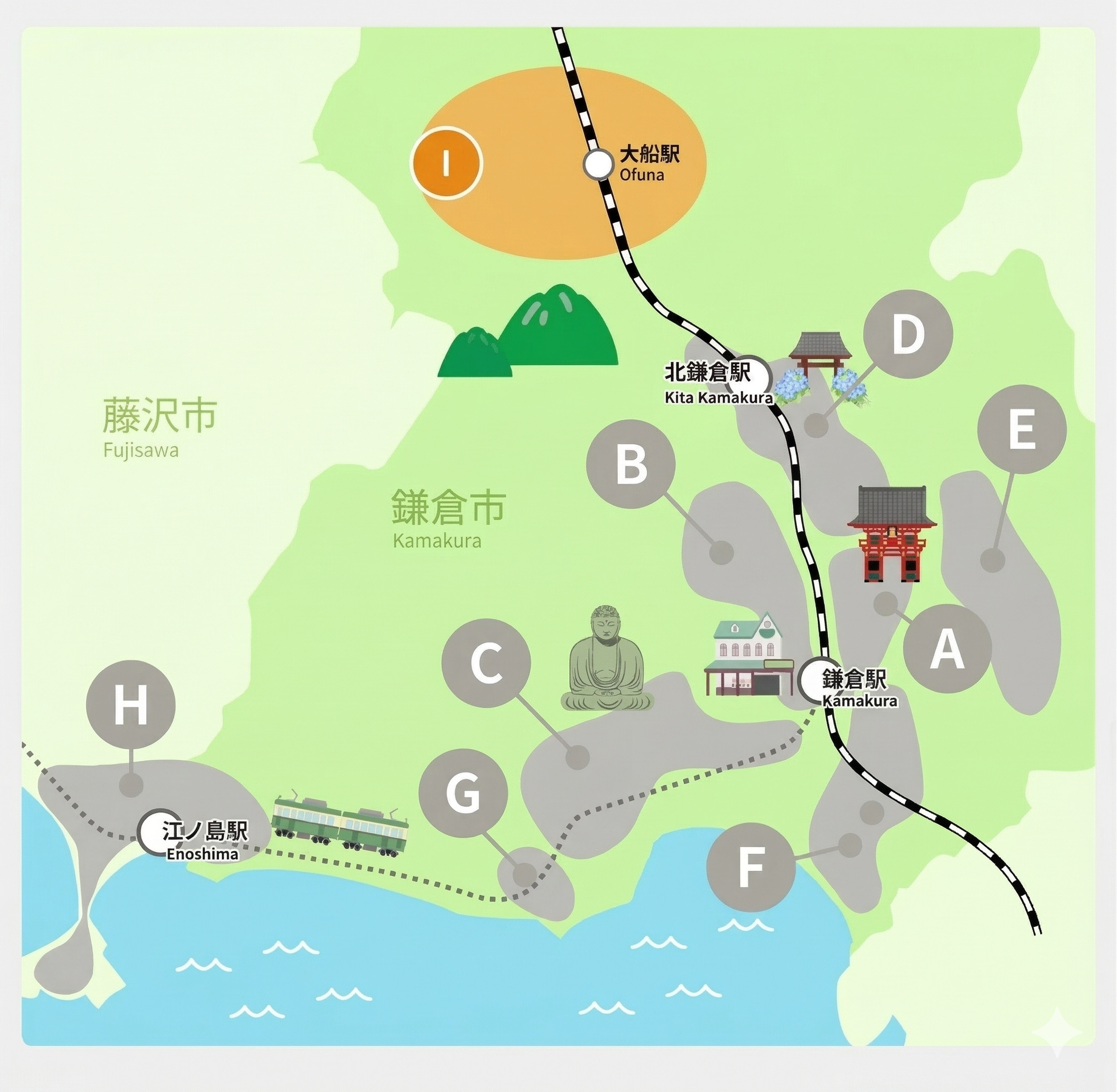
Too good to just pass through. Discover another side of Kamakura.
Toshi’s Kamakura sightseeing map
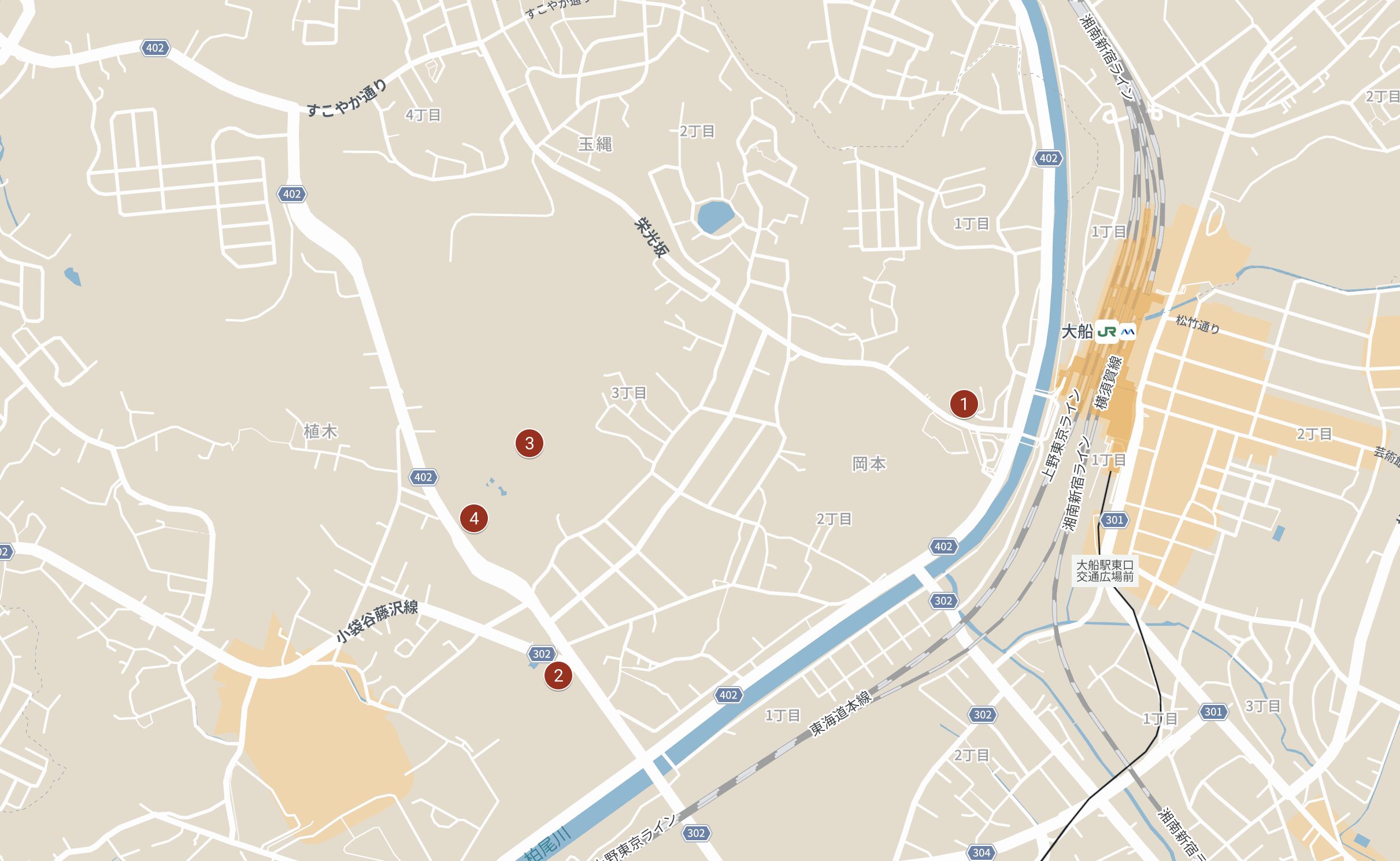
- Ofuna Kannon-ji Temple (大船観音寺)
- Ofuna Flower Center (大船フラワーセンター)
- Ryuhoji Temple (龍宝寺)
- Tamanawa History Museum (玉縄歴史館)
Features
Ofuna is a major transit hub for visitors heading to Kamakura, but it is also a compact area rich in history and nature. Unlike the busy streets around Kamakura Station, Ofuna offers a quieter pace where you can explore at your own speed.Ryuhoji Temple is a Soto Zen temple founded in the Sengoku period as the family temple of the Tamanawa Hojo clan. The main hall houses a Shakyamuni triad and 500 Rakan statues, while the grounds feature a nationally designated historic residence and seasonal highlights including peonies in spring and a giant ginkgo tree in autumn.At Tamanawa History Museum, visitors can learn about Tamanawa Castle — the only mountain castle in Kamakura — and the samurai culture of warlord Hojo Tsunashige. Dioramas and original artifacts bring the unique history of the Ofuna area to life.Ofuna Kannon Temple is home to a towering 25-meter white-robed Kannon statue, built as a prayer for peace. The temple also offers Zen meditation and Buddhist copying experiences alongside its scenic grounds.Kanagawa Prefectural Flower Center Ofuna Botanical Garden showcases around 3,000 plant species across the seasons. From the early-blooming Tamanawa Cherry to tulips, roses, and dahlias, there is always something in flower throughout the year.Ofuna is far more than a place to change trains. Step off the platform and discover a hidden gem within the greater Kamakura area — a destination where history, nature, and tranquility await.
Sightseeing Spot
Ofuna Kannon-ji Temple (大船観音寺)
A Serene Smile for Peace and Prayer in the Modern Era
Ofuna Kannon-ji Temple (大船観音寺) is a modern Buddhist temple in Ofuna, Kamakura, symbolized by the towering 25-meter-tall Byakue Kannon (白衣観音) statue. Built as a prayer for peace in the wake of war and disaster, the statue’s interior houses a thousand memorial Buddhas and monuments of peace. The temple grounds are adorned with seasonal beauty—cherry blossoms in spring, summer greenery, autumn foliage, and nighttime illuminations. Visitors can also enjoy hands-on activities like zazen meditation, sutra tracing, and the Asia Festival. This contemporary temple blends spirituality and modern engagement, offering a peaceful space and a unique landmark in Kamakura.
Ofuna Flower Center (大船フラワーセンター)
A Story of the Seasons Told Through a Symphony of Blossoms
The Kanagawa Prefectural Ofuna Flower Center (神奈川県立大船フラワーセンター) is a botanical garden in Kamakura where the serenity of the city blends beautifully with the changing colors of the seasons. Home to around 3,000 plant species, the center showcases seasonal blooms such as early-blooming Tamanawa-zakura (玉縄桜), tulips, roses, lotus, and dahlias. With barrier-free pathways and informative panels, it’s a welcoming space for families, seniors, and plant lovers of all experience levels. Visitors can quietly connect with nature and find healing through the gentle rhythm of the seasons.
Ryuhoji Temple (龍宝寺)
A Temple of Samurai Prayers and Seasonal Tranquility
Ryuhoji Temple (龍宝寺), a serene Soto Zen temple located in Ofuna, Kamakura City, was founded during the Sengoku period as the family temple of the Tamanawa Hojo clan. The temple grounds, rich with historical significance, feature a main hall that houses statues of Shakyamuni Buddha and the Two Attendants, as well as 500 Rakan statues. Visitors will also find a thatched-roof main gate, the historic former Ishii Residence (an Important Cultural Property), and a stone monument linked to scholar Arai Hakuseki. Amid this tranquility, one can feel the spiritual legacy and devotion of the Samurai. The temple is also known for its seasonal beauty, such as blooming peonies in spring and a majestic ginkgo tree in autumn. It offers a peaceful escape for history lovers and those seeking meaningful cultural experiences.
Tamanawa History Museum (玉縄歴史館)
Another Memory of Kamakura, Told by a Warlord and His Castle
At the Tamanawa History Museum, visitors can learn about the strategies of Samurai warriors and the lives of local people, all centered around Tamanawa Castle (玉縄城), which is closely linked to the famed Sengoku-era general Hojo Tsunashige (北条綱成). Known as Kamakura’s only mountain castle, Tamanawa Castle is recreated through detailed dioramas and original artifacts. The museum also features the relocated former Ishii Residence, a thatched-roof farmhouse where visitors can experience rural life from the Edo period. It’s the perfect spot for a quiet, intellectually enriching visit, far from the bustle of urban sightseeing.