AREA
H
AREA
H
Enoshima Area
A land of natural beauty and sea gods watching over us. Tour ancient shrines and aquariums to experience the harmony of the sea and history.
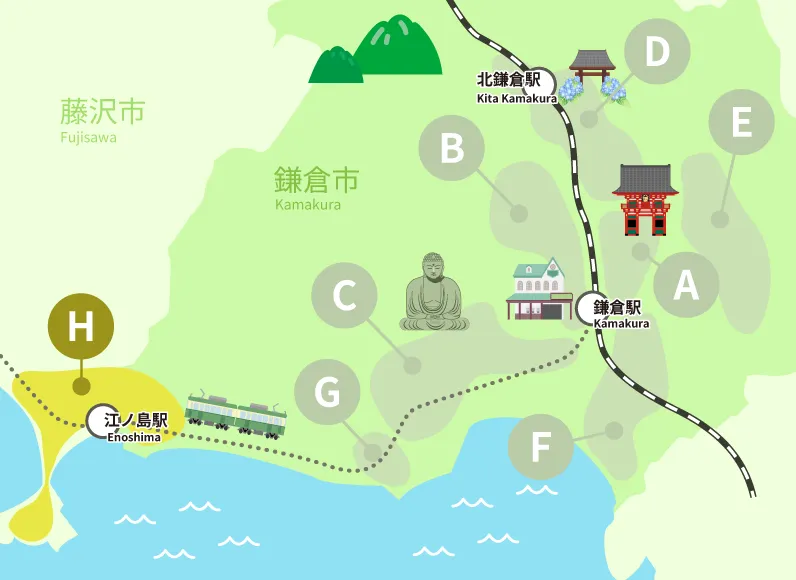
Toshi’s Kamakura sightseeing map
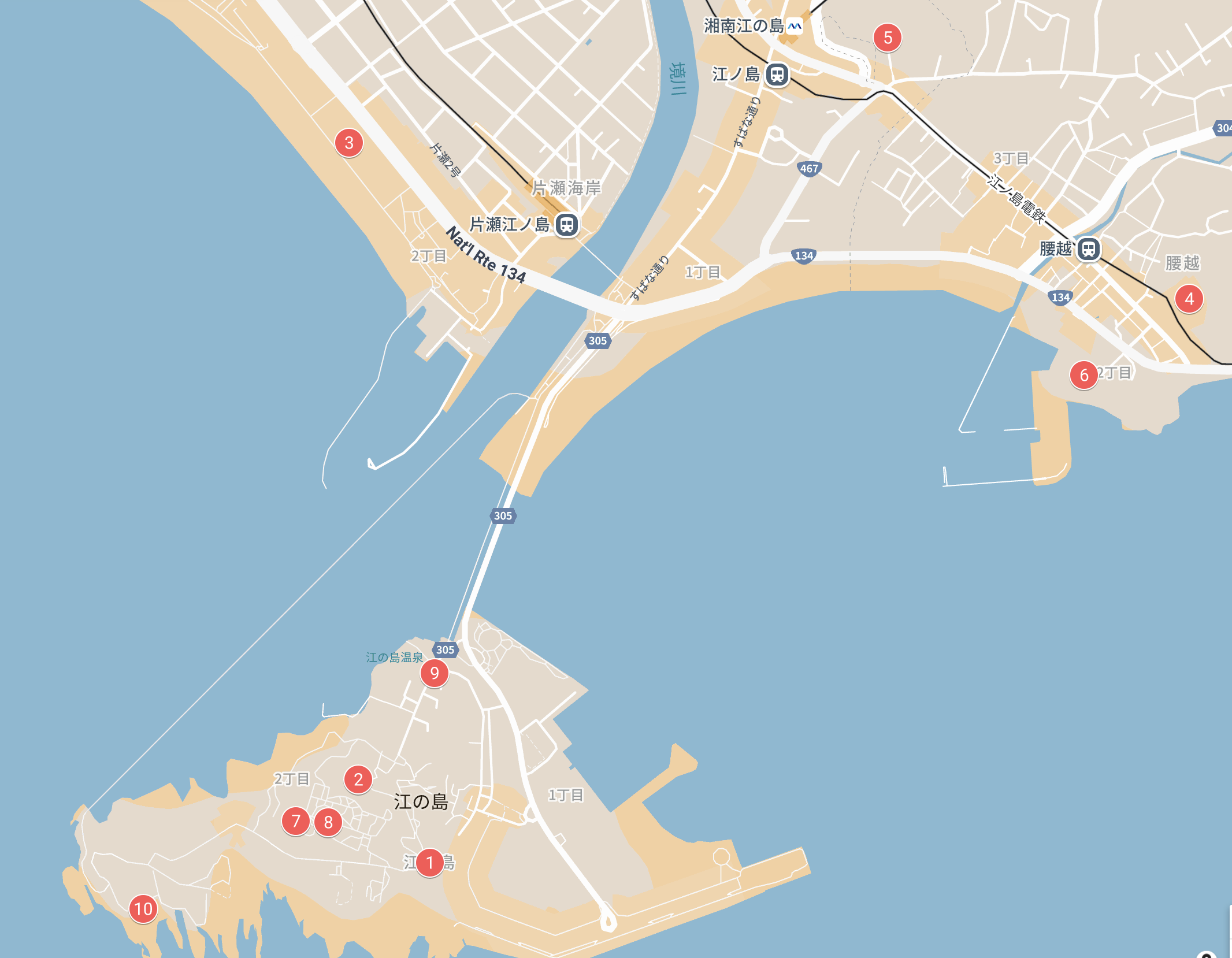
- Enoshima Island (江の島)
- Enoshima Shrine (江島神社)
- New Enoshima Aquarium (新江ノ島水族館)
- Manpukuji Temple (満福寺)
- Ryukoji Temple (龍口寺)
- Komyojinja Shrine (小動神社)
- Enoshima Sea Candle (江の島シーキャンドル)
- Enoshima Samuel Cocking Garden (江の島サムエル・コッキング苑)
- Enoshima Benzaiten Nakamise Street (江の島弁財天仲見世通り)
- Enoshima Iwaya Caves (江の島岩屋)
Features
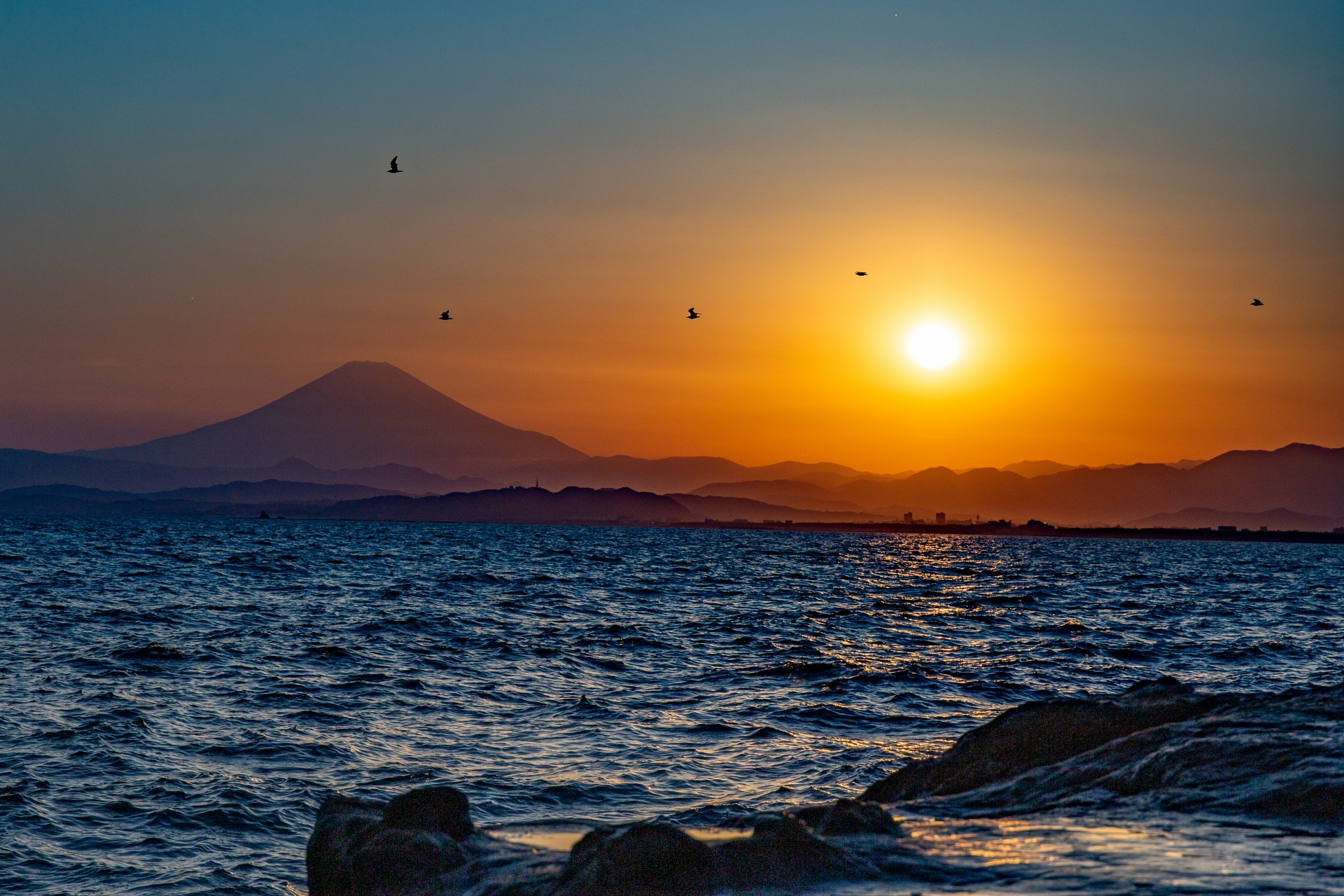
The area around Enoshima is a beautiful region where rich nature and history blend together, just a short trip from Kamakura. This area is known for its diverse tourist attractions, including the natural beauty of Enoshima and the historic temples and shrines located on the island and its surroundings. While Enoshima itself boasts attractive spots such as Enoshima Shrine, which enshrines the god of the sea, and the “Enoshima Sea Candle,” which offers panoramic views of Sagami Bay and Mount Fuji, the surrounding area is also dotted with numerous places worth visiting, such as Manpuku-ji Temple and Ryuko-ji Temple. Enoshima Shrine is a historic shrine located on Enoshima that enshrines the gods of water and the sea; it is said to bestow divine blessings for happiness, wealth, and mastery of the arts. The New Enoshima Aquarium showcases the diversity and beauty of marine life, offering educational programs and exhibits designed to raise awareness of nature conservation. Manpuku-ji Temple was built on a site rich in nature where prayers for the eradication of epidemics were answered, and it is also known as the location of the Koshigoe Letter, in which Minamoto no Yoshitsune sought reconciliation. Ryukō-ji Temple is a historic site where Nichiren was spared execution and holds significant value as a cultural asset. Koyurugi Shrine was founded by one of Yoritomo’s long-serving vassals and is rich in historical episodes, such as Nitta Yoshisada’s prayers for victory during his campaign against Kamakura. These spots offer visitors to Enoshima and its surroundings the opportunity to experience the beauty of nature and Japan’s deep history.
Sightseeing Spot
Enoshima Island (江の島)
A fascinating island with history and nature
Enoshima is a fascinating tourist destination known for its natural beauty, historic temples, and stunning scenery. Enoshima Shrine, which enshrines the sea god, Enoshima Sea Candle, an observatory lighthouse that overlooks Sagami Bay and Mt. Fuji, a coastline loved by surfers, and restaurants serving fresh seafood all add to the appeal of this island. It is a unique place where you can experience the beauty of nature and deep history by walking around the island.
Enoshima Shrine (江島神社)
Prayer for protection of the sea and prosperity
Treasure of the mysterious island
Enoshima Shrine is a historic shrine in Kamakura, set against a backdrop of the beautiful sea, dedicated to the gods of water and the ocean. It enshrines the three sister goddesses born from the vow between Amaterasu Omikami and Susanoo-no-Mikoto, and is said to bestow divine blessings of happiness, wealth, and mastery of the arts upon visitors. During the Edo period (17th–19th centuries), the shrine attracted many pilgrims and has become a symbol of peace and prosperity, enveloped in natural beauty and rich in history and legend.
New Enoshima Aquarium
(新江ノ島水族館)
Fusion of science and nature
Journey from Kamakura to the sea
Enoshima Aquarium is a place that showcases the diversity and beauty of marine life. We convey the importance of the ocean through dolphin shows and exhibits of large marine creatures. With educational programs and exhibits that raise awareness of conservation, this aquarium invites people of all ages to experience the depths of the ocean.
Manpukuji Temple
(満福寺)
Yoshitsune’s Prayer for Reconciliation
Silent Testimony of Manpukuji Temple
Manpukuji Temple is a place rich in nature where prayers to ward off epidemics are said to have come true and illnesses to be cured.In the Nara period (8th century), Gyoki was built on the orders of Emperor Shomu. ) was erected by. The “Yakushi Sanzon”, a secret Buddha statue that is only open to the public on New Year’s Eve, is a guardian deity of health and healing. It is also famous as the place where Minamoto no Yoshitsune held the “Koshigoejo” to pray for reconciliation, and it is a sacred place that is steeped in history and heroic legends, with relics related to Benkei remaining.
Ryukoji Temple (龍口寺)
Nichiren’s miracles and legacy
The quiet tale of Ryuguchiji Temple
Ryukouji Temple is located in Koshigoe and is a Nichiren sect temple whose symbol is the large Niomon gate. It is a historical place where Nichiren escaped execution, and the stone on which he sat is housed in the main hall. The principal object of worship is a teaching based on Nichiren’s “Rissho Ankokuron,” and the Lotus Sutra is chanted to pray for the stability of the country. It has high value as a cultural property, including a five-storied pagoda that is listed as one of Kanagawa’s top 100 buildings, making it a must-see place for those interested in history and culture.
Koyurugi Shrine (小動神社)
Witness of time
A legendary sacred place overlooking the sea
Koyurugi Shrine is a historic shrine that was founded in the late 12th century by Moritsuna Sasaki, a veteran vassal of Yoritomo. The name originates from the natural beauty of Mt. Kodo that I felt while visiting Enoshima Benzaiten and the legend of “Koyurugi no Matsu”. This shrine is rich in historical episodes, such as Nitta Yoshisada’s prayer for victory during the invasion of Kamakura, and Odawara Castle lord Okubo Tadazane’s dedication to the Sanjinja Shrine.This shrine is a great place to view the sea. It is located in a location that conveys the history and natural beauty of Kamakura to visitors.
Enoshima Sea Candle
(江の島シーキャンドル)
A Tower of Light and Wind Offering Stunning Views
The “Enoshima Sea Candle,” offering sweeping views of the sea and sky, is a modern observation tower reborn from Japan’s first privately operated lighthouse. From its height of approximately 60 meters above ground, you can enjoy panoramic vistas that extend to Mt. Fuji, the Izu (伊豆) Peninsula, and the Bōsō (房総) Peninsula. It’s especially breathtaking at sunset, when the “Diamond Fuji”—the sun setting atop Mt. Fuji—can sometimes be seen. In winter, the “Jewel of Shōnan” illuminations transform the entire tower into a dreamy lightscape, blending art and nature into a unique experience each season. It’s a landmark well worth visiting and a highlight of any trip to Enoshima (江の島).
Enoshima Samuel Cocking Garden
(江の島サムエル・コッキング苑)
A Magical Garden Where the East Meets the West
This garden was developed on the site of a former botanical garden built in the early 20th century by Samuel Cocking, a British merchant who lived in Japan during the Meiji era. It is a captivating space where Western horticultural techniques harmonize with Japan’s natural beauty. Visitors are charmed by seasonal flowers and plants, the enchanting winter illumination event “Shonan no Hoseki (Shonan’s Jewel),” and the breathtaking views from the Enoshima Sea Candle observation tower. This garden, where history, nature, and culture intersect, offers a unique way to rediscover the charm of Enoshima.
Enoshima Benzaiten Nakamise Street
(江の島弁財天仲見世通り)
A Sensory Journey Along the Path of the Gods
Enoshima Benzaiten Nakamise Street (江の島弁財天仲見世通り), the lively gateway to Enoshima sightseeing, is a bustling 150-meter approach road where spiritual visits, local cuisine, and shopping come together. The street is lined with local specialties such as octopus rice crackers, shirasu (whitebait) rice bowls, and the famous Meoto Manju (女夫饅頭) from long-established Japanese confectionery shops, making it perfect for enjoying while strolling. Historical highlights also dot the area, including Iwamotoro (岩本楼), a historic inn preserving the spiritual traditions of the Kamakura (鎌倉) period, and a restored black post box from the Meiji (明治) era. As the pathway to Enoshima Shrine (江島神社), which enshrines the goddess Benzaiten (弁財天), the street has long been cherished by pilgrims and now offers a full-sensory experience of Enoshima’s culture.
Enoshima Iwaya Caves
(江の島岩屋)
A Prayerful Cave Woven from Sea and Myth
Enoshima Iwaya is a mystical sea cave shaped by marine erosion, where the natural beauty of the coastline meets centuries of spiritual devotion. With legendary roots dating back to the mid-6th century, this sacred site is also known as a place of prayer for Minamoto no Yoritomo, a prominent Kamakura-era Samurai. Within its dreamlike illuminated interior, visitors can sense legends of celestial maidens and dragon gods, as well as traces of ancient ascetic practices. Exploring the cave with a candle in hand, taking in the stunning views of the sunset and Mount Fuji, and experiencing the spiritual link to Enoshima Shrine all combine to create a multisensory journey.