AREA
D
AREA
D
Kitakamakura Area
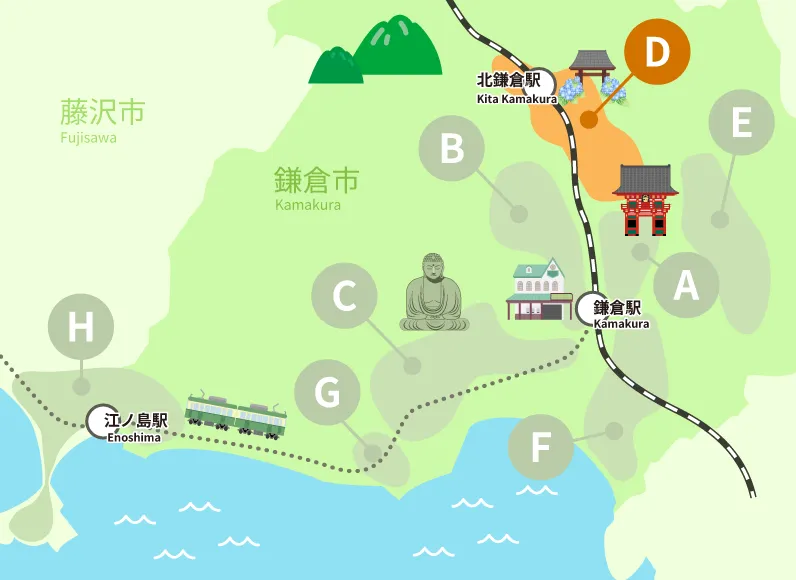
A group of historic temples where Zen teachings and serenity come to life. Seasonal flowers and ancient architecture convey the spirituality of Kamakura to the present.
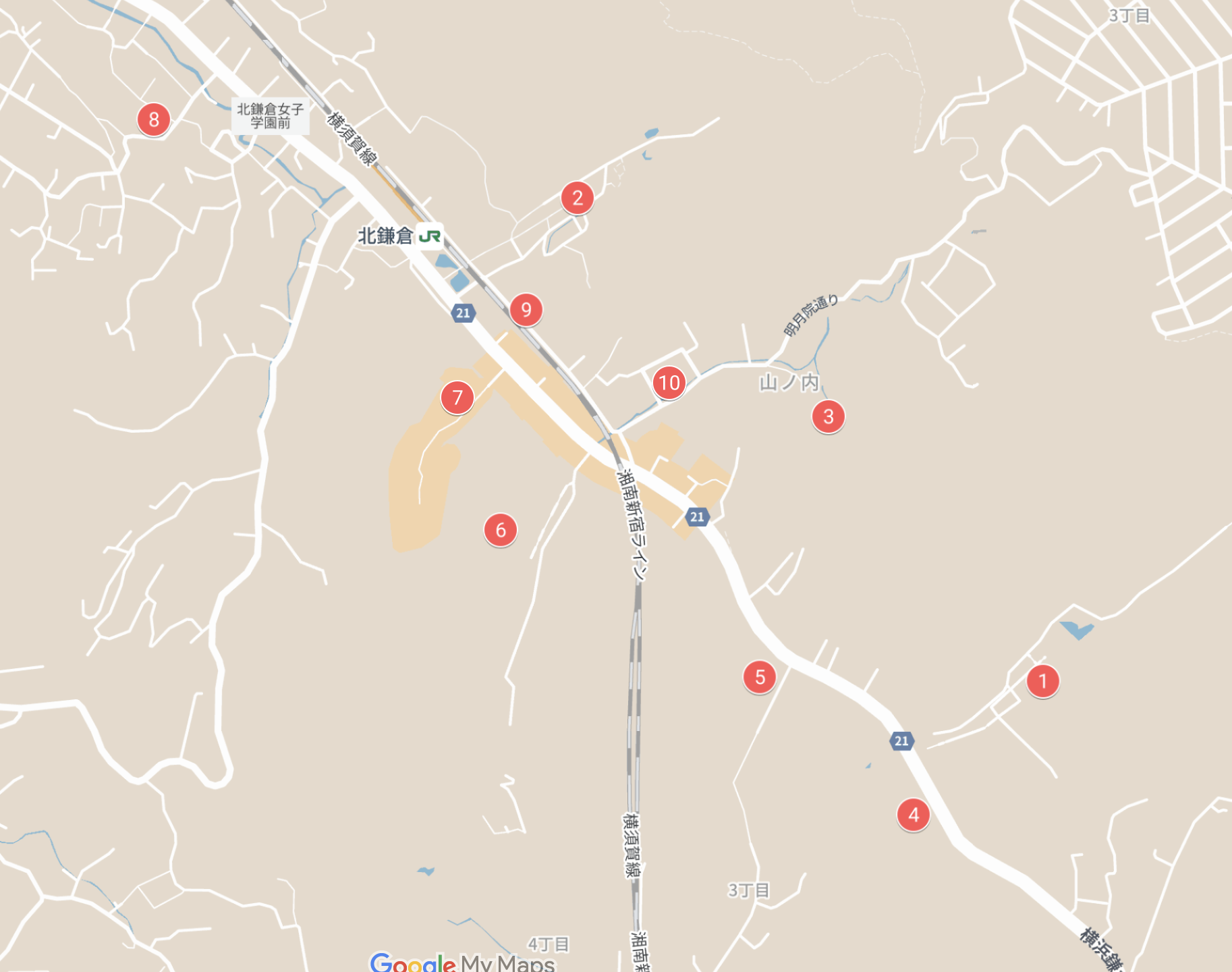
Toshi’s Kamakura sightseeing map
Features
Kitakamakura is an area where historic temples, enveloped in tranquility, convey the spirit of Kamakura to the present day. Kenchō-ji is one of the most important temples among the Kamakura Gozan (Five Great Zen Temples of Kamakura); it pursues the Zen Buddhist ideals of peace and enlightenment, conveying the spirit of Zen through its solemn gardens and magnificent architecture. Engaku-ji Temple houses treasures of great artistic value and is known as the “Temple of Flowers,” a place where visitors can enjoy the blooms of each season. <br><br> Meigetsu-in Temple is famous as the “Hydrangea Temple” and captivates visitors with its beauty, especially during hydrangea season. It also offers visitors a time of tranquility and meditation through features such as Kamakura’s largest yagura (rock pagoda) and a dry landscape garden. En'ō-ji is a place where one can deeply understand the Ten Kings faith, which determines one’s fate after death; the seated statue of King Yama, created by Unkei, is a special place for families praying for the healthy growth of their children. <br><br> Chōju-ji features a beautiful pagoda and a statue of Takauji, and visitors can enjoy the beauty of autumn foliage in its garden, which is open to the public on limited occasions. Jōchiji Temple preserves architectural styles from the Song Dynasty and is a place where visitors can experience the nature and history of Kamakura. Tōkeiji Temple supports women’s independence and rights; as a nunnery with over 600 years of history, it offers healing to visitors through seasonal flowers and Zen culture. Kōshō-ji Temple has a history of protecting hidden Christians and stands as a symbol of Japan’s religious diversity and tolerance. These temples serve as precious places where visitors to North Kamakura can experience inner peace and a sense of historical depth.
Sightseeing Spot
Kenchoji Temple (建長寺)
The pinnacle of Kamakura Gozan
A temple that weaves the tradition of Zen Buddhism
Kenchoji Temple was founded in the middle of the Kamakura period and occupies a particularly respected position among the five Kamakura Gozan temples.It is a place where people can pursue the peace and enlightenment of Zen Buddhism. was formed by. The Zen training and teachings practiced here are still alive today through the solemn gardens and magnificent architecture, conveying the spirit of Zen to visitors. The giant oak tree, which has been around for about 750 years, shows that the temple has remained an unchanging spiritual pillar over the years, and for people visiting Kamakura, it is a place where history, nature, and It is a precious place where you can feel peace of mind at the same time.
Engakuji Temple (円覚寺)
A sacred place in Kamakura that reflects the spirit of Zen
Enkakuji Temple, a story of history and nature
Engakuji Temple is a core temple of the Rinzai sect, which occupies a particularly important position among the Kamakura Gozan, and was founded in the 13th century. It greatly contributed to the development of Zen Buddhism and culture, and holds many treasures of high artistic value, such as a garden designated as a place of scenic beauty and a seated statue of Shakyamuni Buddha wearing a crown. Surrounded by the nature of Mt. Zuiroku, this temple is known as the “Temple of Flowers,” where you can enjoy seasonal flowers, bringing tranquility and spiritual peace to visitors.
Meigetsu-in (明月院)
View from the window of meditation
Beauty of each season
Meigetsu-in Temple is a hidden gem in Kamakura, widely known as the “Hydrangea Temple.” The park is beautiful throughout the year, but especially during the hydrangea season, the unique hydrangea called “Meigetsuin Blue” colors the park. However, its charm lies not only in the hydrangeas, but also in the Meigetsuin Yagura, the largest tower in Kamakura, the irises and autumn leaves that can be enjoyed in the garden at the back, and the view from the Karesansui garden and the “Enlightenment Window” that offer tranquility and meditation to visitors. time. With its rich history and natural beauty, Meigetsuin promises a relaxing experience for all who visit.
Ennoji Temple (円応寺)
A seat of mercy, looking at the judgment after death
Ennoji Temple, a temple built in the mid-13th century, enshrines Enma Daio as its principal image and allows for a deep understanding of the ten king religion that determines one’s fate after death. The temple is characterized by a seated statue of King Enma, created by Unkei and designated as an important cultural property of the country.The temple also has a tradition of being a child-rearing Enma, a place where families pray for the healthy growth of their children. It’s a special place for me. Ennoji Temple, one of Kamakura’s 24 Jizo temples, continues to offer visitors a rich history, culture, and spirituality.
Chojuji Temple (長寿寺)
A quiet time exploring the heritage of Muromachi
Kamakura’s secret garden
Choujuji Temple, a hidden gem in Kita Kamakura, is a temple founded by Takauji Ashikaga. It is characterized by the Shichido Garan, the beautiful Tahoto Pagoda, and the statues of Takauji and the chief priest in Kannon-do, and the garden, which is open to the public for a limited time, promises a peaceful time for visitors as the leaves turn red.
Jochiji Temple (浄智寺)
Silence that transcends time and space
Jochiji Temple, the secret of Song style architecture
Jochiji is a temple of the Engakuji sect of the Rinzai sect that was built in the 13th century to pray for the body of Hojo Munemasa. It retains the architectural style of the Song Dynasty, and features a seated statue of the Third Buddha, an important cultural property, and the Kanronoi, which is said to have the power of immortality, allowing you to feel the nature and history of Kamakura.
Tokeiji Temple (東慶寺)
Beyond the tradition of cutting ties
Healing garden
Tokeiji Temple was founded as the most prestigious nunnery in Kamakura, and is known as a “marginal temple” that supports women’s independence and rights. This temple, which has been a sacred place for women for over 600 years and has deep connections with historical figures, including the daughter of Toyotomi Hideyori, is a popular place for visitors to enjoy seasonal flowers and Zen culture. Gives healing.
Koshoji Temple (光照寺)
A refuge for hidden Christians
Coexistence of religions in Kamakura
Koshoji Temple was built on the site where Ippen Shonin camped out, and is historically known as a place to protect hidden Christians. The Sanmon gate, which bears the Kurusu crest, is a symbol of Japan’s religious diversity and tolerance.
Kitakamakura Old Private House Museum
(北鎌倉古民家ミュージアム)
A Hidden Retreat Where the Tranquility of a Traditional Home Resonates with Art in Kita-Kamakura
The Kita-Kamakura Old Folk House Museum is a restored exhibition space featuring historic homes relocated from Fukui Prefecture and Yokohama. This quiet space harmonizes the beauty of traditional Japanese architecture, retro furniture, and art. The charming courtyard, filled with seasonal plants, enhances the peaceful atmosphere. It’s a hidden gem in the Kamakura area, where visitors can enjoy different exhibitions with each visit.
Yoh Shomei Art Museum (葉祥明美術館)
A World of Healing and Hope Through the Beautiful Art of Picture Book Author Yoh Shomei
The Yoh Shomei Museum, located in Kita-Kamakura, is dedicated to the works of picture book author and painter Yoh Shomei. The museum showcases his original illustrations and landscape paintings, offering visitors the chance to discover new works with each visit. Surrounded by tranquil nature, this is a place where you can immerse yourself in the world of healing and hope crafted through Yoh’s art and poetry.