Features
Features
10 Hidden Gems of Kamakura Selected by Connoisseurs
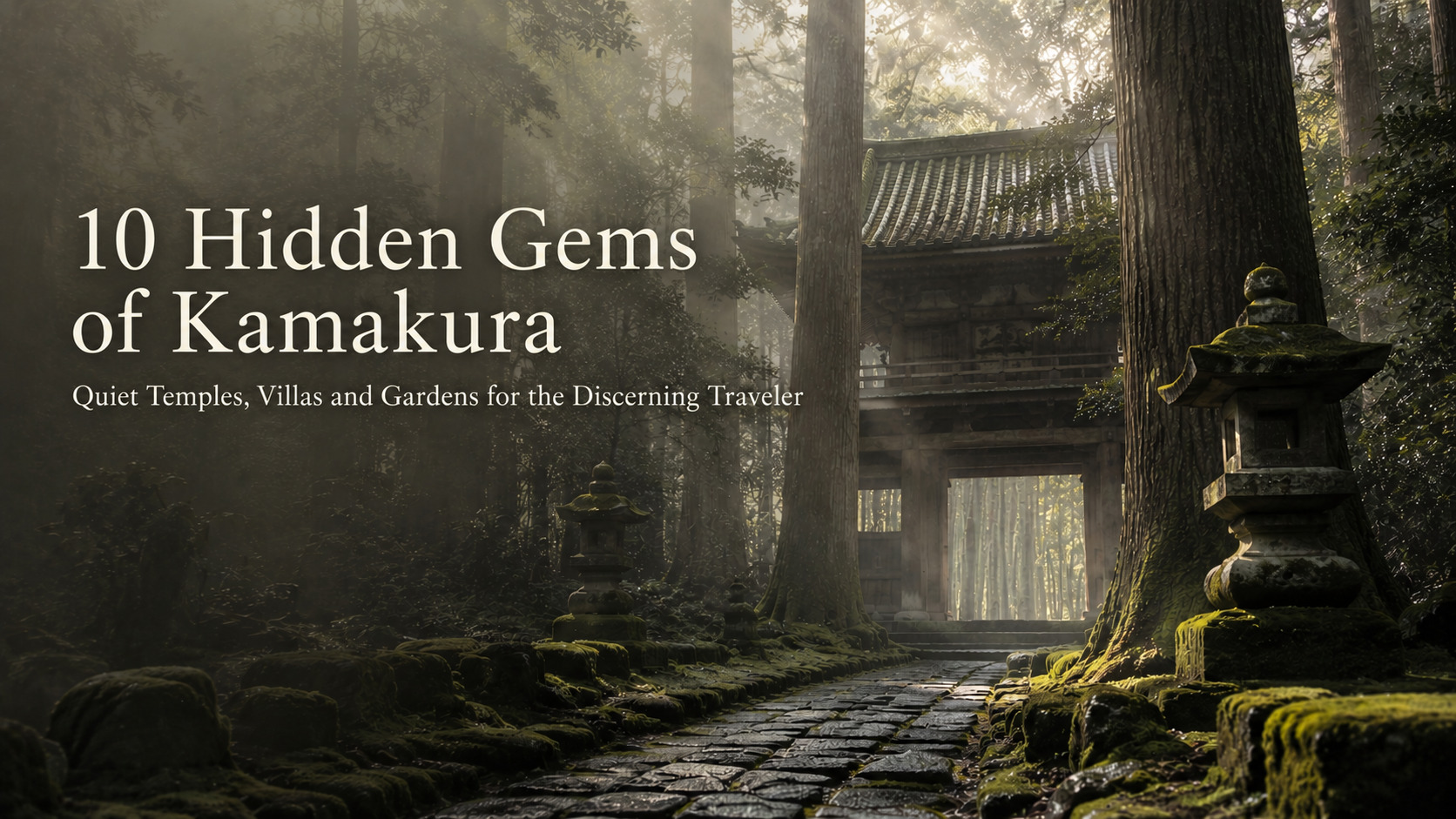
Beyond Tsurugaoka Hachimangu Shrine (鶴岡八幡宮) and the Great Buddha (大仏): 10 places to encounter the true essence of Kamakura. For travelers who want to escape the tourist crowds and feel the depth of Kamakura through quiet temples, villas, and gardens, here are the hidden gems we recommend to our overnight guests.
What Are Kamakura's Hidden Gems? Quiet Spots Beyond the Usual Tourist Trail
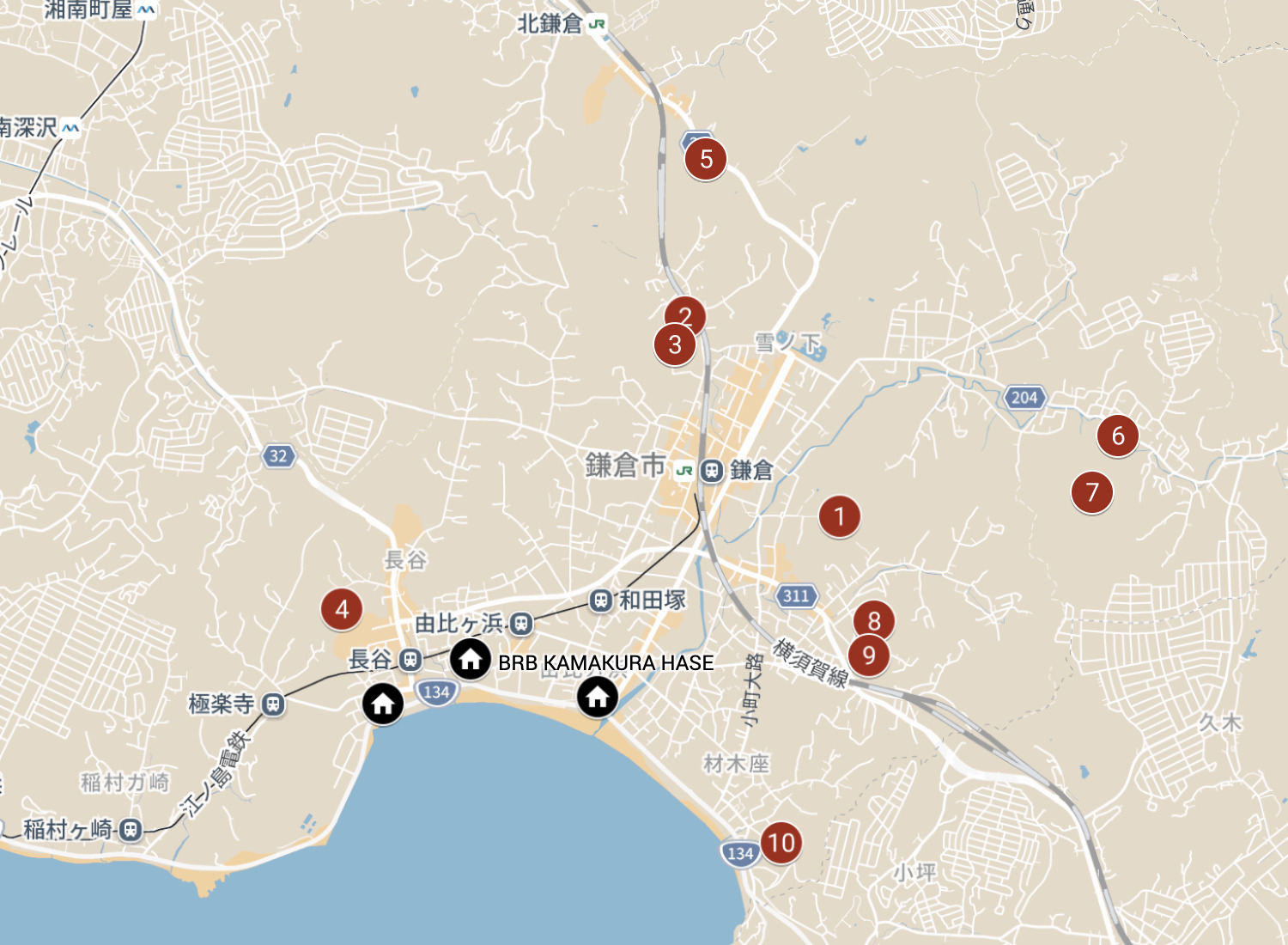
Hidden gems of Kamakura are places that offer a depth you can't experience at the iconic Tsurugaoka Hachimangu Shrine (鶴岡八幡宮) or the Great Buddha (大仏). In this article, we introduce 10 carefully selected destinations from among the temples, villas, and gardens we recommend to our overnight guests—each one rich in history and steeped in tranquility. Our selection is based on three criteria. First, profound historical significance. Second, the beauty of architecture or gardens worth experiencing. And above all, the third: the rare ability to encounter authenticity within silence. These are places where you can savor Kamakura's culture even during peak times like New Year's and major holidays. Whether you're a returning visitor exploring Kamakura for the second or third time, or a first-time traveler hoping to escape the crowds, these spots will help you feel the true depth of Kamakura.
Experience Kamakura's Tranquility Through Temples, Villas, and Gardens
Myohonji Temple (妙本寺)
Just 8 Minutes from Kamakura Station, Where the Bustle Disappears Into Valley Silence
Just 8 minutes on foot from the East Exit of Kamakura Station, Myohonji Temple (妙本寺) sits deep in the Hikigayatsu (比企谷) valley as the head temple of Nichiren Buddhism (日蓮宗). The moment you pass through the main gate, the noise of the busy station district vanishes, and a tree-shrouded path stretches quietly into the depths. Founded in the mid-13th century on the site where the Hiki clan—powerful samurai vassals of the Kamakura Shogunate led by Hiki Yoshikazu (比企能員)—met their tragic end, this ancient temple remains one of Kamakura’s most surprising hidden gems. Despite its proximity to the station, visitors are remarkably few. As one of our overnight guests put it, “I never imagined Kamakura had a place this peaceful, this close to the station.”
Eishoji Temple (英勝寺)
Kamakura’s Only Active Convent — A Bamboo Grove Without the Crowds
Tucked away in Ogigayatsu (扇ガ谷), Eishoji Temple (英勝寺) is the only active convent remaining in Kamakura today. It was founded in the early 17th century by Eishoin (英勝院), a concubine of Tokugawa Ieyasu (徳川家康), the founder of the Tokugawa Shogunate. While Hokokuji Temple (報国寺) is famous worldwide for its bamboo forest, Eishoji’s bamboo grove offers something Hokokuji cannot: solitude. Unlike the crowds at Hokokuji, here the bamboo stands in profound silence — making this one of the rare places in Kamakura where you can capture a photograph of bamboo without anyone in the frame. For travelers who want the bamboo grove experience without the crowds, Eishoji is Kamakura’s best-kept secret.
Jufukuji Temple (寿福寺)
One of Kamakura’s Five Great Zen Temples — Quietly Nestled Down a Stone-Paved Path
Jufukuji Temple (寿福寺) is one of the most prestigious temples in Kamakura, ranked third among the Five Great Zen Temples of Kamakura (鎌倉五山) — five Zen monasteries regarded as especially significant during the Kamakura period. Founded in the late 12th century by Hojo Masako (北条政子), wife of Minamoto no Yoritomo (源頼朝), the first shogun of the Kamakura Shogunate, to honor his memory after his death. The temple’s most striking feature is the long, beautifully laid stone path leading from the front gate to the inner gate. Walking between rows of ancient cedars on this stone path, you’ll notice the area is surprisingly quiet for a temple of such high standing — far less visited than nearby Tsurugaoka Hachimangu Shrine (鶴岡八幡宮). The only sound is your own footsteps. Just 10 minutes from Kamakura Station, Jufukuji offers Zen-temple silence that feels worlds away.
Kosokuji Temple (光則寺)
A 3-Minute Walk from Crowded Hasedera — A Hidden Flower Temple
Just a 3-minute walk from the famously crowded Hasedera Temple (長谷寺), Kosokuji Temple (光則寺) is a quiet flower temple known to only a few. Founded in the late 13th century to honor Nichiro (日朗), a key disciple of Nichiren (日蓮), Kosokuji’s grounds bloom with seasonal flowers throughout the year. The temple is especially celebrated for its kaido (flowering crabapple) in spring and yamaajisai (mountain hydrangea) in summer — a quiet alternative to the crowds drawn to Hasedera’s iconic hydrangeas. Step away from the throngs at Hasedera, walk three minutes, and you’ll find a completely different Kamakura: a serene sanctuary in the Hase district that most visitors never discover.
Chojuji Temple (長寿寺)
A Rare Zen Garden Open Only in Spring and Autumn
Just minutes from the bustling Kenchoji Temple (建長寺) in Kita-Kamakura (北鎌倉), Chojuji Temple (長寿寺) is a Zen temple connected to Ashikaga Takauji (足利尊氏), the first shogun of the Muromachi Shogunate that succeeded the Kamakura Shogunate. What makes Chojuji exceptional is its rarity: the temple is open to visitors only during limited periods in spring and autumn. The Zen garden — a tapestry of moss, stone, autumn leaves, and fresh green — is among the most beautiful in Kamakura. Despite being right next to the heavily visited Kenchoji and Engakuji (円覚寺), Chojuji’s limited opening keeps the crowds away, making it a hidden gem where you can savor a Zen garden in true quiet.
Ichijo Ekan Sanso (一条恵観山荘)
A Royal Villa by the Nameri River — Matcha Tea and Quiet Contemplation
Most visitors to Hokokuji Temple (報国寺) and Jomyoji Temple (浄妙寺) board the bus and return to Kamakura Station, never knowing that just a few more minutes on foot would lead them to one of Kamakura’s most exquisite hidden gems. Ichijo Ekan Sanso (一条恵観山荘) was originally built in 17th-century Kyoto by Ichijo Ekan (一条恵観), a son of Emperor Go-Yozei (後陽成天皇). The entire villa was carefully relocated to its present site in 1959 (Showa 34) and is now designated a National Important Cultural Property. Sip matcha tea at the on-site teahouse while gazing at the garden along the Nameri River (滑川) — a quiet hour, far removed from the tourist bustle of Kamakura.
Former Kacho-no-miya Residence (旧華頂宮邸)
A Half-Timbered Western Mansion with a French-Style Garden — Just Beyond Hokokuji
A short walk beyond Hokokuji Temple (報国寺) reveals an unexpected and little-known hidden gem. The Former Kacho-no-miya Residence (旧華頂宮邸) is a half-timbered Western-style mansion built in 1929 (Showa 4) as the residence of the Kacho-no-miya royal family. Now designated a Registered Tangible Cultural Property of Japan, the mansion features a beautifully maintained French-style garden in front. Among Kamakura’s many temples and shrines, this elegant European-style estate offers a striking contrast — “another Kamakura” that surprises and delights every visitor who discovers it.
Myohoji Temple (妙法寺)
The “Moss Temple” of Kamakura — Stone Steps Carpeted in Green
Often called the “Moss Temple” of Kamakura, Myohoji Temple (妙法寺) is the eastern counterpart to Kyoto’s famous Saihoji (西芳寺). This Nichiren Buddhist temple was built in the mid-13th century on the site where Nichiren (日蓮) himself once lived in a hermitage in Matsubagayatsu (松葉ヶ谷). The temple’s most breathtaking feature is its stone staircase, completely covered in moss like a carpet of green velvet. While the steps themselves are off-limits to protect the moss, the view alone is unforgettable — a rare and magical scene found nowhere else in Kamakura. Located slightly off the main tourist trail, Myohoji sees few visitors, making it a perfect alternative when the famous spots are crowded.
Ankokuronji Temple (安国論寺)
A Sacred Site of Nichiren — Hilltop Views and Quiet Trails in Matsubagayatsu
Located in the same Matsubagayatsu (松葉ヶ谷) valley as Myohoji Temple (妙法寺), Ankokuronji Temple (安国論寺) is best visited together with Myohoji as a pair. This Nichiren Buddhist temple is considered especially sacred — it was built in the mid-13th century on the site where Nichiren (日蓮) is believed to have composed his influential treatise “Risshō Ankoku Ron (立正安国論).” A trail behind the main hall climbs to a hilltop viewpoint called Fujimi-dai, offering sweeping views over the streets of Kamakura. Seasonal flowers bloom throughout the year. Tucked away from Kamakura’s main tourist areas, Ankokuronji draws few visitors, making it an ideal spot when the popular sites become crowded.
Komyoji Temple (光明寺)
A Grand Temple Complex Near Zaimokuza Beach — A Quiet Finale Away from the Crowds
Located near Zaimokuza Beach (材木座), Komyoji Temple (光明寺) is the head temple of the Jodo (Pure Land) school of Buddhism, which centers on devotion to Amida Buddha. Founded in the mid-13th century by Hojo Tsunetoki (北条経時), regent of the Kamakura Shogunate, the temple boasts one of the largest temple gates in Kamakura — designated a National Important Cultural Property. Within its expansive grounds lie two distinctive gardens: the Kishu Garden and the Sanzon-Goso Garden. Because it sits at some distance from Kamakura Station and requires a short bus ride, surprisingly few visitors make the trip. For travelers seeking the silence of a grand temple complex with the sound of the nearby sea, Komyoji is a fitting finale to this journey through Kamakura’s hidden gems.