Ume at Myohonji Temple (妙本寺)
The Charm of Myohonji Temple’s Plum Blossoms
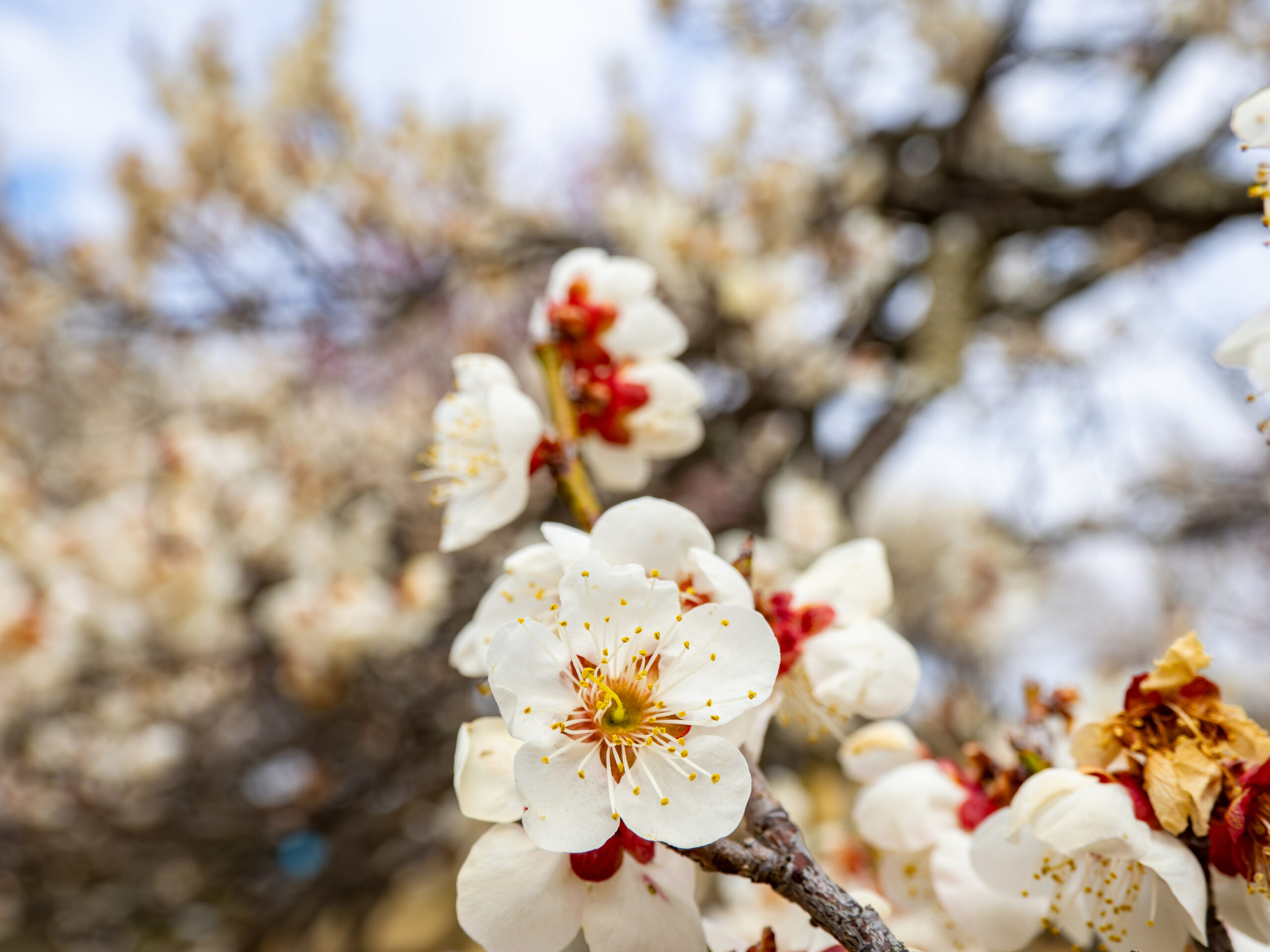
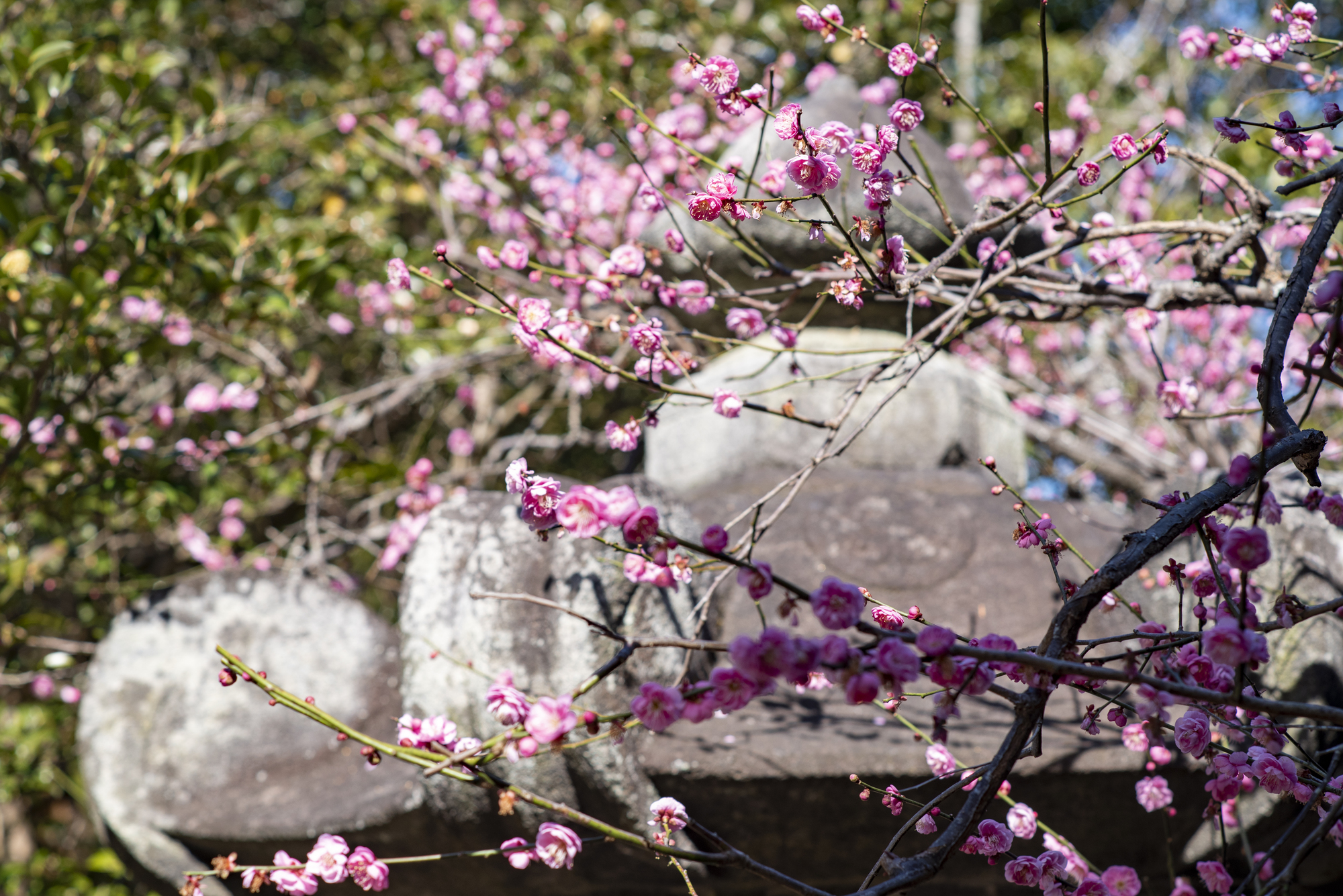
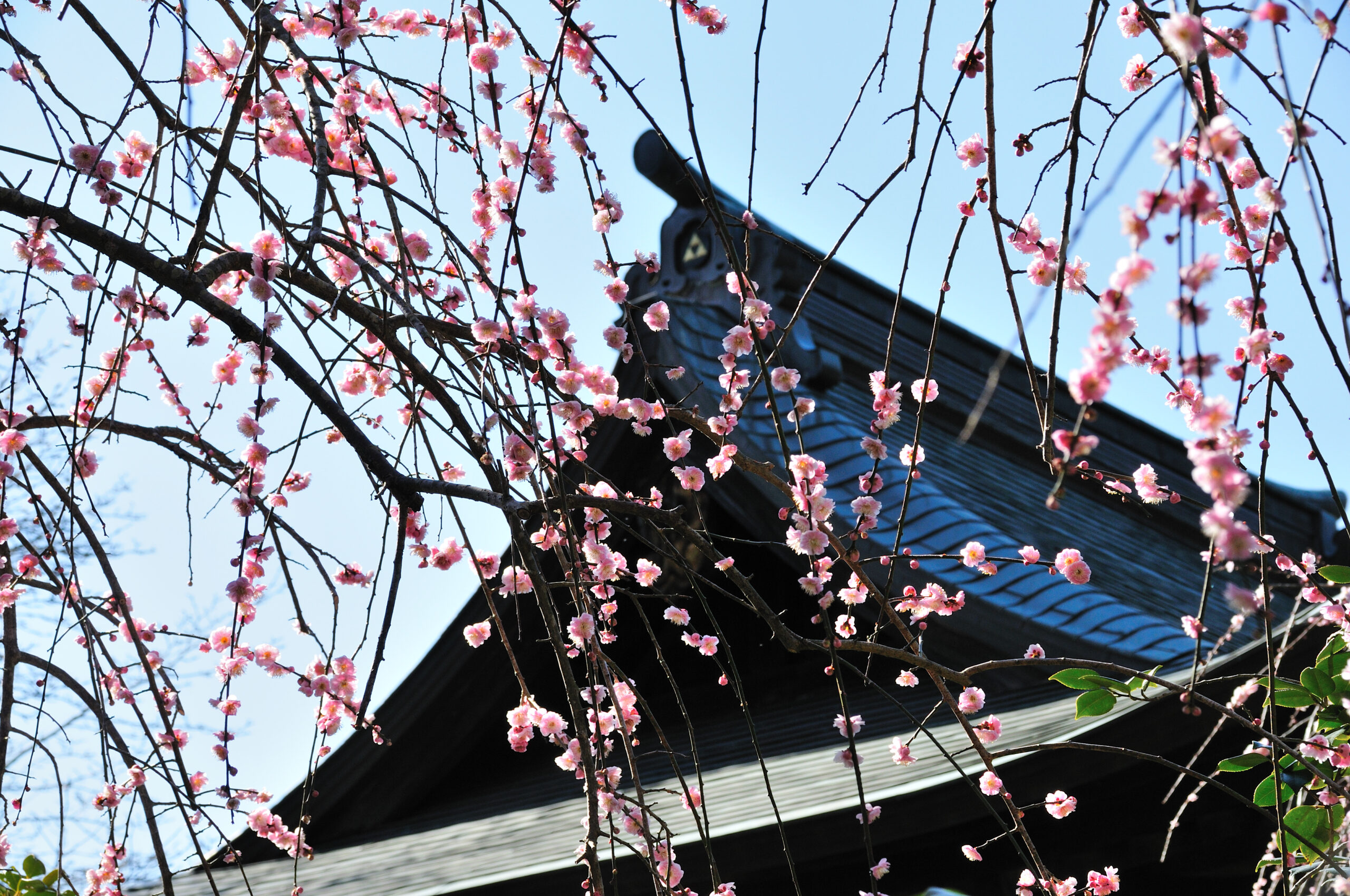
Myohonji Temple is the oldest Nichiren Buddhist temple in Kamakura, surrounded by beautiful nature throughout the seasons. During the plum blossoms season, red and white plum trees bloom throughout the temple grounds, creating a tranquil atmosphere where visitors can feel the arrival of spring.
Highlights – Plum Blossoms at Nitenmon Gate and Soshido Hall
The plum blossoms around Nitenmon Gate and in front of Soshido Hall are particularly noteworthy. The deep crimson flowers harmonize with the historic temple structures, captivating visitors. Additional red and white plum trees can be found beside Soshido Hall and around the Nichiren statue, each offering a unique charm.
Best Time to See Plum Blossoms and Enjoyment Tips
The plum blossoms in the temple grounds begin to bloom in late January and reach full bloom from mid-February to early March. Amidst the solemn ambiance of the temple, visitors can enjoy the subtle fragrance of the blossoms. Additionally, it is a unique sight to see mejiro (Japanese white-eye birds) flitting among the flowers. The contrast of red blossoms and green birds is strikingly beautiful, and the early morning and late afternoon are ideal times for observation and photography.
A Peaceful Visit to Enjoy the Flowers
Unlike more touristy locations, Myohonji Temple is known as a tranquil spot where visitors can appreciate the beauty of flowers in a serene setting. It is the perfect destination for those looking to avoid crowds while enjoying the elegant charm of plum blossoms.
Myohonji Temple Through the Seasons
Beyond the plum blossoms in spring, Myohonji Temple offers seasonal beauty with cherry blossoms (late March to early April), Chinese flowering crabapple (early to mid-April), and autumn foliage (November). Each season provides a unique reason to visit and experience its natural beauty.
Conclusion
When strolling through Kamakura, be sure to visit Myohonji Temple and immerse yourself in the historic temple grounds while embracing the breath of spring.
Toshi’s Evaluation (2026)
| Evaluation Category | Score | Reason |
|---|---|---|
| Scenery | 9 | Set in a quiet valley, the red and white plum blossoms around the Soshi-do Hall and the statue of Nichiren harmonize beautifully with the historical temple buildings. The scene, enhanced by early spring sunlight, is highly photogenic. While the number of plum trees is modest, the composition and traditional Japanese ambiance are of very high quality. |
| Accessibility | 9 | Located about an 8–10 minute walk from the East Exit of JR and Enoden Kamakura Station (鎌倉駅), with no need for transfers. The mostly flat route through the city is easy to follow, though it is not immediately adjacent to the station, so it doesn’t earn a perfect score. |
| Historical Value | 9 | One of the oldest temples of the Nichiren school, Myohonji Temple (妙本寺) is deeply tied to medieval Kamakura history as the family temple of the Hiki clan. The temple halls, such as the Soshi-do, are rich in historical atmosphere and significant in the context of Kamakura Buddhism. |
| Comfort | 8 | Despite being within walking distance of Kamakura Station, the temple is not overly commercialized, allowing for quiet strolls and photography, especially in the morning and evening. However, some areas can get slightly crowded during the day with photographers, and facilities are minimal. |
| Reviews | 7 | While many appreciate the tranquility and ambiance, some feel the scale of the plum blossoms is modest compared to more famous plum-viewing spots. Overall, it earns a solid mid-to-high range evaluation. |
Total Score: 42
Overall Evaluation
The plum blossoms at Myohonji Temple (妙本寺) offer a serene early spring experience, combining the quietude of a valley with the presence of historic Nichiren temple architecture. With easy access from the station and relatively low crowds, this is an ideal location for visitors who seek a peaceful, contemplative plum-viewing experience in a historically rich setting.