Hydrangeas of Ennoji Temple (円応寺)
What Do the Hydrangeas at Ennoji Temple Look Like?
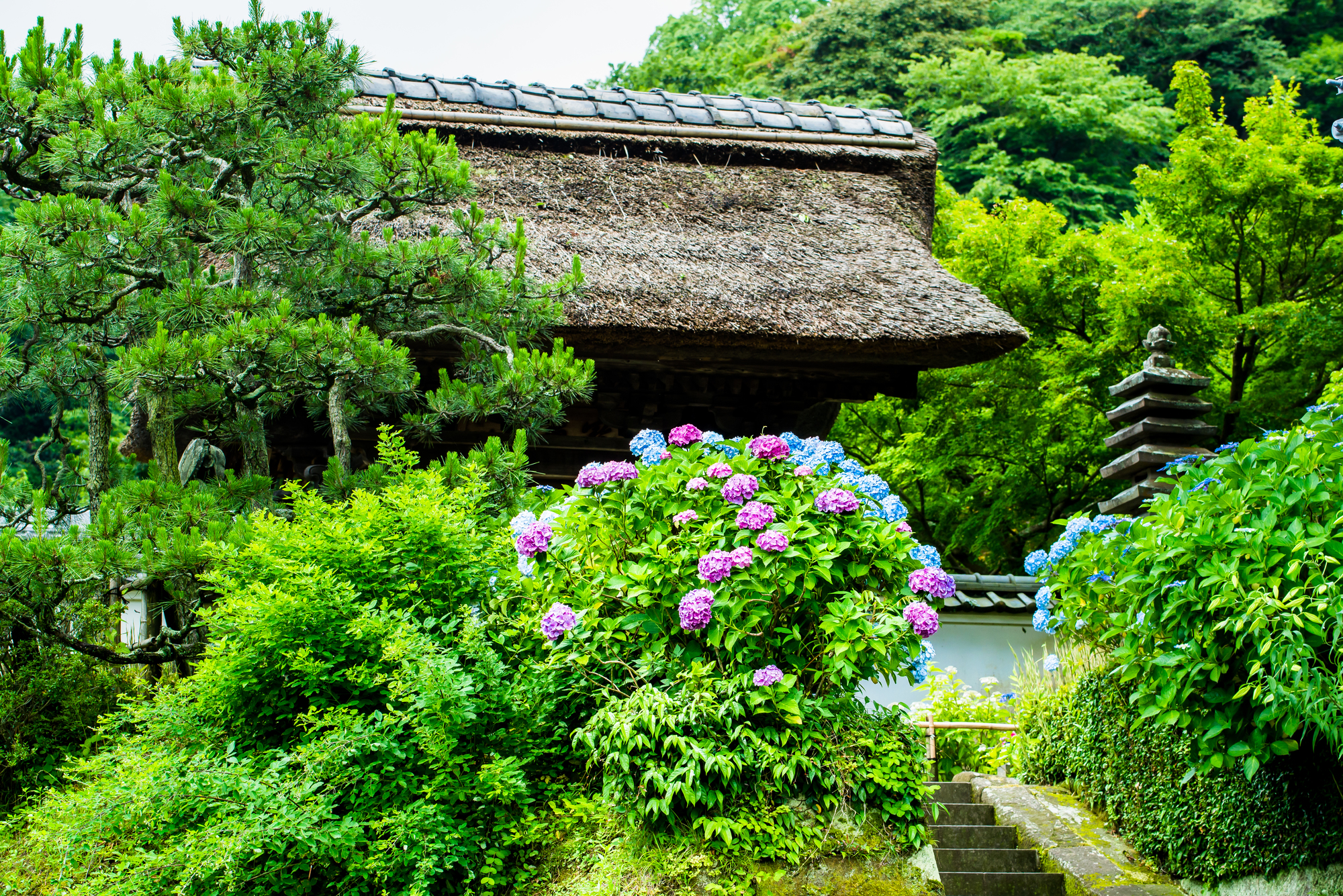
Tucked into a quiet valley in northern Kamakura, Ennoji Temple (円応寺) is not known as a hydrangea destination. Its true highlight is the seated statue of King Enma, the temple’s principal image, and the hydrangeas are a modest seasonal touch. In early summer, blue hydrangeas bloom in just three or so spots in a secluded corner beside the main hall, along the edge of a bamboo grove.
When Is the Best Time to Visit?
The hydrangeas at Ennoji Temple typically reach their peak between early and late June. During the rainy season, the blue of the rain-soaked flowers deepens, standing out vividly against the green of the bamboo behind them. The exact timing shifts with the weather each year, so it is worth checking before you visit.
Photo Highlights and Must-See Spots
Set against the straight green stalks of the bamboo grove, the blue hydrangeas have a wild, natural character quite unlike the flowers of a manicured garden. They are few in number, but that very modesty lets you take in the colour and shape of each bloom. Rather than seeking out the hydrangeas alone, viewing them together with the statue of King Enma in the main hall is what makes a visit to Ennoji distinctive.
Enjoying the Quiet of Early Morning
The hydrangeas at Ennoji Temple are free of the crowds you find at Hasedera Temple or Meigetsuin Temple. This is a place for those who want to take in the change of season in peace. If you are staying at Toshi’s Place (トシズプレイス), walking over in the early morning lets you enjoy a stillness that a day trip cannot offer.
Getting There and Visitor Information
Ennoji Temple is about a 15–20 minute walk from Kita-Kamakura Station, directly across from Kenchoji Temple (建長寺). Nearby hydrangea spots such as Meigetsuin Temple (明月院) and Tokeiji Temple (東慶寺) make it a natural stop on a northern Kamakura hydrangea walk. For admission fees and opening hours, please see the Ennoji Temple detail page.
Summary
The hydrangeas at Ennoji Temple are not flowers that impress by scale. Blue hydrangeas blooming quietly against a bamboo grove, and the statue of King Enma, an Important Cultural Property — being able to take in these two in stillness is what makes a visit to Ennoji worthwhile. For those who want to step away from the busier sights and feel early summer in Kamakura quietly, this is a place we gently recommend.
Toshi’s Review
| Category | Score | Remarks |
|---|---|---|
| Scenery | 7 | The hydrangeas are modest in number, offering a quiet and refined beauty. The atmosphere is calm, but the scale and vibrancy fall short compared to more famous temples. |
| Accessibility | 6 | Reachable on foot in 15–20 minutes from the nearest station, or by bus. However, signage and route clarity are average. No major improvements noted. |
| Historical Value | 9 | Home to a nationally designated Important Cultural Property—the statue of Enma (閻魔大王)—and known as one of the Thirteen Buddha Temples of Kamakura (鎌倉十三仏霊場), the temple holds significant historical and cultural value. |
| Comfort | 7 | The grounds are quiet and rarely crowded, but steep stone steps and a lack of facilities like benches or restrooms may cause inconvenience. |
| Public Reviews | 7 | Social media and online reviews frequently describe it as a “quiet hidden gem” or “peaceful,” while concerns persist about the limited hydrangea display and basic facilities. |
Total Score: 36
Ennoji Temple is a hidden gem ideal for those who value serenity and historical depth. While it may not satisfy visitors seeking large, colorful displays, it’s a great choice for those wanting a calm and reflective experience. Note that accessibility and facility limitations should be considered, but overall, the temple receives steady, positive reviews.