About the Flowers of Kamakura
Surrounded by hills and the sea, Kamakura has many temples and shrines tucked into narrow valleys called yato, and something is in bloom in their grounds almost all year. This guide introduces 12 flowers and autumn colors you can see in Kamakura, in seasonal order, from winter wintersweet to the autumn leaves of mid-December. Peak times shift from year to year, so check what is in bloom now before you go. In short: plum blossoms peak in February, cherry blossoms from late March to early April, hydrangeas in June, lotus in July, bush clover and red spider lilies in September, and autumn leaves from late November to mid-December.
When Flowers Bloom in Kamakura: Month-by-Month Calendar
| Month | Flowers | Where to see them |
|---|---|---|
| January | wintersweet, narcissus, early plum | Kosokuji Temple (光則寺), Meigetsu-in (明月院), Zuisenji Temple (瑞泉寺) |
| February | plum, wintersweet, narcissus | Egara Tenjin Shrine (荏柄天神社), Tokeiji Temple (東慶寺), Hokaiji Temple (宝戒寺) |
| March | cherry, late plum (early March) | Dankazura Path (段葛), Genjiyama Park (源氏山公園), Hasedera Temple (長谷寺) |
| April | cherry, crabapple (early April), wisteria (from late April) | Hasedera Temple, Kosokuji Temple, Eishoji Temple (英勝寺) |
| May | wisteria (until early May) | Tsurugaoka Hachimangu Shrine (鶴岡八幡宮), Eishoji Temple |
| June | hydrangea, iris | Meigetsu-in, Hasedera Temple, Ofuna Flower Center (大船フラワーセンター) |
| July | lotus | Tsurugaoka Hachimangu Shrine, Komyoji Temple (光明寺) |
| August | lotus (until early August) | Komyoji Temple, Tsurugaoka Hachimangu Shrine |
| September | bush clover, red spider lily | Hokaiji Temple, Kaizoji Temple (海蔵寺), Eishoji Temple |
| October | red spider lily (until early October) | Eishoji Temple, Egara Tenjin Shrine |
| November | autumn leaves, ginkgo | Engakuji Temple (円覚寺), Tsurugaoka Hachimangu Shrine |
| December | autumn leaves (early to mid-December), wintersweet, narcissus | Zuisenji Temple, Kosokuji Temple |
Browse by season: Winter to early spring (wintersweet, plum) / Spring (cherry, crabapple, wisteria) / Summer (hydrangea, iris, lotus) / Autumn (bush clover, red spider lily, autumn leaves) / Winter (narcissus)
Wintersweet (Robai, 蝋梅)

Usual peak: December to February
Where to see them: Hase: Kosokuji Temple; Kita-Kamakura: Meigetsu-in
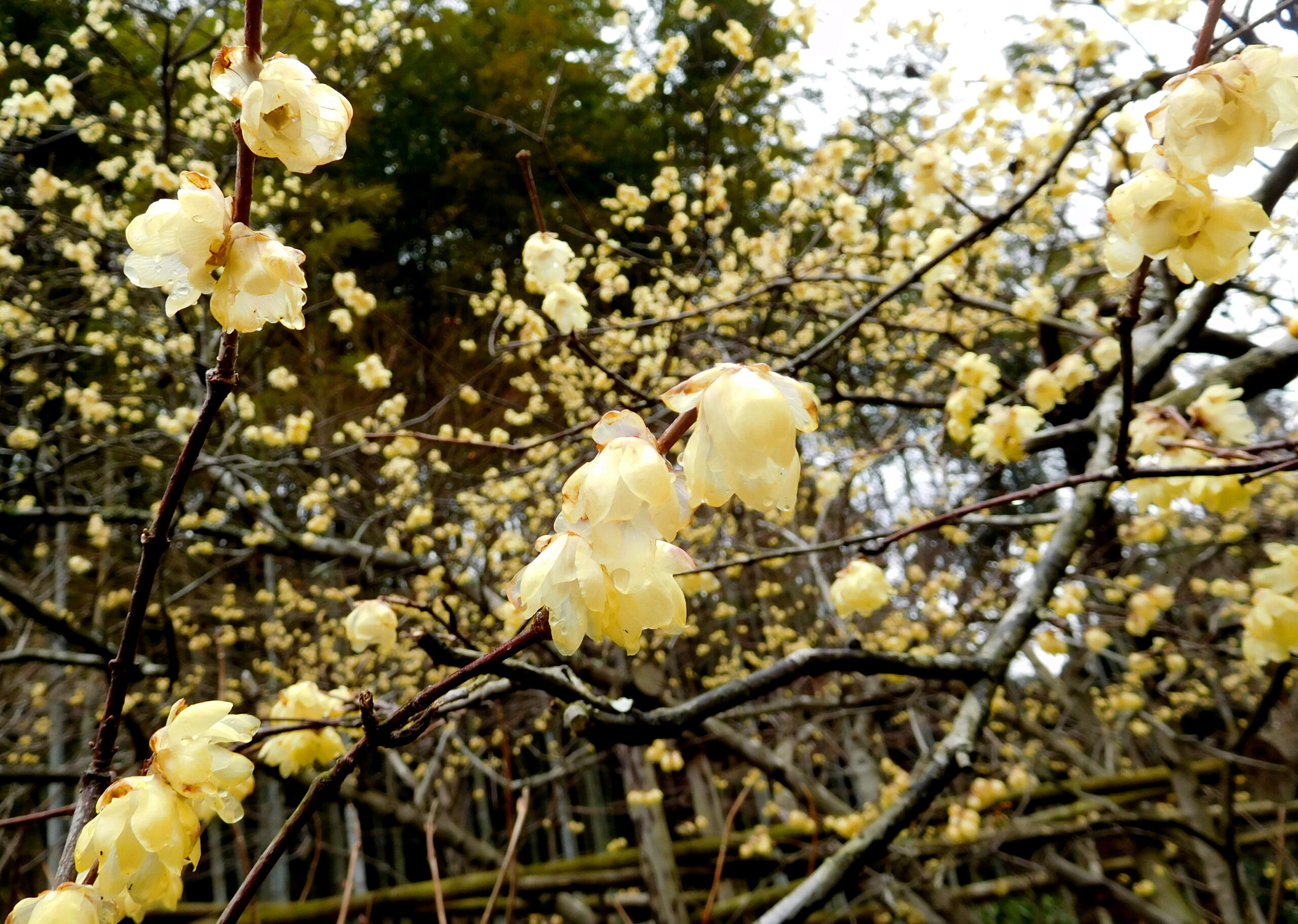
Wintersweet is a shrub that blooms in the coldest months, with pale yellow flowers that look almost like wax. Its sweet, strong scent stands out in the quiet winter temple grounds. At Kosokuji Temple and Meigetsu-in, the winter grounds fill with yellow blossoms and fragrance.
See what’s in bloom now →Plum Blossoms (Ume, 梅)

Usual peak: Late January to early March (best in mid-February)
Where to see them: Nikaido: Egara Tenjin Shrine; Kita-Kamakura: Tokeiji Temple; Kamakura Station east: Hokaiji Temple
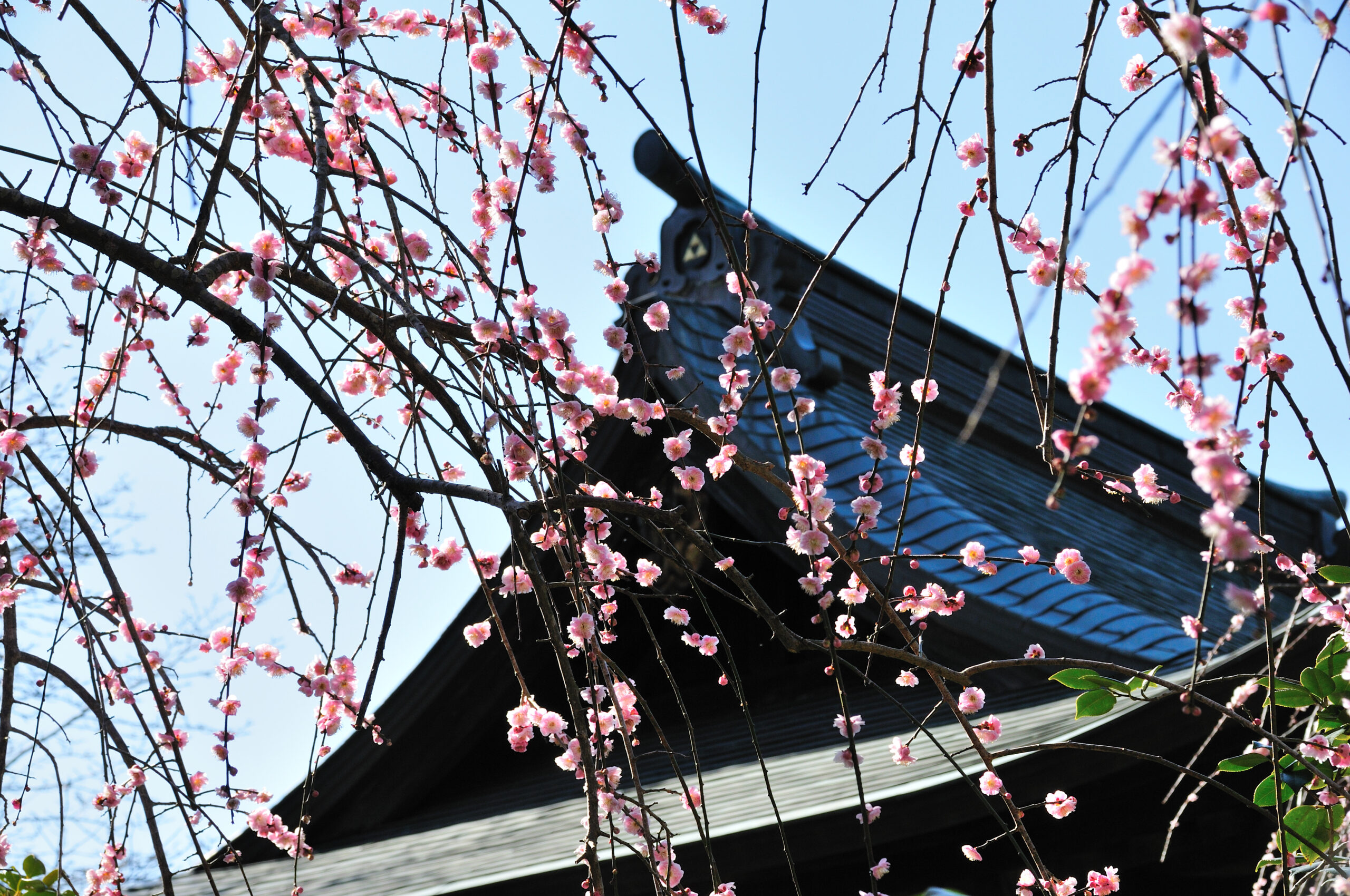
Kamakura’s plum trees start blooming in late January, and most are at their best in mid-February, when white, red and weeping blossoms announce the coming of spring. Egara Tenjin Shrine honors Sugawara no Michizane, a 9th-century scholar worshipped as the god of learning. Minamoto no Yoritomo is said to have revered it as the guardian of the unlucky northeast direction when he founded his shogunate here.
See the 10 best plum blossom spots in Kamakura →
See what’s in bloom now →Cherry Blossoms (Sakura, 桜)

Usual peak: Late March to early April
Where to see them: Kamakura Station east: Dankazura Path; Kamakura Station west: Genjiyama Park; Hase: Hasedera Temple
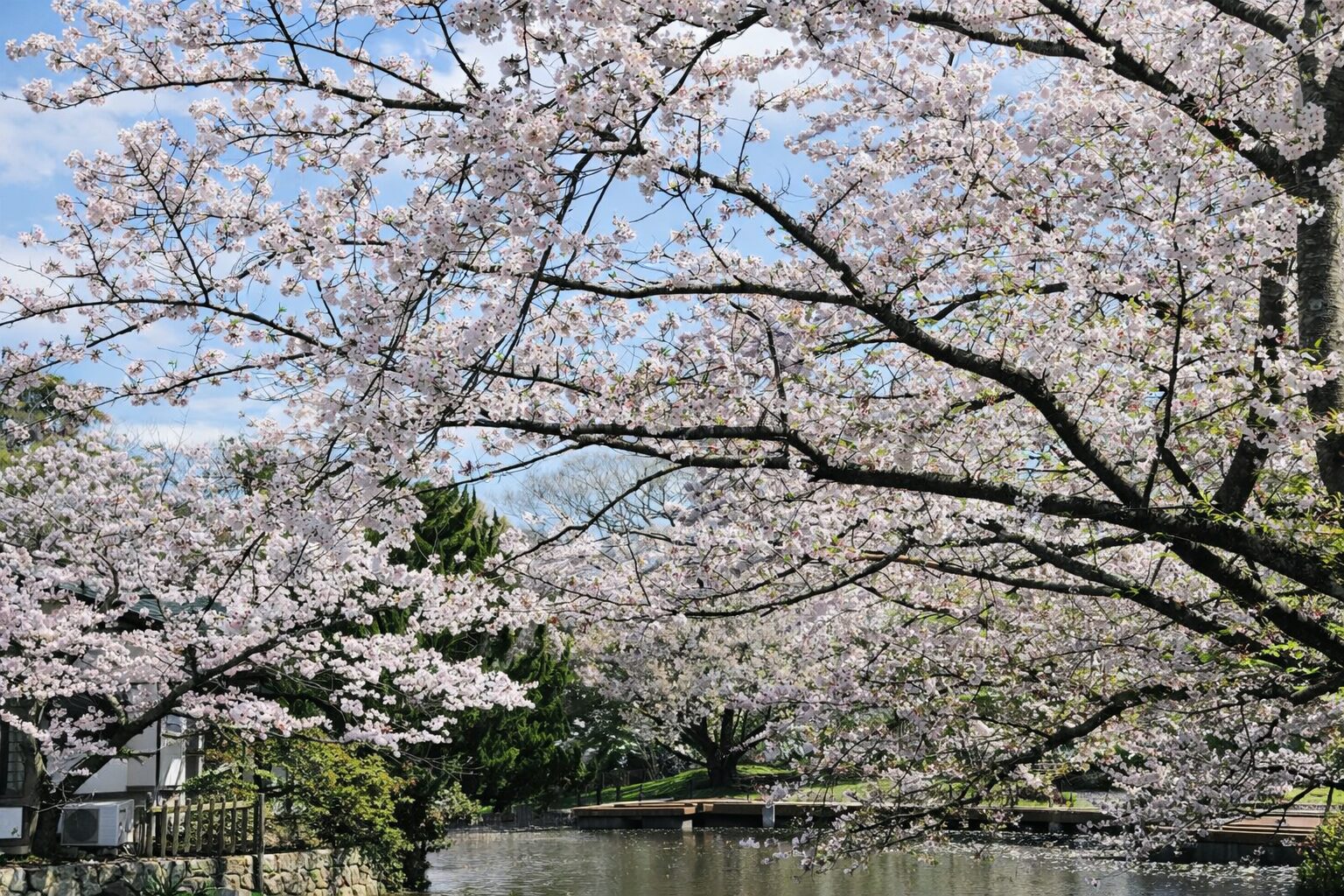
Early varieties open from late February, while weeping cherries and Somei-Yoshino peak from late March to early April. Dankazura, the raised path in the middle of Wakamiya-oji Avenue, was laid out by Minamoto no Yoritomo in 1182 as the approach to Tsurugaoka Hachimangu Shrine. At Hasedera Temple, the lookout gives you a view over the town and the sea.
See the 10 best cherry blossom spots in Kamakura →
See what’s in bloom now →Flowering Crabapple (Kaido, 海棠)

Usual peak: Late March to early April
Where to see them: Hase: Kosokuji Temple; Omachi: Myohonji Temple (妙本寺); Kamakura Station west: Kaizoji Temple (海蔵寺)
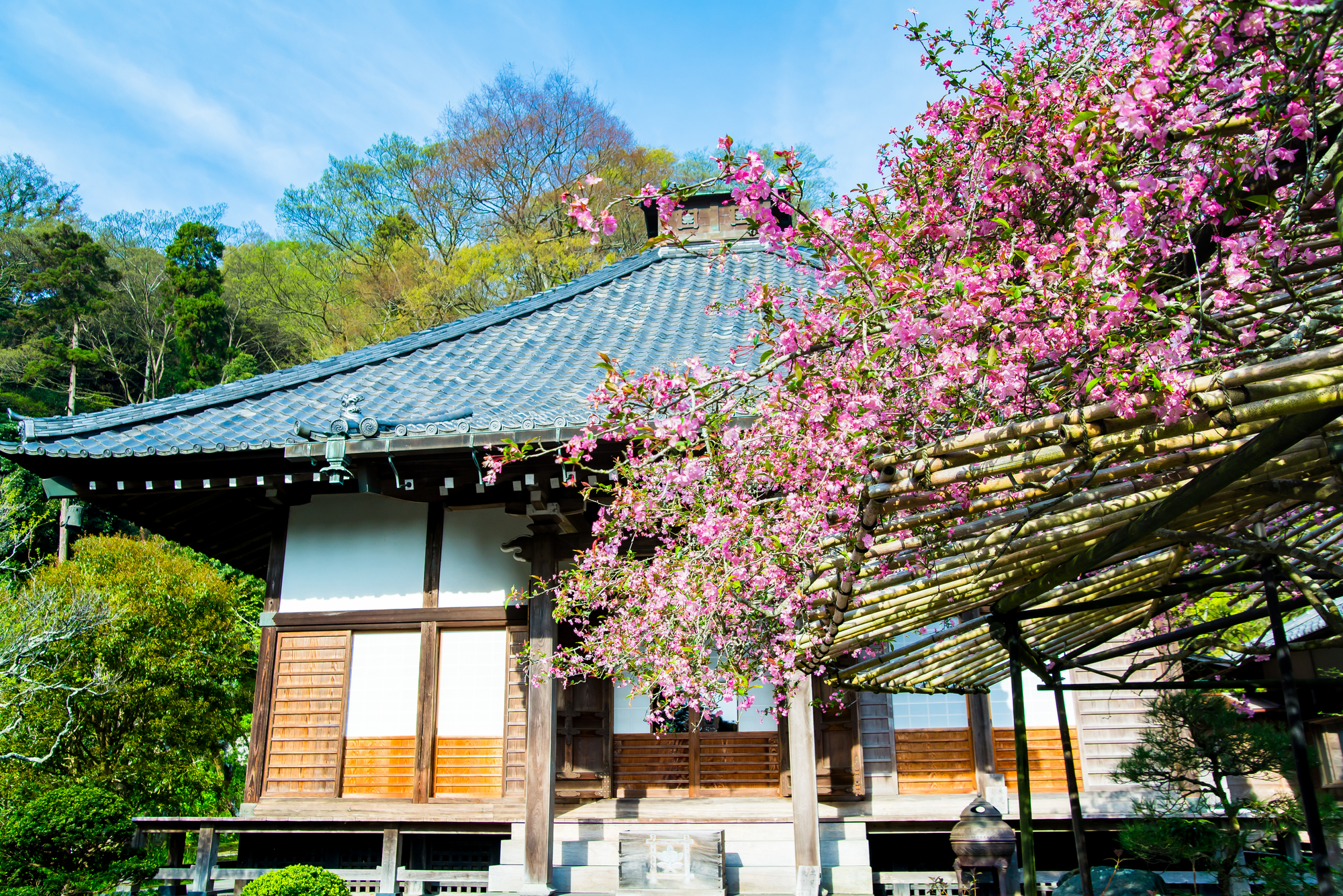
Kaido is a relative of the apple tree, known for deep pink flowers that hang gracefully downward. The crabapple at Kosokuji Temple is said to be about 200 years old and is designated a natural monument of Kamakura City. It usually peaks from late March to early April. Myohonji Temple and Kaizoji Temple also have bright crabapple blossoms in spring.
See what’s in bloom now →Wisteria (Fuji, 藤)
Usual peak: Late April to early May
Where to see them: Kamakura Station west: Eishoji Temple; Kamakura Station east: Tsurugaoka Hachimangu Shrine; Nikaido: Zuisenji Temple
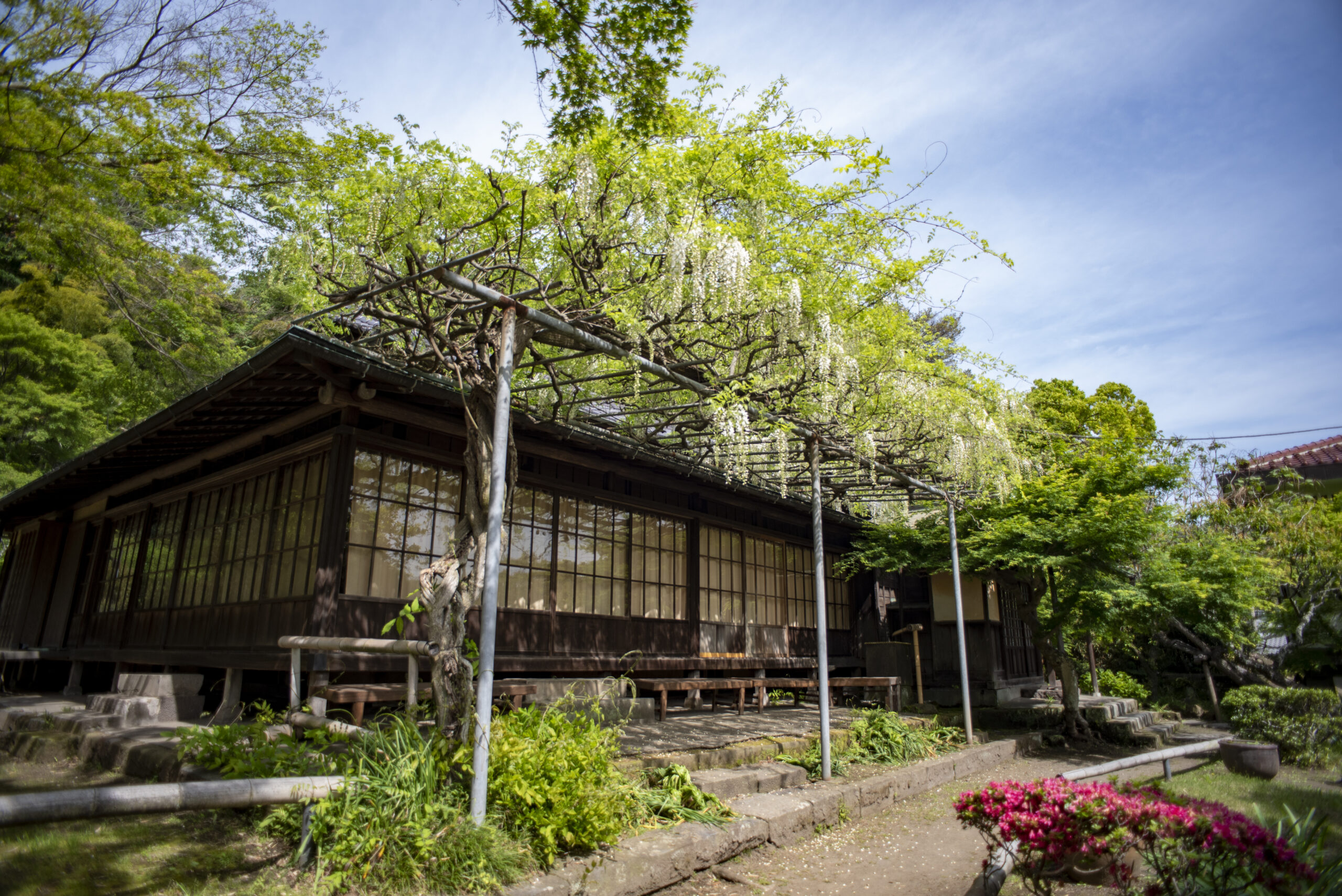
Wisteria is a climbing plant of the pea family, with long clusters of purple or white flowers hanging from trellises. In Kamakura, temple and shrine wisteria usually blooms from late April to early May. Eishoji Temple stands on land said to be the former residence of Ota Dokan, the 15th-century warrior who built Edo Castle, and you can enjoy its flowers along with a bamboo grove and an old gate.
See what’s in bloom now →Hydrangeas (Ajisai, 紫陽花)
Usual peak: Early to late June
Where to see them: Kita-Kamakura: Meigetsu-in; Hase: Hasedera Temple; Nikaido: Zuisenji Temple
Wild and lacecap hydrangeas start to open in late May, and the large mophead varieties peak from early to late June. Meigetsu-in sits in a narrow valley called Meigetsudani; in Kamakura these valleys are known as yato. The blue hydrangeas that fill its approach are nicknamed “Meigetsu-in blue.” Hasedera Temple grows about 2,500 plants on a hillside facing the town and the sea.
See the 10 best hydrangea spots in Kamakura →
See what’s in bloom now →Japanese Irises (Hanashobu, 花菖蒲)
Usual peak: June
Where to see them: Kita-Kamakura: Meigetsu-in; Ofuna: Ofuna Flower Center; Hase: Kosokuji Temple
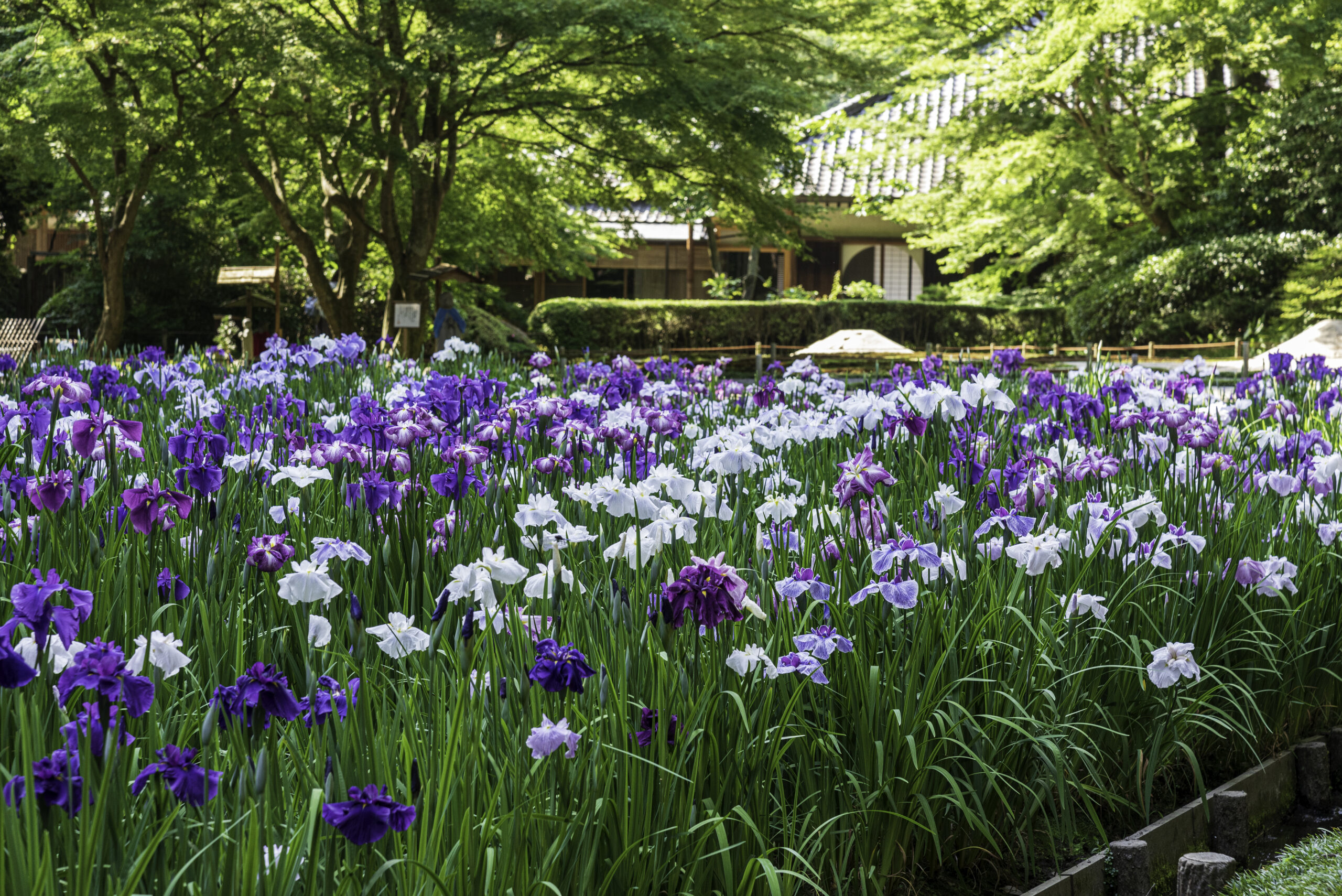
Hanashobu are Japanese irises with large purple or white flowers that grow by water and in damp gardens. The garden behind the main hall of Meigetsu-in is usually closed, and it opens only while the irises bloom and in the autumn leaf season (separate fee). Ofuna Flower Center (officially the Kanagawa Prefectural Ofuna Botanical Garden) grows about 120 iris varieties, including the Ofuna line bred here from the early 1900s.
See what’s in bloom now →Lotus (Hasu, 蓮)

Usual peak: July to early August
Where to see them: Kamakura Station east: Tsurugaoka Hachimangu Shrine; Zaimokuza: Komyoji Temple
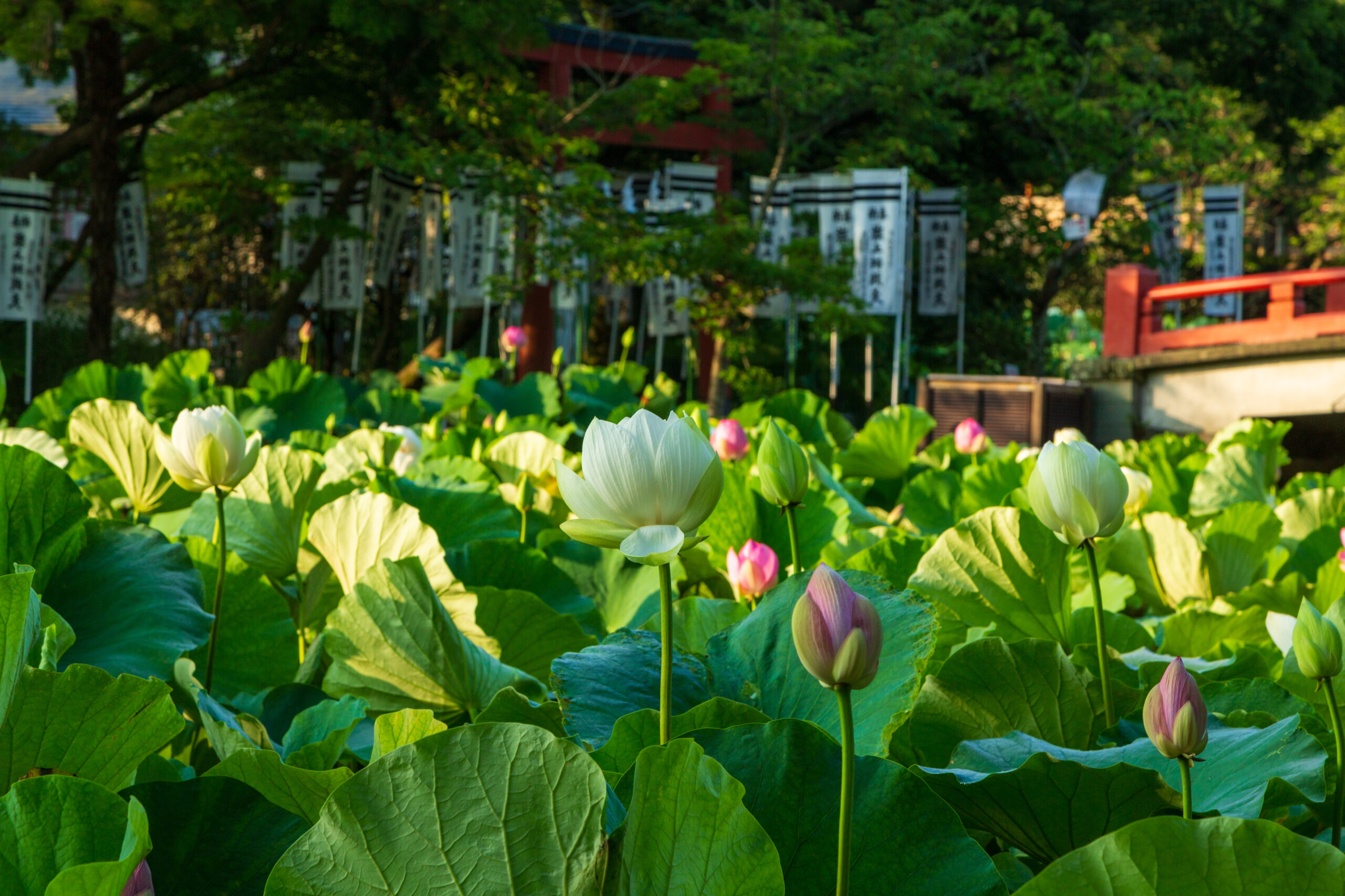
Lotus flowers open from late June and peak from July to early August. The Genpei Ponds at Tsurugaoka Hachimangu Shrine are said to date from the time of Minamoto no Yoritomo (another account says his wife Hojo Masako had them dug). Tradition says the three islands of the Genji Pond stand for prosperity and the four islands of the Heike Pond for decline. Komyoji Temple’s garden has several lotus varieties, including an ancient one.
See what’s in bloom now →Bush Clover (Hagi, 萩)
Usual peak: Mid to late September (around the autumn equinox)
Where to see them: Kamakura Station east: Hokaiji Temple; Kamakura Station west: Kaizoji Temple
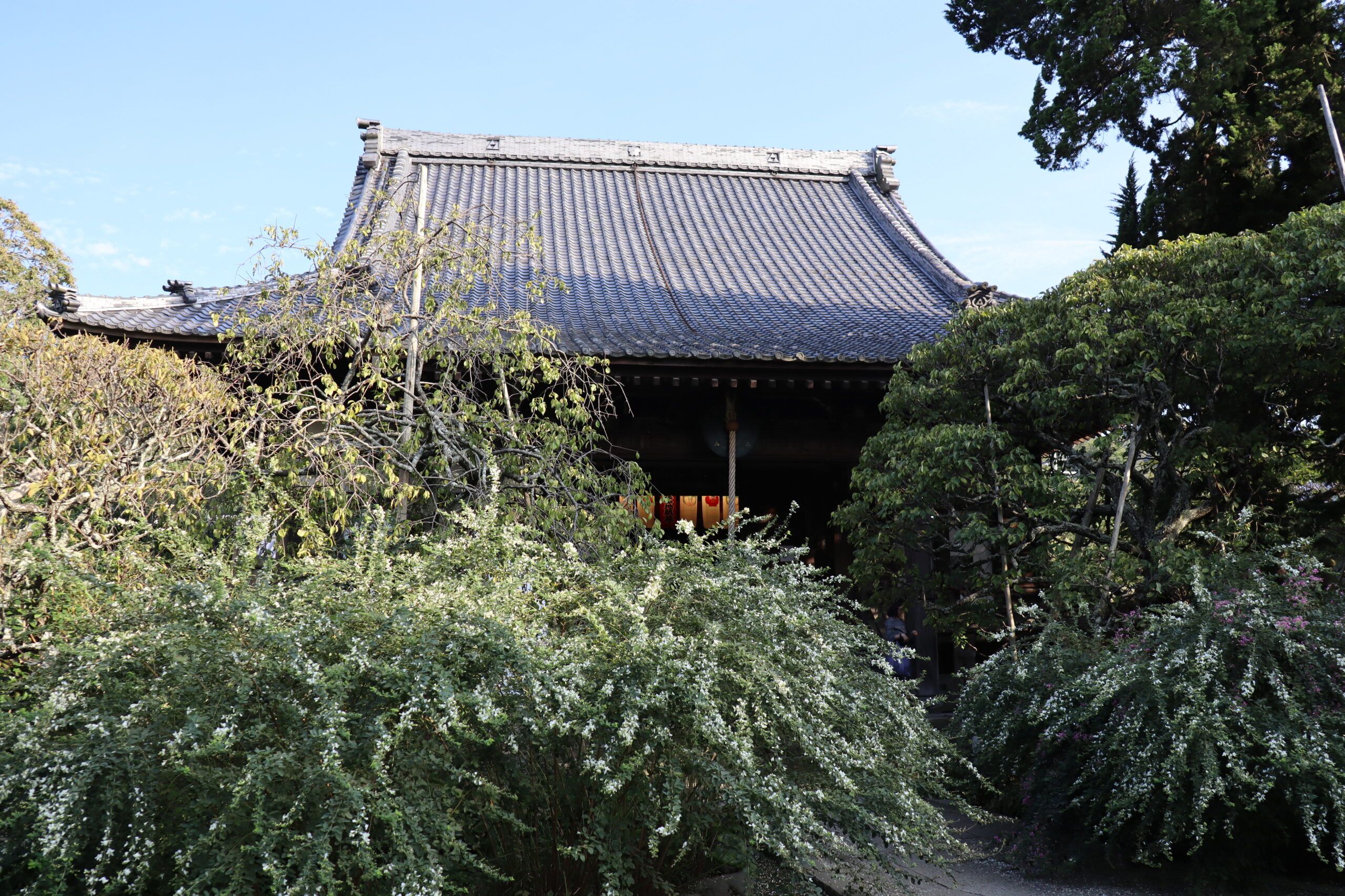
Bush clover is one of the traditional seven flowers of autumn, with slender branches covered in tiny purple-pink or white blossoms. Hokaiji Temple was built in the 14th century by Ashikaga Takauji, on the orders of Emperor Go-Daigo, to console the spirits of the Hojo clan after its fall in 1333. Around the autumn equinox, white bush clover fills the grounds, and locals call it the “temple of bush clover.”
See what’s in bloom now →Red Spider Lilies (Higanbana, 彼岸花)
Usual peak: Mid-September to early October
Where to see them: Kamakura Station west: Eishoji Temple; Nikaido: Egara Tenjin Shrine
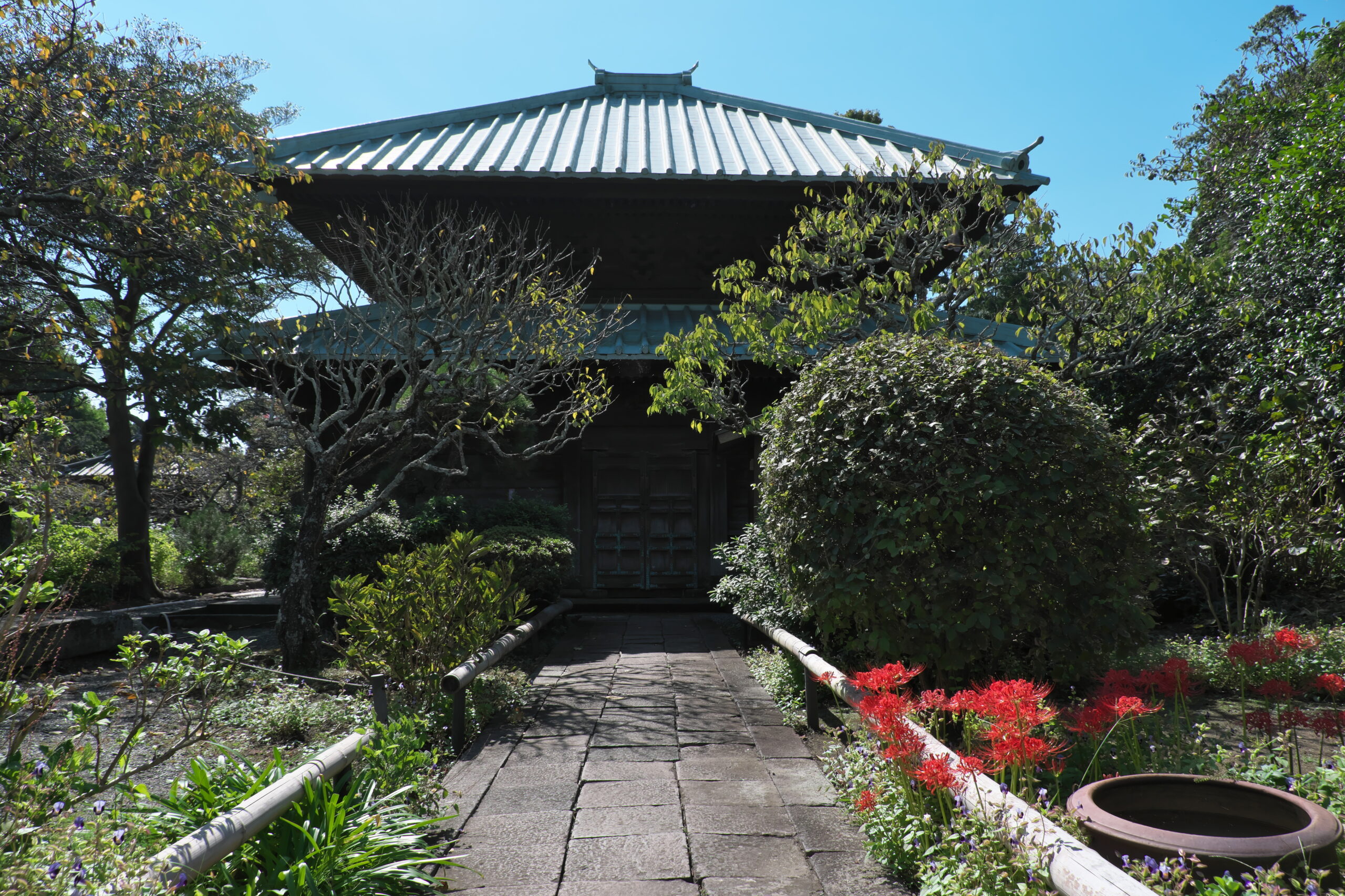
The red spider lily is named after higan, the Buddhist week around the autumn equinox, when its fiery red flowers appear. The bloom rises on a bare stalk, and the leaves come out only after the flowers fade. Eishoji Temple was founded in 1636 for Okatsu no Kata (Eisho-in), a consort of Tokugawa Ieyasu, the first Tokugawa shogun, and its quiet grounds glow red in early autumn.
See what’s in bloom now →Autumn Leaves and Ginkgo (Koyo, 紅葉)
Usual peak: Late November to mid-December (until late December at Zuisenji Temple)
Where to see them: Kita-Kamakura: Engakuji Temple; Kamakura Station east: Tsurugaoka Hachimangu Shrine; Nikaido: Zuisenji Temple
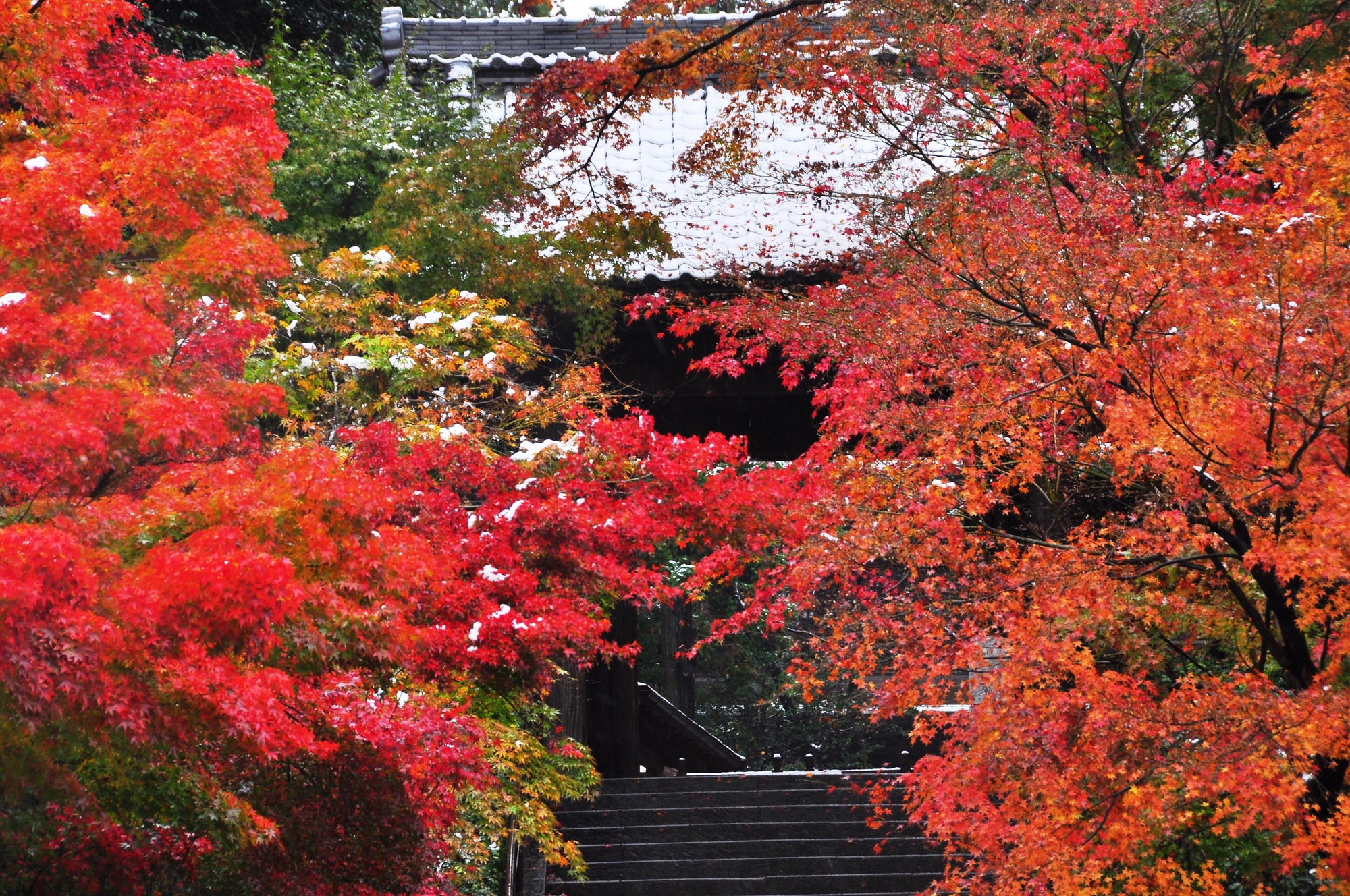
Autumn leaves and ginkgo are not flowers, but they are among Kamakura’s most loved seasonal sights. The color starts around Kita-Kamakura Station and usually peaks across the city from late November to mid-December. The valley of Zuisenji Temple is called Momijigayatsu, “valley of autumn leaves,” and it is enclosed by hills on three sides. At Tsurugaoka Hachimangu Shrine, golden ginkgo leaves brighten the grounds.
See the 10 best autumn leaves spots in Kamakura →
See what’s in bloom now →Narcissus (Suisen, 水仙)

Usual peak: December to February
Where to see them: Nikaido: Zuisenji Temple; Kamakura Station west: Kaizoji Temple; Omachi: Anyo-in Temple (安養院)
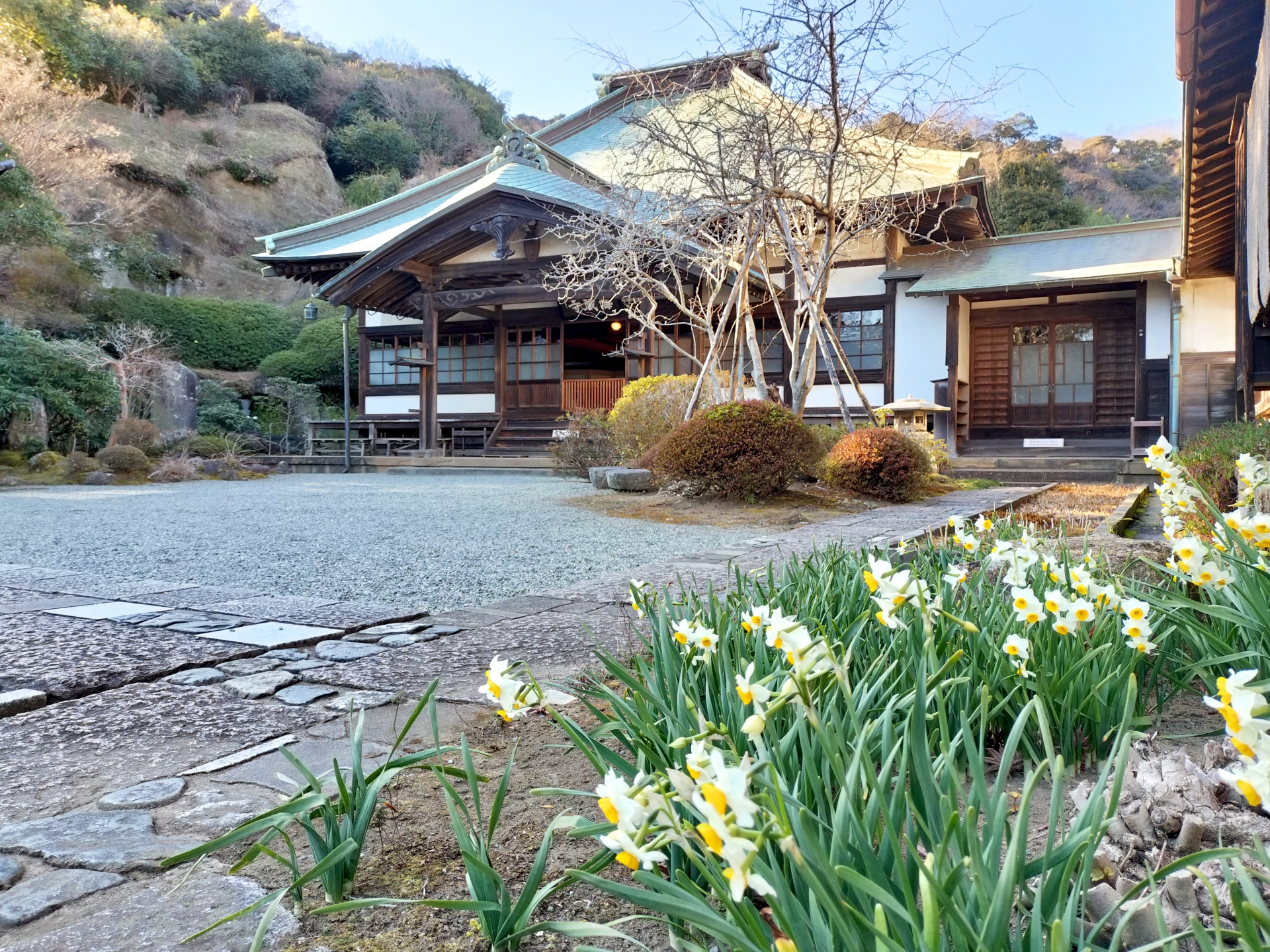
Narcissus opens white and yellow flowers from winter into early spring, with a clean, fresh scent. Zuisenji Temple is a Zen temple founded in 1327 by Muso Soseki, a famous Zen monk and garden designer. Its rock garden is said to have been carved by Muso himself. In winter, narcissus and plum blossoms brighten the temple grounds.
See what’s in bloom now →

Frequently Asked Questions
What is the best month to see flowers in Kamakura?
The most colorful times are late March to early April for cherry blossoms and June for hydrangeas. If you prefer quieter visits, mid-February for plum blossoms and September for bush clover and red spider lilies are also good choices.
How can I avoid the hydrangea crowds?
Meigetsu-in and Hasedera Temple get very busy in June, especially on weekends, and you may have to queue to enter. Some gardens also require a timed ticket or a separate fee in season, so check each temple’s notice before you go. Go early on a weekday morning, or choose a temple a little away from the center, such as Zuisenji Temple.
Can I see flowers and autumn leaves in one day?
From late November to mid-December, start at Engakuji Temple near Kita-Kamakura Station and walk to the ginkgo trees of Tsurugaoka Hachimangu Shrine (about 30 minutes on foot). In the afternoon, take a bus toward Kamakura-gu Shrine and walk to the autumn valley of Zuisenji Temple. This covers Kita-Kamakura, the station area and Nikaido in one day.
For daily updates, see Flowers in Bloom in Kamakura Now.