Setsubun-e at Hasedera Temple (長谷寺 節分会)
- Next
- Wed, Feb 3, 2027, 11:00 AM – 12:00 PM
- Usually
- Tsuina-e service from 11:00, bean-throwing from 11:30
- Venue
- Hasedera Temple
What Is the Setsubun-e at Hasedera?
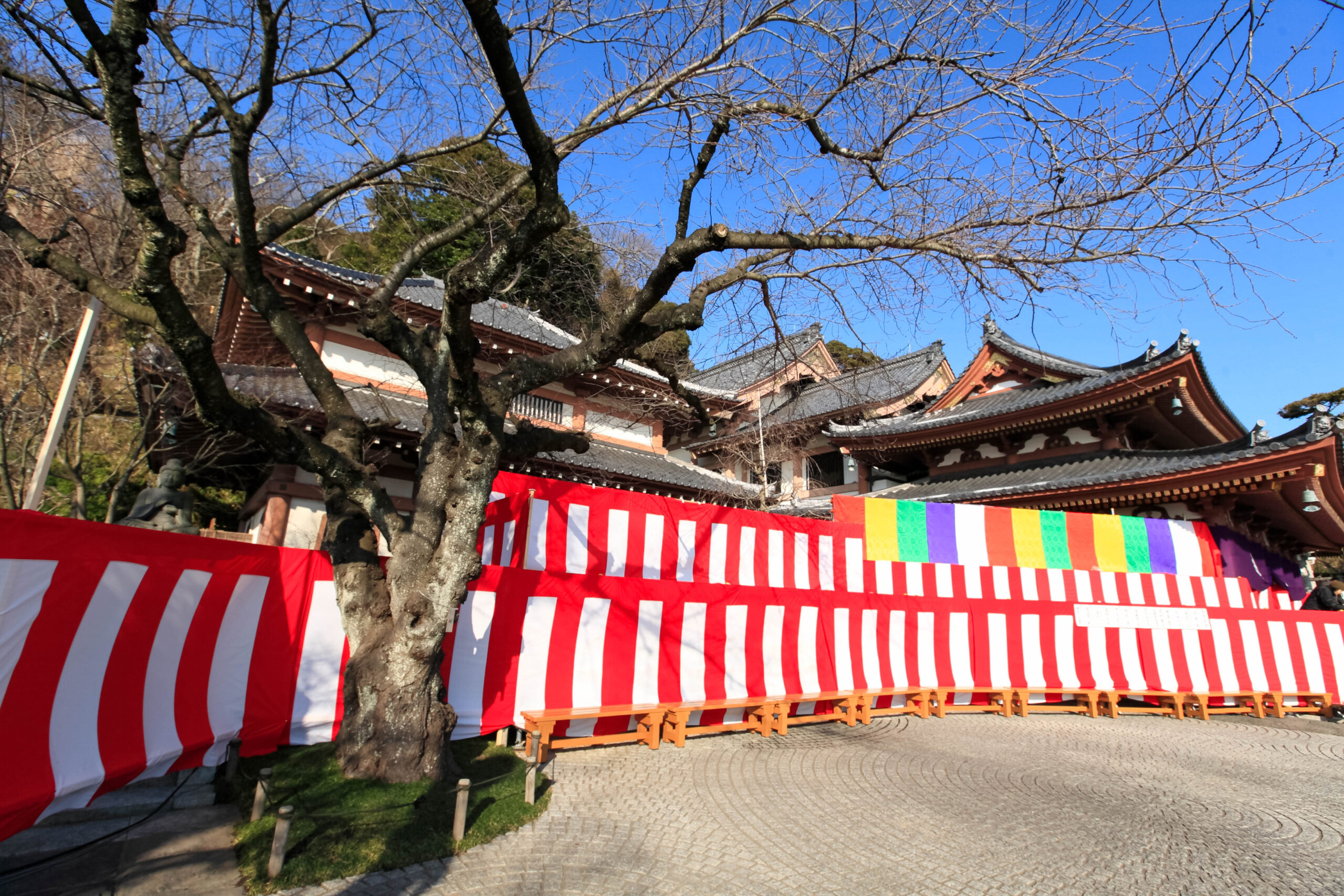
The Setsubun-e (節分会) at Hasedera Temple (長谷寺) is a ceremony held on the day before Risshun (立春), the first day of spring in the old calendar, to drive away misfortune and pray for a year free of disaster and full of good fortune. After the Tsuina-e (追儺会) service in the Kannon Hall (観音堂), fukumame (福豆), or lucky beans, are thrown from a special stage in the Kamikeidai (上境内), the upper precinct. Every year, celebrities and toshi-otoko and toshi-onna (年男年女), people born in the zodiac year, take part, and the temple grounds fill with visitors.
Date and Time
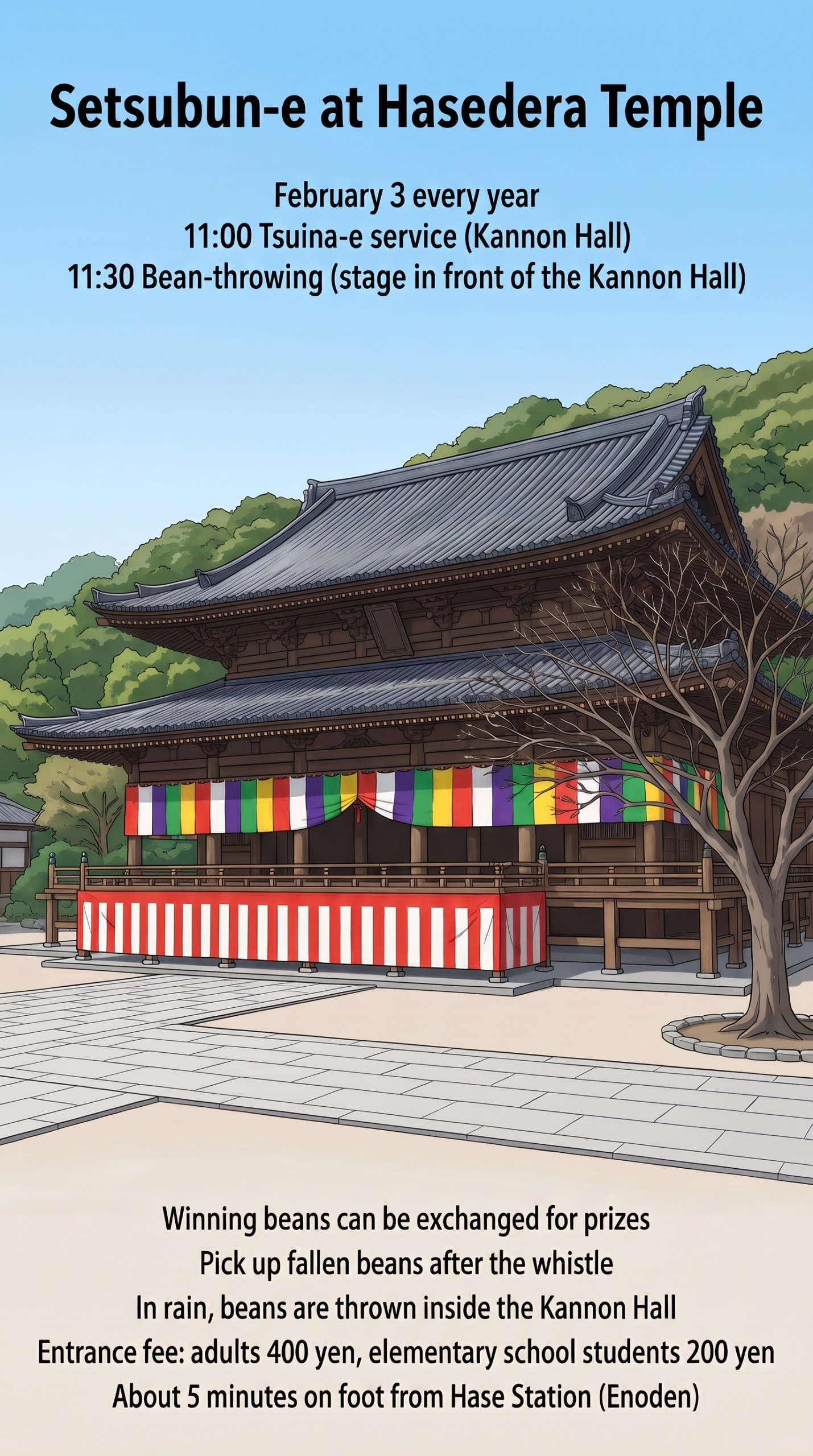
The Setsubun-e takes place every year on February 3. Even in years when Setsubun on the calendar falls on February 2, the ceremony is held on February 3. In a typical year, the Tsuina-e service begins in the Kannon Hall at 11:00, and the bean-throwing starts at 11:30.
Highlights: Bean-Throwing from a Stage in Front of the Kannon Hall
The bean-throwing stage is set up in front of the Kannon Hall. Guests line up on a long stage hung with red-and-white curtains and throw lucky beans to the visitors gathered in the plaza below. In a typical year, the beans include winning beans that can be exchanged for prizes.
Beans that fall on the ground may be picked up only after a whistle signal. You may not catch beans by holding open a paper bag, a handbag, or a hat. In rain or bad weather, the bean-throwing is held inside the Kannon Hall.
Visiting Tips
People start gathering in the upper precinct around 10:00 to wait for the bean-throwing. Entry may be restricted when it gets crowded, so arrive early if you want to join in. The regular entrance fee applies in a typical year (adults 400 yen, elementary school students 200 yen).
The temple asks visitors to come by public transportation because the parking lot gets crowded. On the day of the Setsubun-e, the Kannon Museum (観音ミュージアム) on the temple grounds opens around 12:30 in a typical year.
Access: Visiting During Your Stay at Toshi’s Place
Hasedera Temple is about a 5-minute walk from Hase Station (長谷駅) on the Enoden (江ノ電) line. From JR Kamakura Station (鎌倉駅), take a bus to the “Hase Kannon (長谷観音)” stop and walk about 5 minutes.
If you stay in Kamakura (鎌倉), you can reach Hasedera around 10:00, when people start gathering for the bean-throwing. At Toshi’s Place, fully unstaffed smart hotels with full kitchens and no meals provided, you can explore Kamakura at your own pace.
Summary
On February 3 at Hasedera, lucky beans are thrown from a stage in front of the Kannon Hall after the Tsuina-e service, and if you pick up a winning bean, you can exchange it for a prize. Hasedera’s year begins with the Manto Kigan-e (万灯祈願会) on New Year’s Day and Hatsu-Kannon (初観音) on January 18, and ends with the Toshi-no-Ichi (歳の市) and Kannon Mi-ashi Mairi (観音御足参り) on December 18. On Setsubun day, bean-throwing also takes place at the Setsubun Festival at Tsurugaoka Hachimangu Shrine (鶴岡八幡宮 節分祭) usually from around 14:00 and at the Setsubun Festival at Kamakura-gu Shrine from around 15:40. For the temple’s usual highlights, see Hasedera Temple.
Basic Information
| Item | Details |
|---|---|
| Name | Hasedera Temple Setsubun-e (Tsuina-e) |
| Date | February 3 every year |
| Hours | Tsuina-e from 11:00, bean-throwing from 11:30 (typical year) |
| Venue | Kannon Hall, Hasedera Temple (Tsuina-e); special stage in the upper precinct (bean-throwing; inside the Kannon Hall in rain) |
| Address | 3-11-2 Hase, Kamakura, Kanagawa 248-0016 |
| Fees | Entrance fee: adults 400 yen, elementary school students 200 yen |
| Notes | Entry may be restricted when crowded. Do not catch beans with an open bag or hat. Public transportation recommended |
| Access | About 5 minutes on foot from Hase Station (Enoden). From JR Kamakura Station, bus to “Hase Kannon,” then about 5 minutes on foot |
| Contact | Hasedera Temple +81-467-22-6300 |
| Official website | Annual events (Hasedera Temple, Japanese) |