
Hatsumode at Tsurugaoka Hachimangu Shrine (鶴岡八幡宮 初詣)
- Dates
- Fri, Jan 1, 2027 – Sun, Jan 3, 2027
- Usually
- December 31 to early January. Open 24 hours from New Year's Eve through the first days of January (the end date varies by year)
- Venue
- Tsurugaoka Hachimangu Shrine
What Is Hatsumode at Tsurugaoka Hachimangu Shrine?
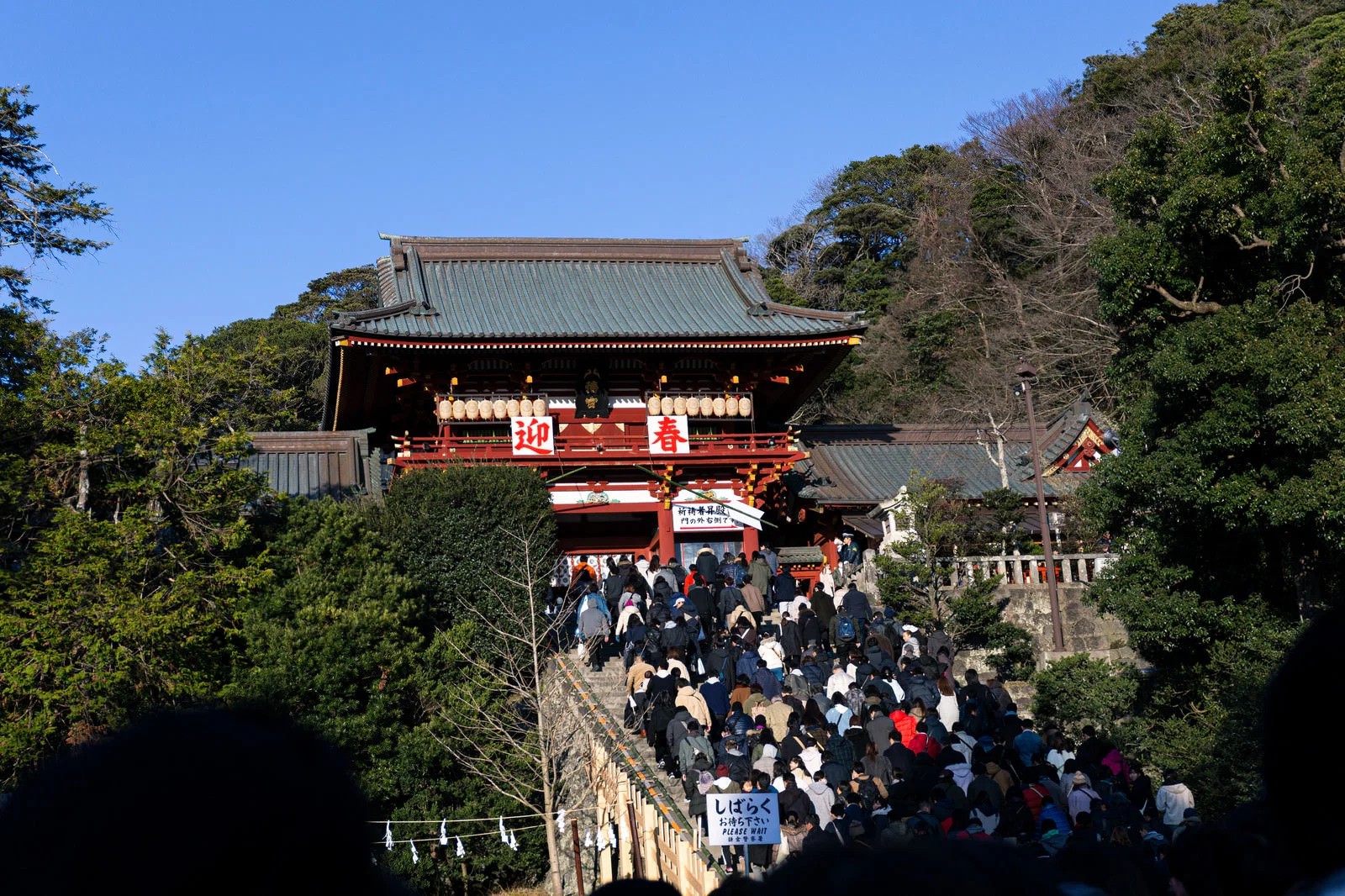
Hatsumode (初詣) is the first visit to a shrine or temple in the New Year, a custom observed across Japan to pray for good fortune in the year ahead. Tsurugaoka Hachimangu Shrine (鶴岡八幡宮) is the leading shrine for hatsumode in Kamakura (鎌倉). Minamoto no Yoritomo (源頼朝), founder of the Kamakura shogunate, moved this Hachiman shrine to the center of Kamakura, and during the first three days of January, crowds of worshippers fill everything from Wakamiya-oji Avenue (若宮大路) to the shrine grounds. From New Year’s Eve through the first days of January, the shrine usually stays open all night.
Dates and Hours
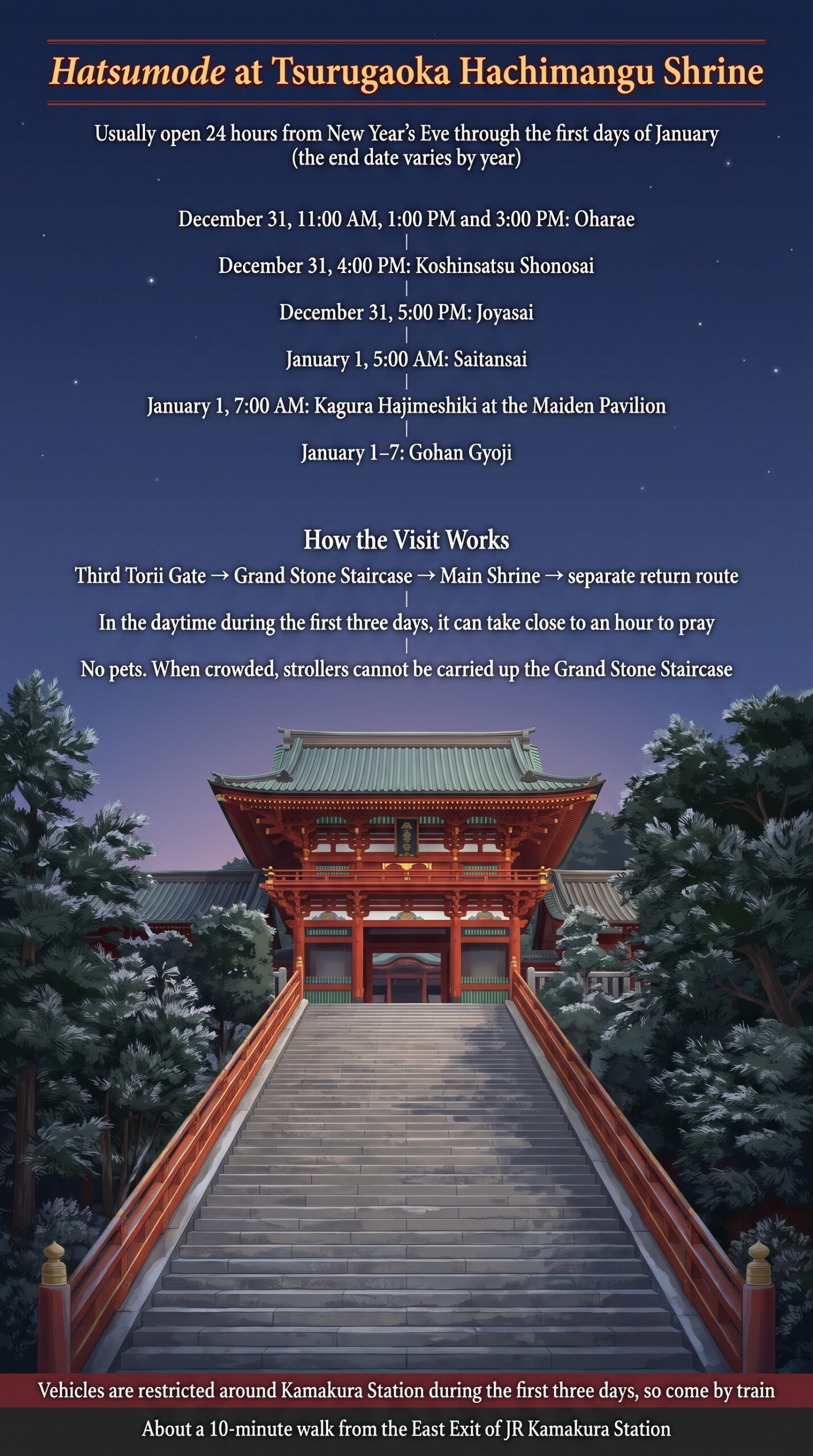
The shrine is usually open 24 hours a day from New Year’s Eve through the first days of January. The day the all-night opening ends varies by year. After that comes a day with hours from midnight to 8:00 PM, and then the usual hours of 6:00 AM to 8:00 PM resume. Check the shrine’s New Year visit notice, posted in December, for the exact hours each year.
Over the New Year period, the following rituals are held: on December 31, Oharae (大祓), a purification rite, at 11:00 AM, 1:00 PM and 3:00 PM; Koshinsatsu Shonosai (古神札焼納祭), the burning of old talismans, at 4:00 PM; and Joyasai (除夜祭), the New Year’s Eve ritual, at 5:00 PM. On January 1, Saitansai (歳旦祭), the New Year’s Day ritual, begins at 5:00 AM, followed at 7:00 AM by Kagura Hajimeshiki (神楽始式), the first sacred dance of the year, at the Maiden Pavilion (舞殿), a stage for sacred dances. From January 1 to 7, the Gohan Gyoji (御判行事), a blessing with the shrine’s sacred seal, is held. On January 4 from around 1:00 PM, the Chona Hajime Shiki (手斧始式), a work-starting ceremony for Kamakura’s builders, takes place in front of the Maiden. On January 15 at 7:00 AM, New Year decorations are burned in the Sagicho Shinji (左義長神事), a New Year fire ritual.
How the Visit Works and How Crowded It Gets
After you enter the grounds through the Third Torii Gate (三の鳥居), a line forms along the approach to the Main Shrine (本宮). When it is crowded, the line is divided with ropes at two points, in front of the Lower Worship Hall (下拝殿), which is another name for the Maiden Pavilion, and in front of the Grand Stone Staircase (大石段), and visitors move forward a little at a time under the guidance of police and security staff. When the people at the top of the staircase have moved on, the next group goes up. During the daytime in the first three days of January, it can take close to an hour from joining the line to praying at the Main Shrine.
After praying, follow the guidance to a return route separate from the Grand Stone Staircase. Along the way are stalls offering ofuda (お札), talismans for the home, omamori (お守り), amulets, and hamaya (破魔矢), arrows said to ward off evil, and food stalls line the approach within the grounds. Photography is not allowed in the Main Shrine inside the Romon Gate (楼門).
Komachi Street (小町通り), which starts in front of Kamakura Station (鎌倉駅), gets extremely crowded. From the station, walking along Wakamiya-oji Avenue is easier, and during the first three days of January the avenue is closed to vehicles and mostly used by pedestrians.
Before You Go
- Dogs and other pets are not allowed in the shrine grounds
- When it is crowded, you cannot carry a stroller up the Grand Stone Staircase. Please follow the instructions of the security staff
- You can check how crowded the grounds are on the “Keidai Live” (境内ライブ) camera on the shrine’s official website
- New Year prayers (gokito, ご祈祷) are usually accepted from midnight on January 1, with pauses during the rituals. The offering (hatsuhoryo, 初穂料) starts at 10,000 yen per prayer. Some amulets and New Year prayers can also be ordered by mail through the shrine’s online application site
- During the New Year period, goshuin (御朱印), the shrine’s handwritten seal, is usually given only on separate sheets of paper. Writing directly in goshuin books resumes in February
- New Year lucky charms are offered at the amulet counters from December 1 and are available until Setsubun (節分) in early February, while supplies last
- The Shin-en Peony Garden (神苑ぼたん庭園) usually opens its winter peonies from January 1 (admission 500 yen). For details, see New Year Peonies at the Shin-en Peony Garden
- Usually, vehicles are banned around Kamakura Station from 11:00 PM on December 31 to 5:00 PM on January 1, and from 9:00 AM to 5:00 PM on January 2 and 3. During these hours, the bus and taxi stops at Kamakura Station are moved. The shrine’s visitor parking cannot be used during the daytime in the first three days of January, so please come by train
Access | Visiting During Your Stay at Toshi’s Place
Tsurugaoka Hachimangu Shrine is about a 10-minute walk from the East Exit of JR Kamakura Station or from Enoden (江ノ電) Kamakura Station. If you are staying at Toshi’s Place, take the Enoden from Hase Station (長谷駅) or Wadazuka Station (和田塚駅) to Kamakura Station, then walk along Wakamiya-oji Avenue.
Staying overnight in Kamakura lets you go for hatsumode at your own pace, without worrying about train times even in the busy New Year season. At Toshi’s Place, fully unstaffed smart hotels with fully equipped kitchens and room-only stays, you can enjoy the New Year in Kamakura at a relaxed pace.
Summary
At Tsurugaoka Hachimangu Shrine, you can usually visit all night from New Year’s Eve through the first days of January. The first three days are very crowded, so come by train and allow plenty of time. For the shrine’s highlights throughout the year, see Tsurugaoka Hachimangu Shrine.
Basic Information
| Item | Details |
|---|---|
| Name | Hatsumode at Tsurugaoka Hachimangu Shrine |
| Japanese name | 鶴岡八幡宮 初詣 |
| Period | December 31 to early January (most crowded during the first three days of January) |
| Visiting hours | Usually open 24 hours from New Year’s Eve through the first days of January (the end date varies by year). Normally 6:00 AM – 8:00 PM |
| Location | Tsurugaoka Hachimangu Shrine |
| Address | 2-1-31 Yukinoshita, Kamakura, Kanagawa |
| Admission | Free. The offering for New Year prayers starts at 10,000 yen |
| Notes | No pets. Strollers cannot be carried up the Grand Stone Staircase when crowded. Vehicle restrictions around Kamakura Station during the first three days of January |
| Access | About a 10-minute walk from the East Exit of JR Kamakura Station or Enoden Kamakura Station |
| Contact | Tsurugaoka Hachimangu Shrine 0467-22-0315 |
| Official Website | https://www.hachimangu.or.jp/activity/news/ |