Tomb of Minamoto no Yoritomo (源頼朝の墓)
What Is the Tomb of Minamoto no Yoritomo?|History and Origins
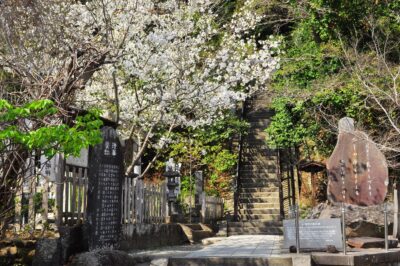
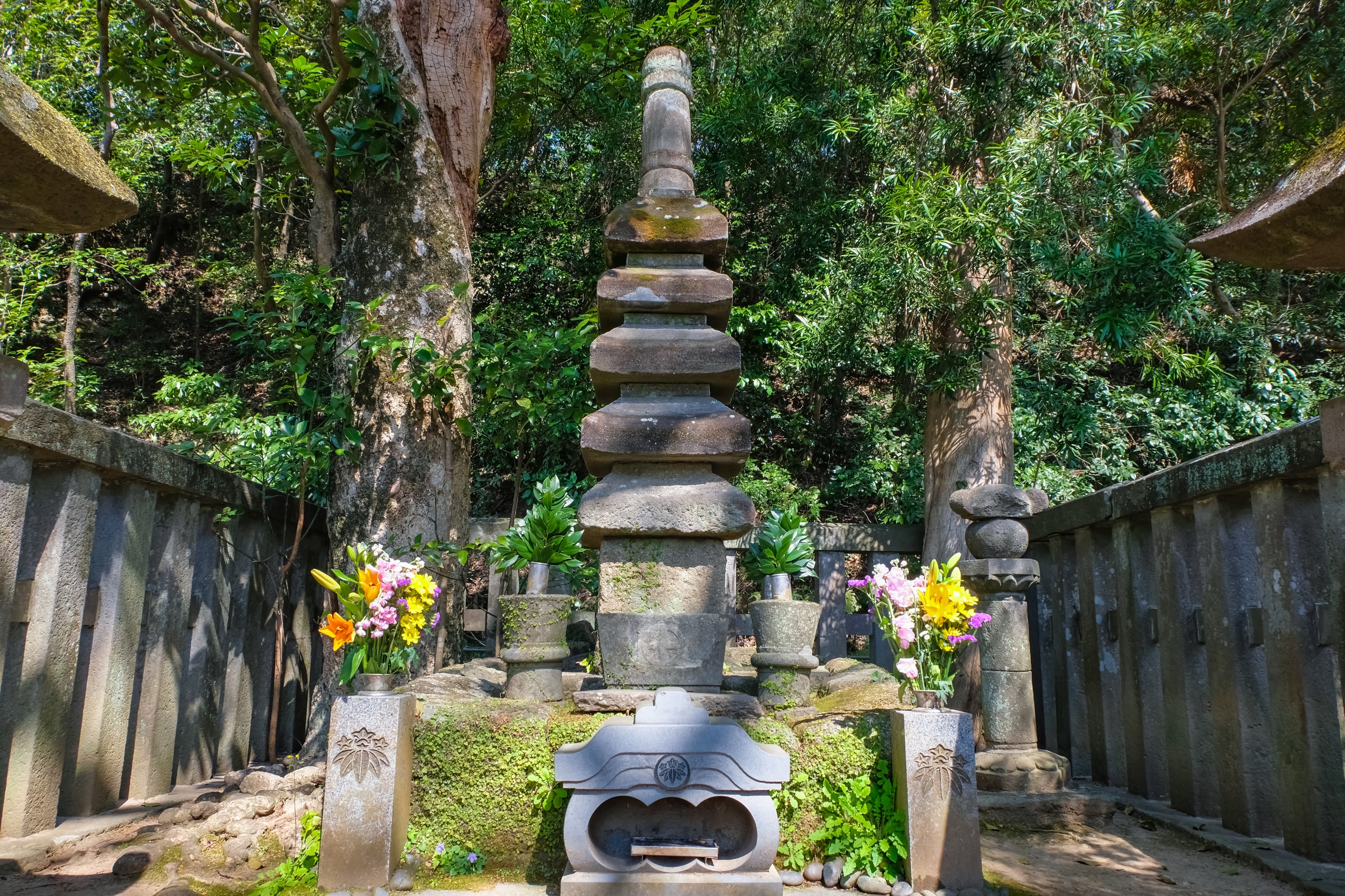
The Tomb of Minamoto no Yoritomo (源頼朝の墓) is a small stone pagoda said to mark the grave of Yoritomo, the founder of the Kamakura shogunate. It stands halfway up a low hill at the back of the quiet Nishimikado (西御門) neighborhood, east of Tsurugaoka Hachimangu Shrine (鶴岡八幡宮). The land at the foot of the hill is thought to be where Yoritomo’s government residence, the Okura Gosho (大倉御所), once stood, so the tomb looks down over that site. It is part of the national historic site “Hokkedo Ruins (Tomb of Minamoto no Yoritomo and Tomb of Hojo Yoshitoki)” and one of the cultural properties of the Japan Heritage story “Iza, Kamakura.”
Yoritomo first built a private Buddhist hall (持仏堂) here to house a statue of the bodhisattva Sho Kannon that he worshipped. When he died at the end of the 12th century, he was buried here, and the hall became known as the Hokkedo (法華堂), a memorial hall built over the grave of a powerful figure. It was an important place for the shogunate. In the early 13th century, the shogun Minamoto no Sanetomo took refuge here during the Wada Rebellion, and in the mid-13th century, members of the Miura clan are said to have shut themselves inside the hall and taken their own lives during the Hoji Battle.
The pagoda you see today is thought to date from the late 18th century, about 600 years after Yoritomo’s death, when the lord of the Satsuma domain, Shimazu Shigehide (島津重豪), restored the grave. The stone fence, lanterns and water basin were donated at that time. An Edo-period travel diary (相中紀行) records that the lord of Satsuma restored the grave and renewed its fence and steps, which shows that the Shimazu family replaced what had been a small, plain grave marker. The Shimazu family traced its origin to Shimazu Tadahisa (島津忠久), who, according to family tradition, was a son of Yoritomo, and the lords or their representatives came to pray here almost every year on Yoritomo’s death anniversary. Another tradition says the pagoda was moved here from Shochoju-in (勝長寿院), a temple Yoritomo founded. It has not been confirmed that Yoritomo’s remains lie beneath the pagoda.
When Buddhism and Shinto were separated in the Meiji era, the Hokkedo was abolished and Shirahata Shrine (白旗神社), dedicated to Yoritomo, was built at the foot of the stone steps. The Buddhist statues from the hall are said to have been moved to nearby Raikoji Temple (来迎寺). This Shirahata Shrine is separate from the Shirahata Shrine inside the grounds of Tsurugaoka Hachimangu and is usually unstaffed.
Highlights|Yoritomo’s Tomb, the Hokkedo of Hojo Yoshitoki and the Ancestral Graves of Satsuma and Choshu
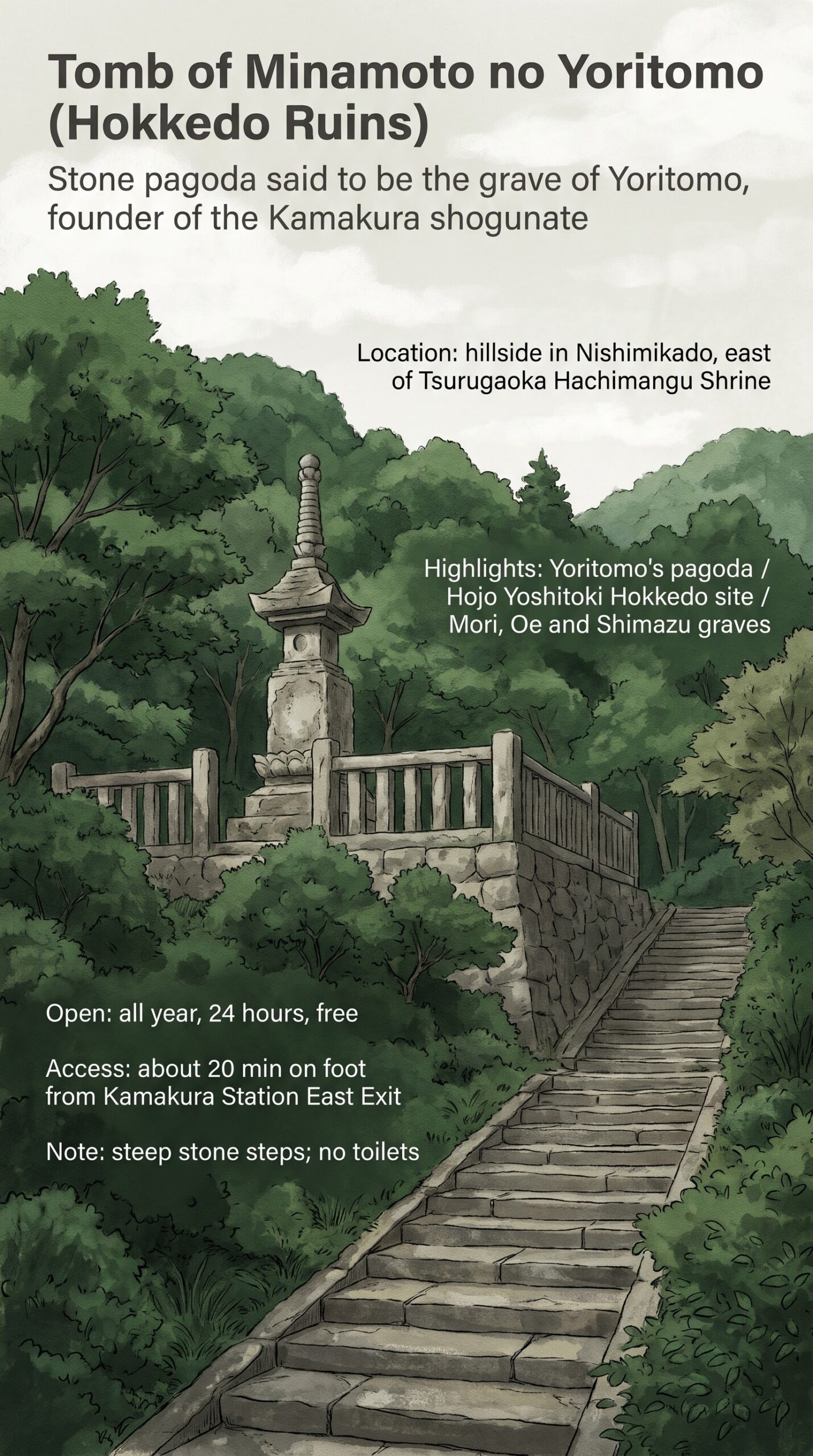
From the front of Shirahata Shrine, steep stone steps lead up to a small terrace where the pagoda stands inside a stone fence. The stone stand in front of the pagoda bears the Shimazu family crest, a cross inside a circle, a reminder of the Satsuma domain that restored the grave.
The flat ground just east of the tomb is the site of the Hokkedo of Hojo Yoshitoki (北条義時), the second regent of the shogunate. The shogunate’s chronicle, the Azuma Kagami (吾妻鏡), records that Yoshitoki was buried on the hill east of Yoritomo’s Hokkedo, and an excavation in 2005 found the remains of a tile-roofed hall about 8.5 meters on each side. The remains were covered again with soil, and wooden stakes now mark the positions of the pillars and foundation stones. If you point the free smartphone app “AR北条義時法華堂” at the AR sign on site, a reconstruction of the hall appears in front of you, and you can look around inside it (ARCore-compatible devices only).
Behind the Yoshitoki site, two flights of stone steps lead to three graves: from left to right, those of Mori Suemitsu (毛利季光), Oe no Hiromoto (大江広元) and Shimazu Tadahisa. They are ancient tombs cut into the hillside in the Kofun period, which the Mori family of the Choshu domain and the Shimazu family of the Satsuma domain later made into graves for their ancestors. A stone lantern offered by Choshu retainers was refused by the Satsuma domain and kept at another temple for many years, before it was finally set up on the path to the Mori grave in 1872. The ancestral graves of Satsuma and Choshu, the two domains that later led the Meiji Restoration, stand side by side next to Yoritomo’s tomb. To the left at the bottom of these steps is a yagura (rock-cut tomb) that honors the Miura clan members who died in the Hoji Battle.
Access and Opening Hours
The site is open all year round, 24 hours a day, and free to visit. Take a bus bound for Kamakuragu Shrine or a similar route from the east exit of Kamakura Station, get off at “Wakaremichi” (岐れ道), and walk about 5 minutes. On foot, it takes about 20 minutes from Kamakura Station. Follow the narrow lane that runs straight north from the Kanazawa Kaido road, past the small Yoritomo Children’s Park, to Shirahata Shrine and the steps up to the tomb at the end.
The steps are steep and have a handrail, so it is difficult to bring a stroller or wheelchair up to the tomb. To reach the Yoshitoki site, go back down the steps and climb another flight of steps about 50 meters to the right. There are no toilets, trash bins, parking or bicycle parking at the site; use the public toilets at Tsurugaoka Hachimangu or Kamakuragu. The lane is narrow and cars also use it. Photography for publications or TV programs requires prior notice to the Cultural Properties Division of the Kamakura City Board of Education.
Best Time to Visit|Seasonal Recommendations
The tomb is surrounded by trees, and on weekdays it is quiet with few visitors. In summer you can rest in the shade, but the steps are steep and a little hard to climb, so watch your footing.
Cherry trees bloom in spring, and the ginkgo at Shirahata Shrine turns yellow in autumn. Every year on April 13, the Yoritomo Memorial Ceremony at the Grave (頼朝公墓前祭) is held in front of the tomb. A local volunteer group, the Minamoto no Yoritomo Society, cleans the grave on the 13th of every month in honor of Yoritomo’s death anniversary, and in 2024 it planted hydrangeas beside the steps.
If you stay at Toshi’s Place, you can walk from Tsurugaoka Hachimangu to Yoritomo’s tomb in the quiet early morning and pay your respects in peace.
Nearby Spots|Places Within Walking Distance
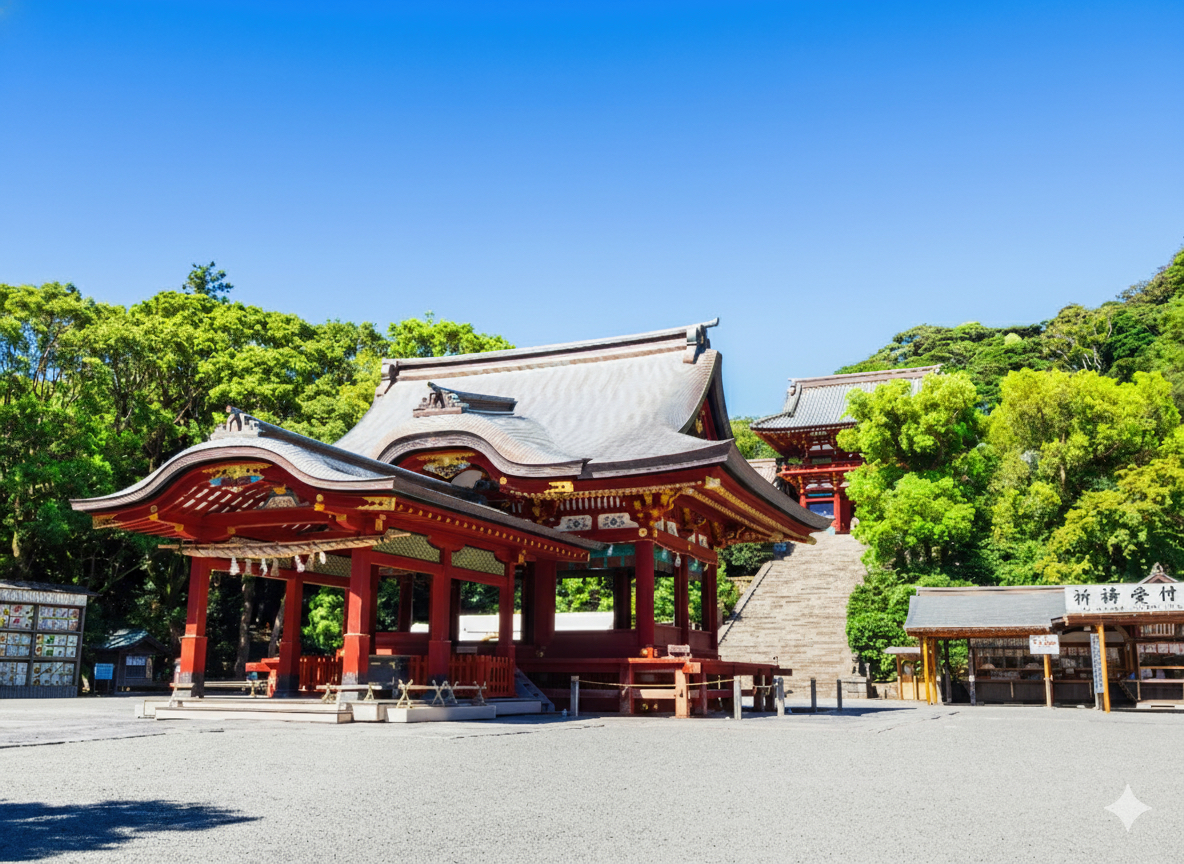
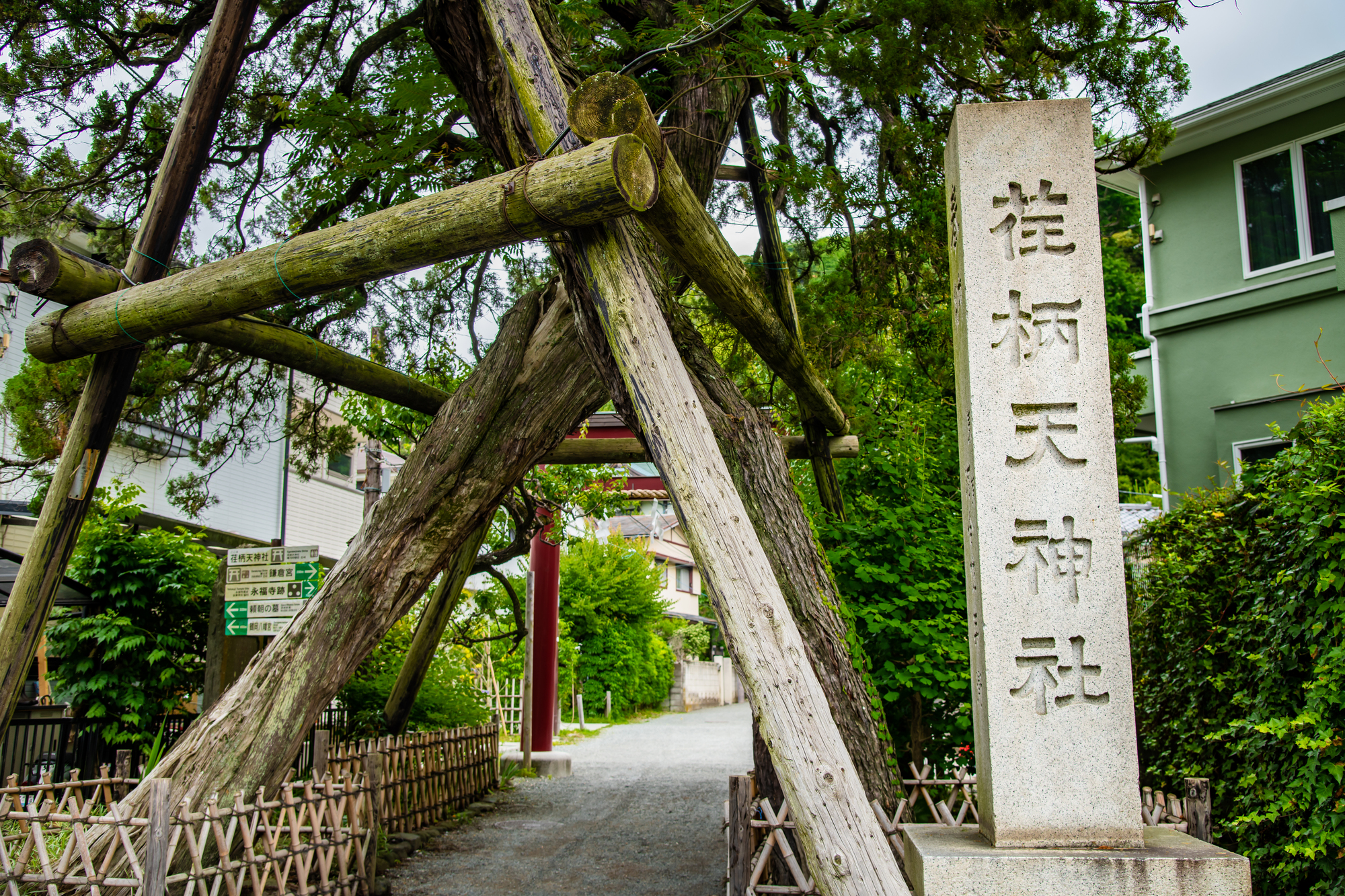
Tsurugaoka Hachimangu is within walking distance to the west, and its grounds hold the other Shirahata Shrine, which enshrines Yoritomo and Sanetomo. Heading east, you can visit Egara Tenjinsha Shrine (荏柄天神社) and Kamakuragu Shrine along the way. Raikoji Temple, where the Hokkedo’s statues were moved, is also nearby.
Who Should Visit?|Recommended for Different Travelers
- Travelers who want to see places connected with Yoritomo, founder of the Kamakura shogunate, and the regent Hojo Yoshitoki
- Visitors interested in the traces that the Shimazu and Mori families of Satsuma and Choshu left in Kamakura
- Walkers looking for a quiet route from Tsurugaoka Hachimangu to Kamakuragu
Summary
The Tomb of Minamoto no Yoritomo is a stone pagoda halfway up a hill overlooking the site of the government residence where Yoritomo ruled. Next to the grave, which the Shimazu family restored in the late 18th century, are the site of Hojo Yoshitoki’s Hokkedo and the ancestral graves of Satsuma and Choshu. It stands at the top of steep stone steps and is free and open at any time.
Basic Information
| Item | Details |
|---|---|
| Name | Historic Site Hokkedo Ruins (Tomb of Minamoto no Yoritomo and Tomb of Hojo Yoshitoki) (史跡 法華堂跡(源頼朝墓・北条義時墓)) |
| Address | 2-5 Nishimikado, Kamakura, Kanagawa (神奈川県鎌倉市西御門2丁目5) |
| Highlights | Stone pagoda said to be Yoritomo’s grave, site of Hojo Yoshitoki’s Hokkedo (markers and AR app), graves of Mori Suemitsu, Oe no Hiromoto and Shimazu Tadahisa, yagura honoring the Miura clan |
| Hours | Open 24 hours, all year |
| Admission | Free |
| Access | About 5 minutes on foot from the “Wakaremichi” bus stop (bus from Kamakura Station East Exit), or about 20 minutes on foot from Kamakura Station (approx.) |
| Notes | Steep stone steps (with handrail); no toilets, trash bins, parking or bicycle parking; no smoking. Photography for publications or TV requires prior notice to the Kamakura City Cultural Properties Division |
| Restrooms | None (public toilets at Tsurugaoka Hachimangu and Kamakuragu) |
| Management | Kamakura City Cultural Properties Division (0467-23-3000, city hall main line) |
| Official Website | Hokkedo Ruins (Kamakura City, Google Translate) |
Google Map
Nearby Highlights
Upcoming Events at Tomb of Minamoto no Yoritomo
Upcoming events at Tomb of Minamoto no Yoritomo, listed by date.
- Yoritomo Memorial Ceremony at the Grave Festivals & Rites Tue, Apr 13, 2027, 10:30 AM
On April 13, Yoritomo's monthly remembrance day, priests of Tsurugaoka Hachimangu hold a Shinto rite in front of the Tomb of Minamoto no Yoritomo in Nishimikado.