Bonbori Festival at Tsurugaoka Hachimangu Shrine (鶴岡八幡宮 ぼんぼり祭)
- Dates
- Sat, Aug 7, 2027 – Mon, Aug 9, 2027
- Usually
- From the day before Risshu through August 9. Lanterns on display around 9:00 AM–9:00 PM, lit from sunset
- Venue
- Tsurugaoka Hachimangu Shrine
What Is the Bonbori Festival at Tsurugaoka Hachimangu Shrine?
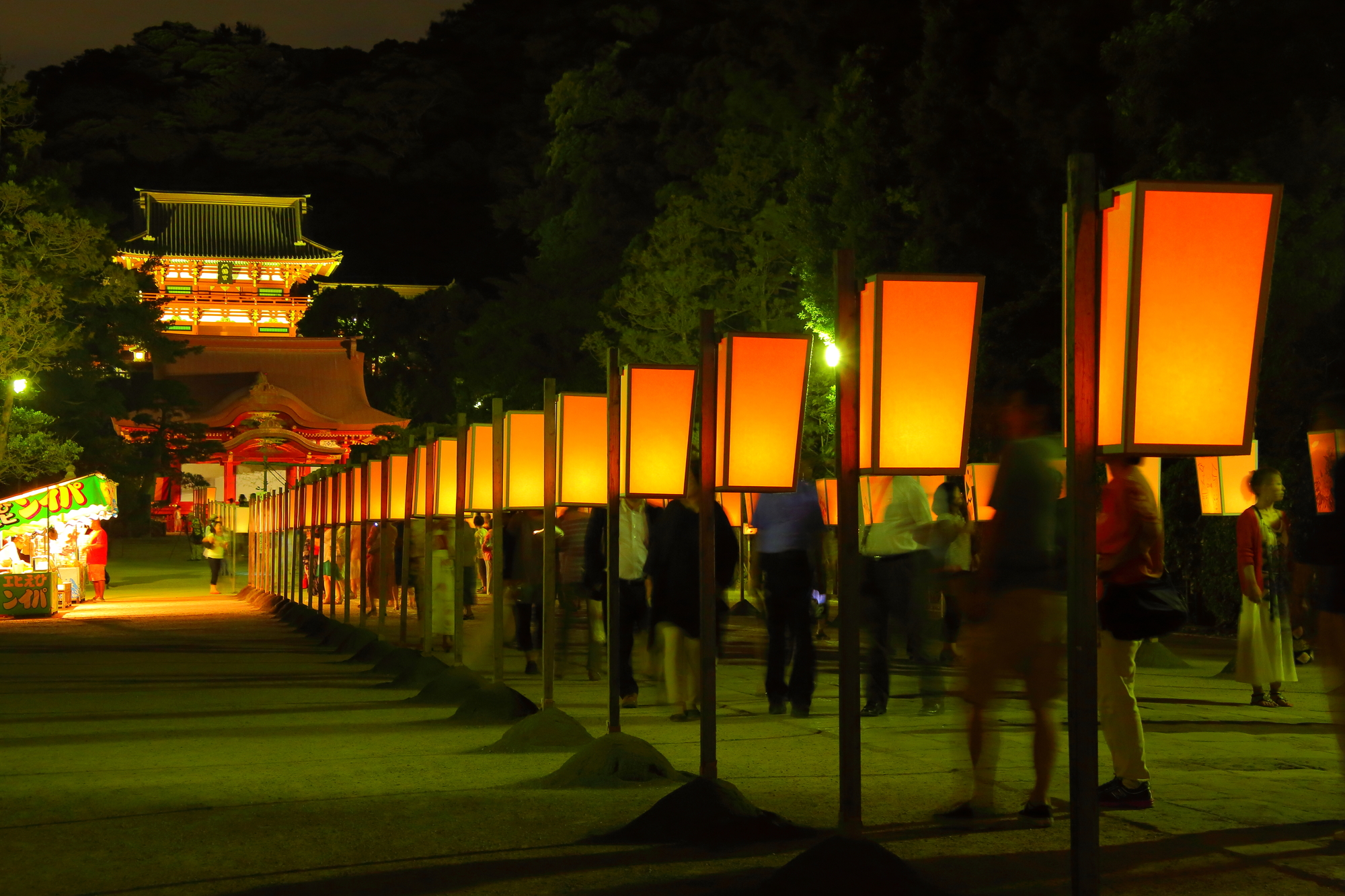
The Bonbori Festival (ぼんぼり祭) at Tsurugaoka Hachimangu Shrine (鶴岡八幡宮) in Kamakura (鎌倉) is a summer festival held every August, from the day before Risshu (立秋), the traditional start of autumn, through August 9. During the festival, about 400 paintings and works of calligraphy by cultural figures connected with Kamakura and well-known people from many fields are made into bonbori, paper lanterns on wooden posts, and set up around the shrine grounds. The lanterns are lit in the evening. The festival began in 1938, when members of the Kamakura PEN Club (鎌倉ペンクラブ), founded by writers living in Kamakura, lined up lanterns so that people visiting for the beach could also enjoy Kamakura’s culture. After the Sanetomosai (実朝祭) was fixed on August 9 in 1942, the festival became a series of rites linking the day before Risshu, the day of Risshu, and August 9.
Dates and Times
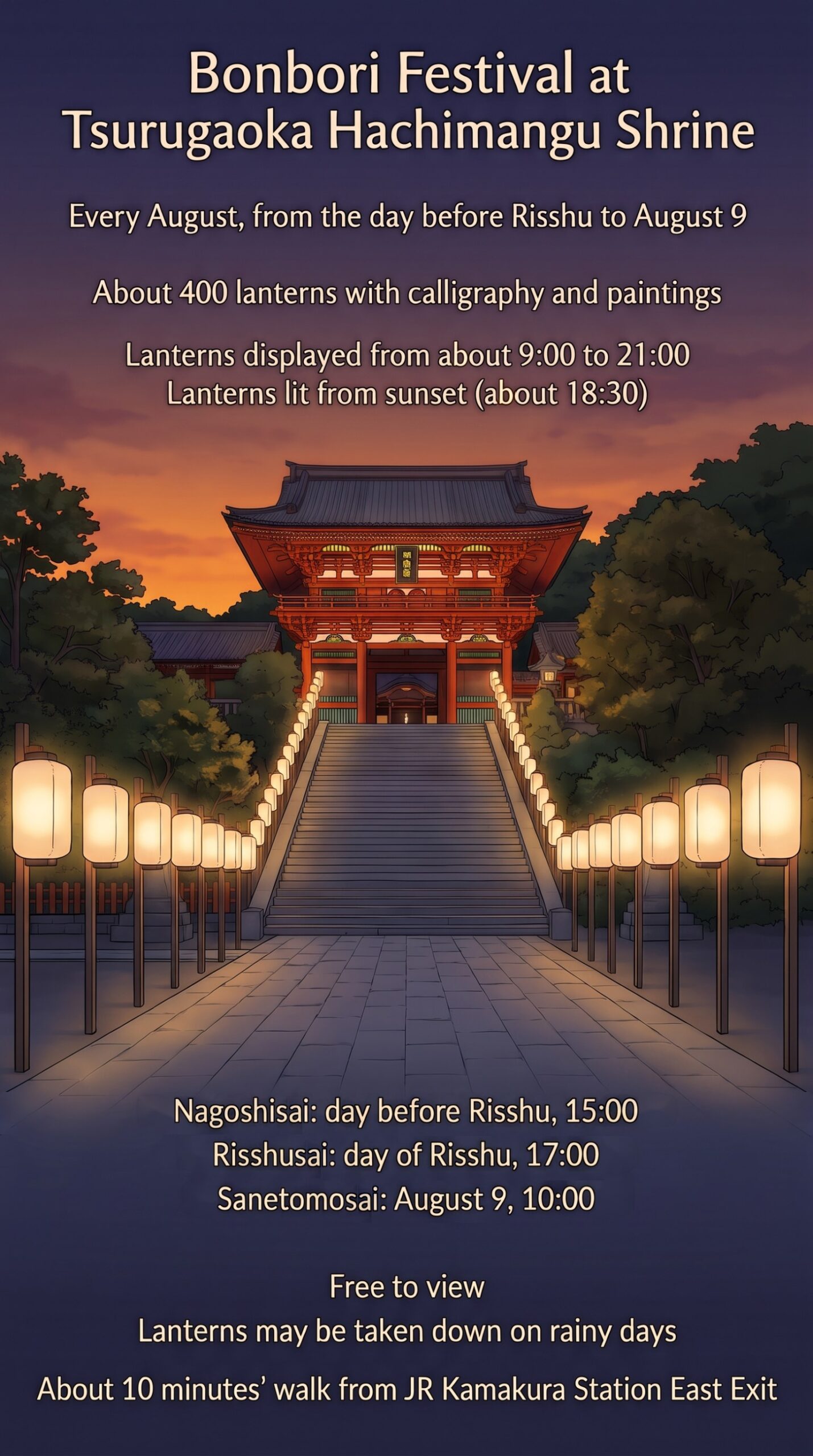
The festival runs from the day before Risshu through August 9, so it lasts three or four days depending on the date of Risshu. The lanterns are usually put up from around 9:00 AM until 9:00 PM, and the kento (献灯), the lighting of the lanterns, begins around sunset.
During the festival, the Nagoshisai (夏越祭) is held on the day before Risshu, the Risshusai (立秋祭) on the day of Risshu, and the Sanetomosai on August 9 at Shirahata Shrine (白旗神社) in the shrine grounds. They usually start at 3:00 PM, 5:00 PM and 10:00 AM respectively, and the public can watch all of them standing. For the highlights of the Sanetomosai, see Sanetomosai at Shirahata Shrine.
Highlights
The lanterns line both sides of the main approach and the Yabusame Baba (流鏑馬馬場), the track used for horseback archery, as well as the area around the Maiden (舞殿), the shrine’s dance hall, and the Oishidan (大石段), the great stone stairway up to the Main Shrine (本宮). Tall, square paper lanterns stand in rows on wooden posts, and each one carries its own painting or calligraphy.
Usually at around 6:30 PM, miko (巫女), shrine maidens, light the candles inside the lanterns one by one by hand, and the glow spreads along the approach. In daylight you can see the details of each painting and inscription, and once the candles are lit the same lanterns take on a different mood, so some visitors walk through once before sunset and again after dark.
During the festival, offerings such as Japanese dance, flute and koto (箏) music, haiku and tanka poetry gatherings, tea ceremonies and flower arrangement are dedicated to the shrine, and in the evening Japanese dance or music is usually performed at the Maiden from around 7:00 PM. Food stalls are also set up in the grounds.
Visiting Tips
- Viewing the lanterns is free
- Before sunset you can look at the lanterns at a relatively relaxed pace, and the crowds grow as it gets dark
- On rainy days the lanterns may be taken down, and the shrine posts the day’s status in the news section of its official website
- The grounds are a place of worship, so take photos without getting in the way of people praying
- The heat lingers into the evening, so it is a good idea to bring something to drink
Access | Visiting During Your Stay at Toshi’s Place
Tsurugaoka Hachimangu Shrine is about a 10-minute walk from the East Exit of JR Kamakura Station (鎌倉駅) or from Enoden (江ノ電) Kamakura Station. If you are staying at Toshi’s Place, take the Enoden from Hase Station (長谷駅) or Wadazuka Station (和田塚駅) to Kamakura Station, then walk along Wakamiya-oji Avenue (若宮大路).
At Toshi’s Place, fully unstaffed smart hotels with fully equipped kitchens and room-only stays, you can rest in your room before sunset and head back out as the candles are lit to enjoy the lanterns at night at your own pace.
Summary
The Bonbori Festival at Tsurugaoka Hachimangu Shrine is held every August from the day before Risshu through August 9, with about 400 lanterns made from paintings and calligraphy by people connected with Kamakura lining the shrine grounds. In the evening shrine maidens light them one by one, and the Nagoshisai, Risshusai and Sanetomosai are also held during the festival. On June 30, the same grounds host the Nagoshi no Oharae, from September 14 to 16 the Reitaisai Annual Grand Festival and the Yabusame Ritual, and from New Year’s Eve through the first days of January, visitors come for Hatsumode, the first shrine visit of the year. For the shrine’s highlights throughout the year, see Tsurugaoka Hachimangu Shrine.
Basic Information
| Item | Details |
|---|---|
| Name | Bonbori Festival at Tsurugaoka Hachimangu Shrine |
| Japanese name | 鶴岡八幡宮 ぼんぼり祭 |
| Dates | Every August, from the day before Risshu through August 9 (3 or 4 days) |
| Lanterns on display | Usually around 9:00 AM–9:00 PM (lit from sunset) |
| Rites during the festival | Nagoshisai (day before Risshu, 3:00 PM), Risshusai (day of Risshu, 5:00 PM), Sanetomosai (August 9, 10:00 AM, Shirahata Shrine) |
| Location | Tsurugaoka Hachimangu Shrine grounds (approach, Yabusame Baba, around the Maiden, along the Oishidan and more) |
| Admission | Free |
| Address | 2-1-31 Yukinoshita, Kamakura, Kanagawa |
| Access | About a 10-minute walk from the East Exit of JR Kamakura Station or Enoden Kamakura Station |
| Contact | Tsurugaoka Hachimangu Shrine office 0467-22-0315 |
| Official Website | https://www.hachimangu.or.jp/matsuri/ |